
Paying homage to the twelve zodiac relic stupas is a practice commonly observed among Thai Buddhists when they have the opportunity to travel. Many believe that visiting the stupa corresponding to one’s birth zodiac can enhance merit and bring auspiciousness and good fortune in life. Therefore, whenever people travel to different places, they often make time to pay respect at least once. Today, we present the twelve zodiac relic stupas. Let’s take a look at where each one is located.
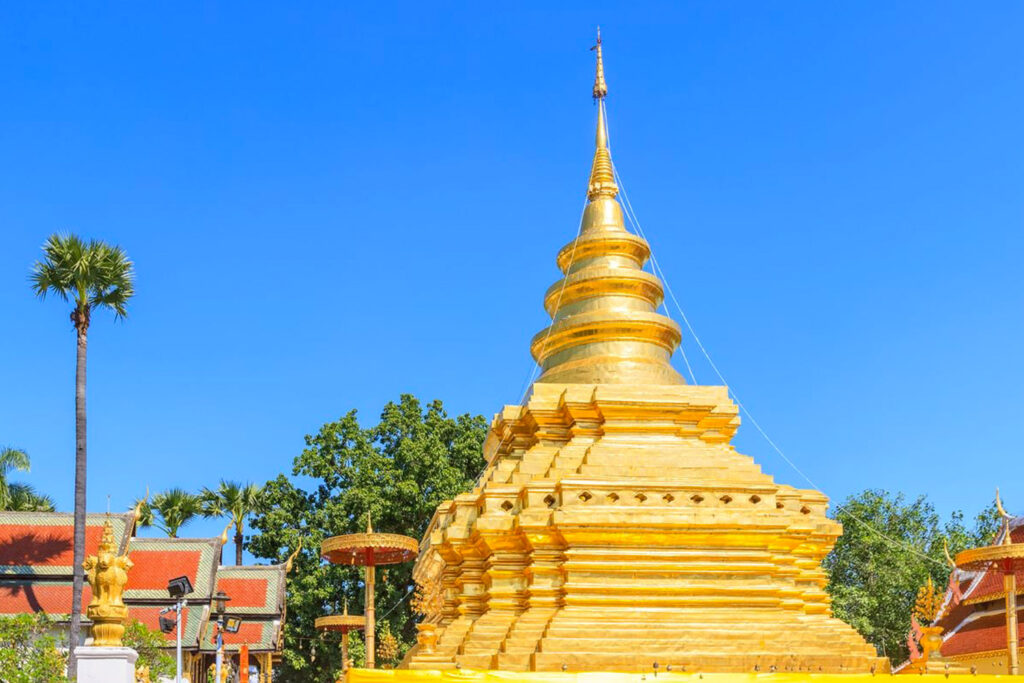
Phra That Si Chom Thong, Chiang Mai (Year of the Rat)
“Phra That Si Chom Thong” is located within Wat Phra That Si Chom Thong Worawihan in Chiang Mai. It was built during the Sukhothai period and enshrines a relic believed to be part of the Buddha’s head. The stupa has been restored through various historical periods and remains preserved to the present day. This stupa is considered a sacred place of worship and is highly respected by Buddhists, especially those born in the Year of the Rat, as it is their zodiac relic stupa. Visitors who come here may notice statues of rats placed around the stupa.
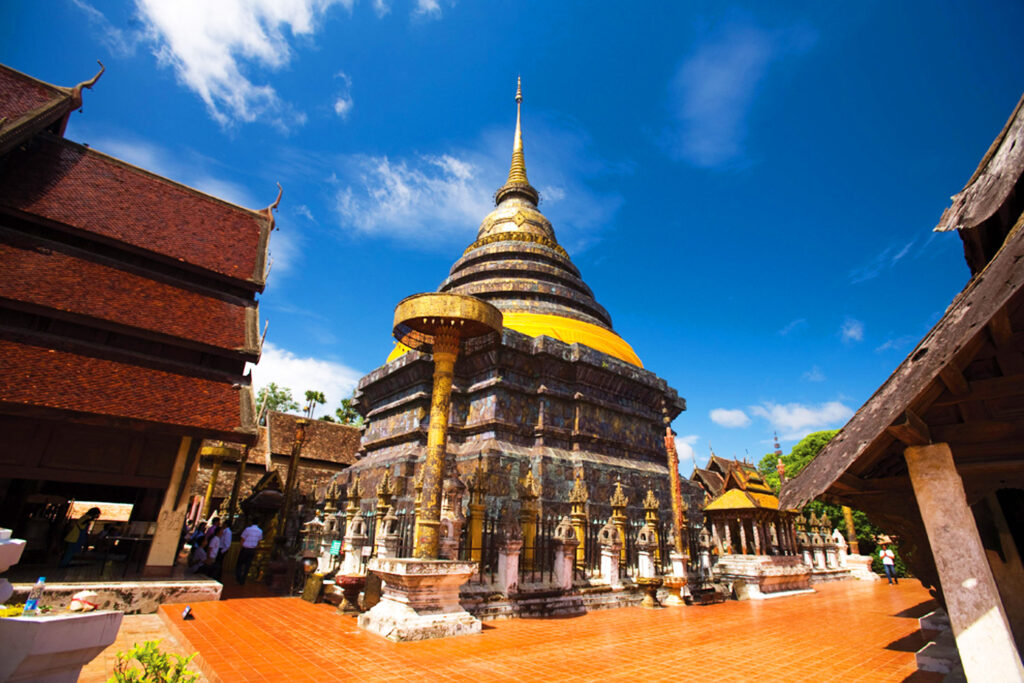
Phra That Lampang Luang, Lampang (Year of the Ox)
Phra That Lampang Luang is located within Wat Phra That Lampang Luang. It is an ancient and beautifully preserved masterpiece of Lanna architectural art, believed to have been built around the 20th Buddhist century. The stupa has an inverted bell shape, reflecting a combination of Bagan and Lanna architectural styles, and enshrines sacred relics of the Buddha. Its surface is decorated with gilded elements inspired by Bagan-style craftsmanship, giving it a majestic and elegant appearance. The temple is also considered one of the most complete wooden temple complexes in Thailand. It is an important religious site in Lampang and serves as the zodiac relic stupa for those born in the Year of the Ox.
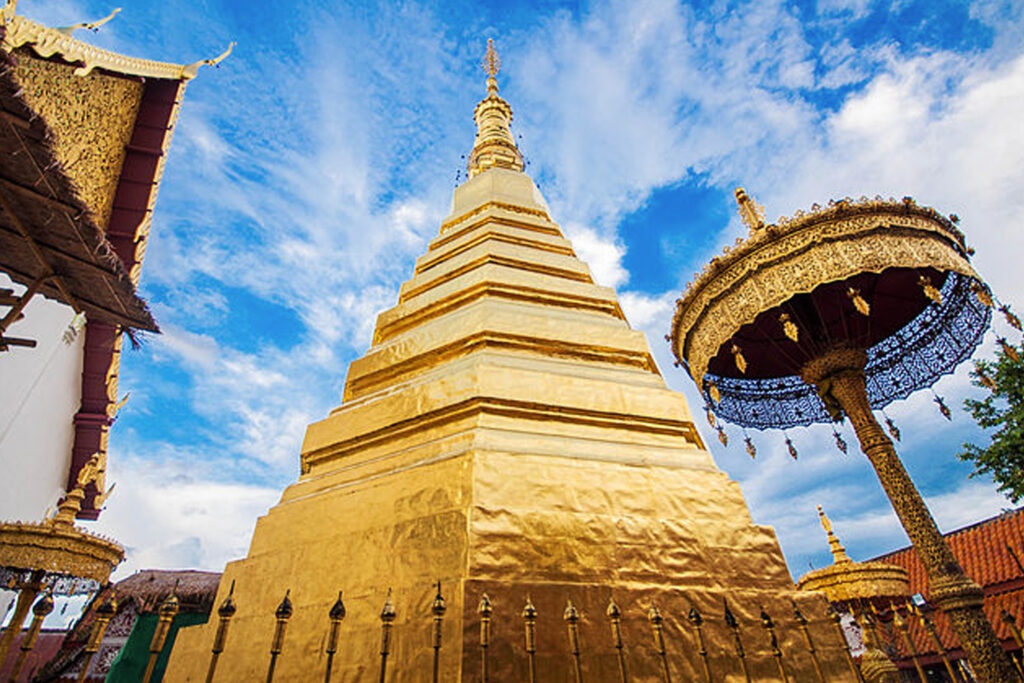
Phra That Cho Hae, Phrae (Year of the Tiger)
Phra That Cho Hae is an ancient historical site with a history of over one thousand years. The golden stupa is octagonal in shape with twelve indented corners and is covered with gold leaf, belonging to the Chiang Saen artistic style. Inside the stupa are enshrined relics of the Buddha, including Buddha relics, Buddha hair relics, and the left elbow bone relic. This temple is an important religious site in Phrae. It was built during the Sukhothai period and reflects Lanna architectural style. The name “Cho Hae” is believed to have evolved from “Chor Phrae (แพร),” where “Phrae” refers to silk fabric. It is said to originate from the mountain where the stupa is located, “Doi Kosiyathajakkhabannapot,” meaning “the mountain of beautiful silk.” Therefore, devotees who come to worship Phra That Cho Hae often offer high-quality silk fabrics as offerings, following ancient Lanna beliefs. Phra That Cho Hae is the zodiac relic stupa for those born in the Year of the Tiger. It is believed that those born in the Year of the Tiger will receive great merit and blessings from worshipping here.
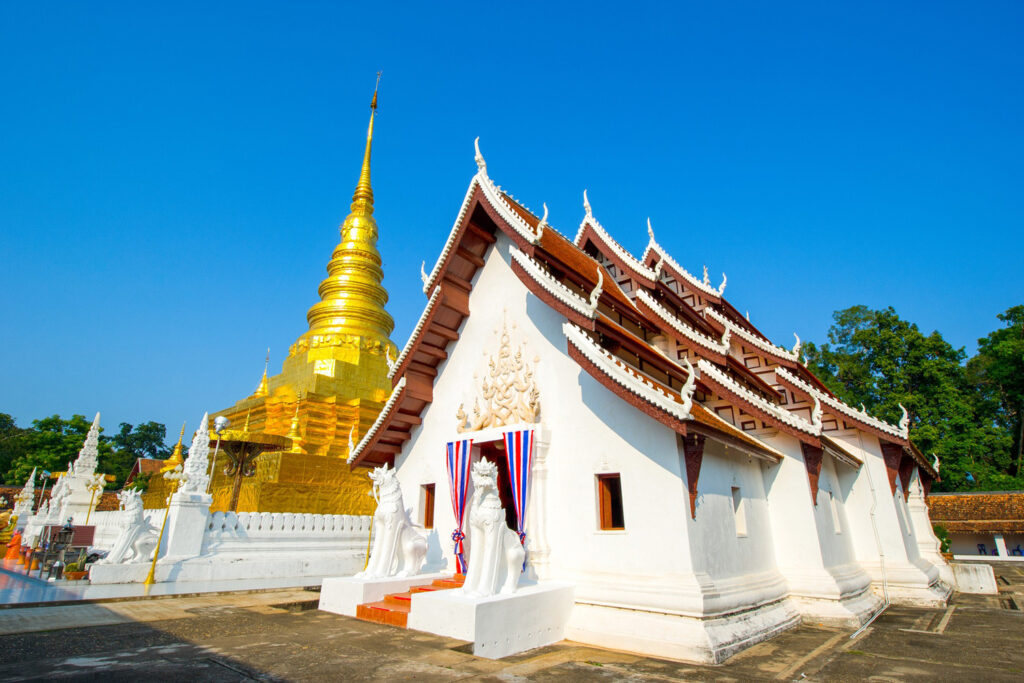
Phra That Chae Haeng, Nan (Year of the Rabbit)
Phra That Chae Haeng is an important sacred site of Nan and serves as the zodiac relic stupa for those born in the Year of the Rabbit. According to legend, during the time of the Buddha, the Buddha traveled to Phu Phiang Chae Haeng to teach and encountered King Amala and his queen, who were bathing at the same place. King Amala offered a white cloth to the Buddha for bathing, but the cloth turned into gold. Ananda then requested a relic of the Buddha’s hair, which was placed inside a bamboo container and entrusted to Indra, who brought it to a cave and stored it together with the golden cloth. Indra later built a stupa seven cubits high above the site. In the year 1896 BE, King Khaeng Mueang sent craftsmen to participate in temple construction in Sukhothai, and King Lue Thai later gifted seven Buddha relics, along with twenty golden and twenty silver Buddha images, to King Khaeng Mueang. These relics were brought back and enshrined at Phu Phiang, where a stupa containing the Buddha’s hair relic and left wrist relic was discovered. A new underground chamber was then constructed to enshrine the relics, and a new stupa was built, becoming the present-day Phra That Chae Haeng.
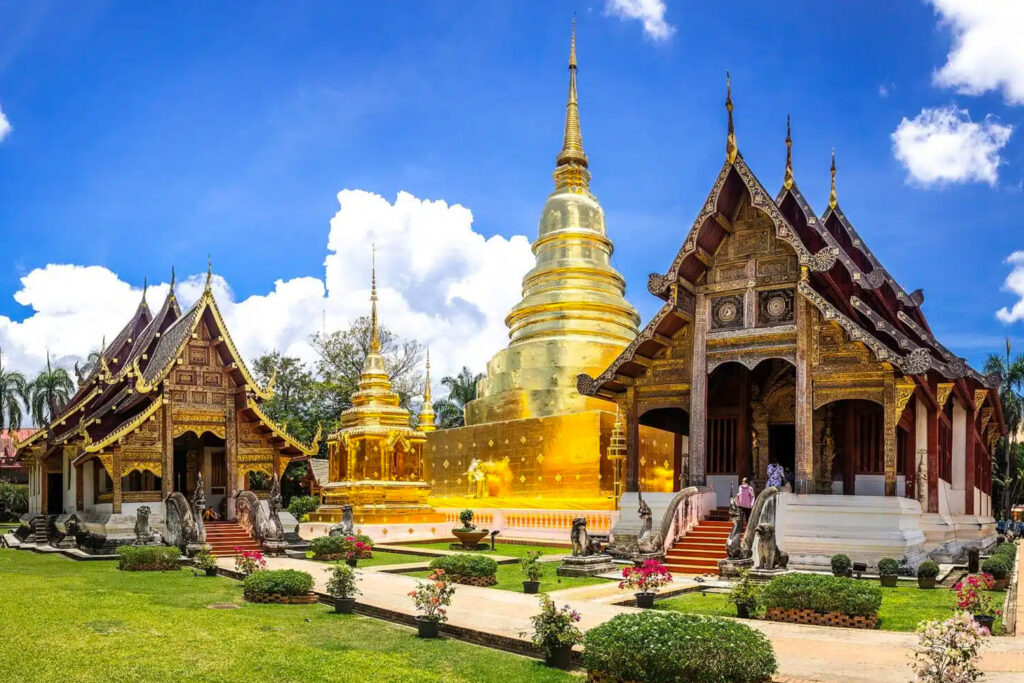
Phra Singh, Chiang Mai (Year of the Dragon)
Wat Phra Singh Woramahavihan is believed to have been built in Buddhist Era 2431 by King Phayu of the Mangrai dynasty. The temple was originally called “Li Chiang Phra Temple,” as it was located near the central market area of the city. In the Lanna language, “Li” means “market.” Later, in the 14th century, King Saen Muang Ma enshrined the Phra Phuttha Sihing Buddha image at this temple, after which it was renamed Wat Phra Singh. Inside the temple are enshrined Buddha relics, including a left wrist bone relic and hair relics. This stupa is considered the zodiac relic stupa for those born in the Year of the Dragon. Visiting and paying respect here is believed to bring auspiciousness and good fortune.
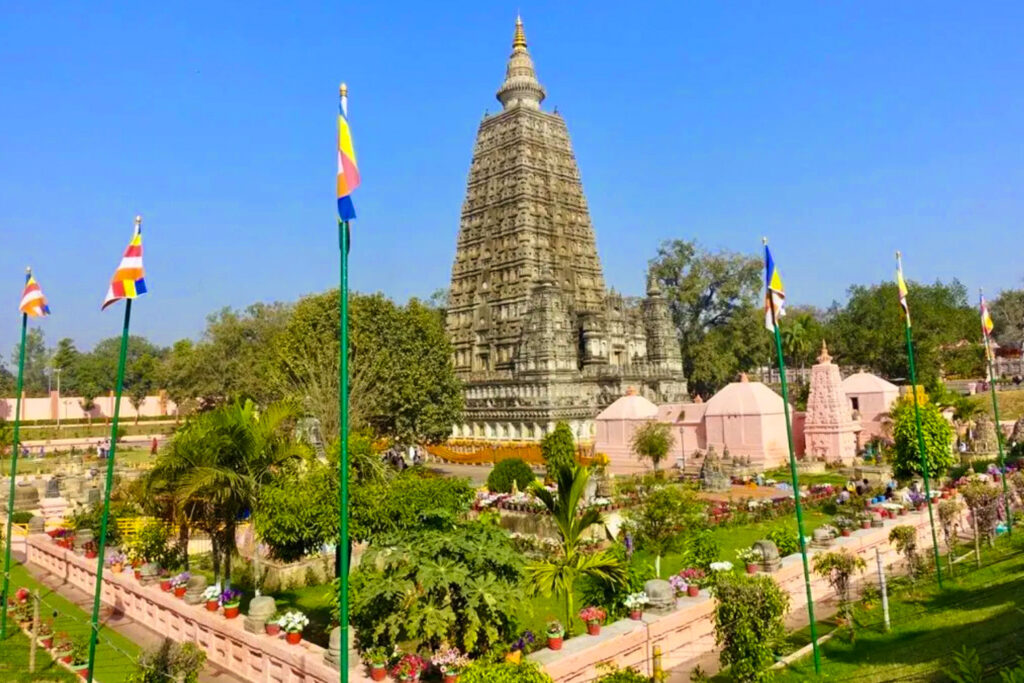
Bodh Gaya Mahabodhi Stupa, India (Year of the Snake)
The Bodh Gaya Stupa, also known as the Mahabodhi Temple, is the sacred site marking the Buddha’s enlightenment. It is a tall square-shaped structure built in Indian architectural style, approximately 170 feet in height. The stupa is divided into two levels: the first level enshrines the “Buddha of Enlightenment” in a subduing-Mara posture (Pala-style art), while the second level enshrines a Buddha image in the granting blessing posture. Around the main stupa are smaller stupas in all four directions. In Thailand, a replica of the Bodh Gaya stupa exists at Wat Analayo Thipphayaram in Phayao. The temple contains various Buddha images, including Sukhothai-style Buddha images, reclining Buddha, walking Buddha, and Naga-protected Buddha images, all finely crafted. Those born in the Year of the Snake can pay respect here without needing to travel to India, as it serves as a symbolic representation of their zodiac relic stupa.
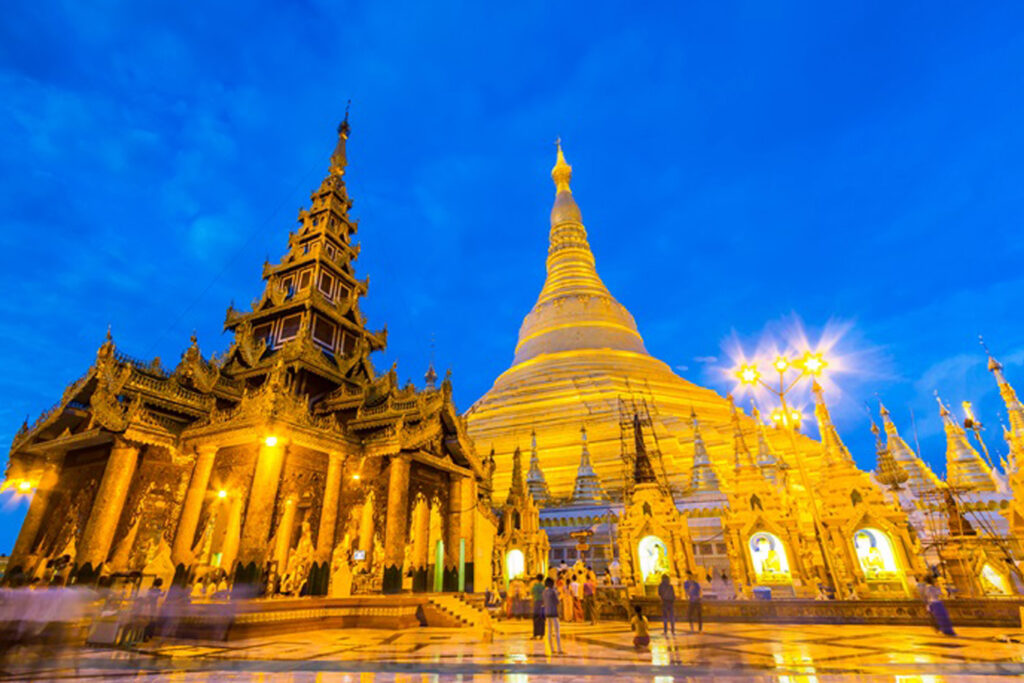
Shwedagon Pagoda, Myanmar (Year of the Horse)
The Shwedagon Pagoda is Myanmar’s national treasure and one of its most important sacred sites, considered one of the five major sacred objects of the country. It is also the zodiac relic stupa for those born in the Year of the Horse. It is believed to enshrine eight strands of the Buddha’s hair relics. The top of the pagoda is decorated with jewels and ornaments, including 5,448 diamonds. It also contains 2,317 rubies and a large diamond weighing 76 carats. If one cannot travel to Myanmar, worship can alternatively be done at a stupa in Tak, Thailand.
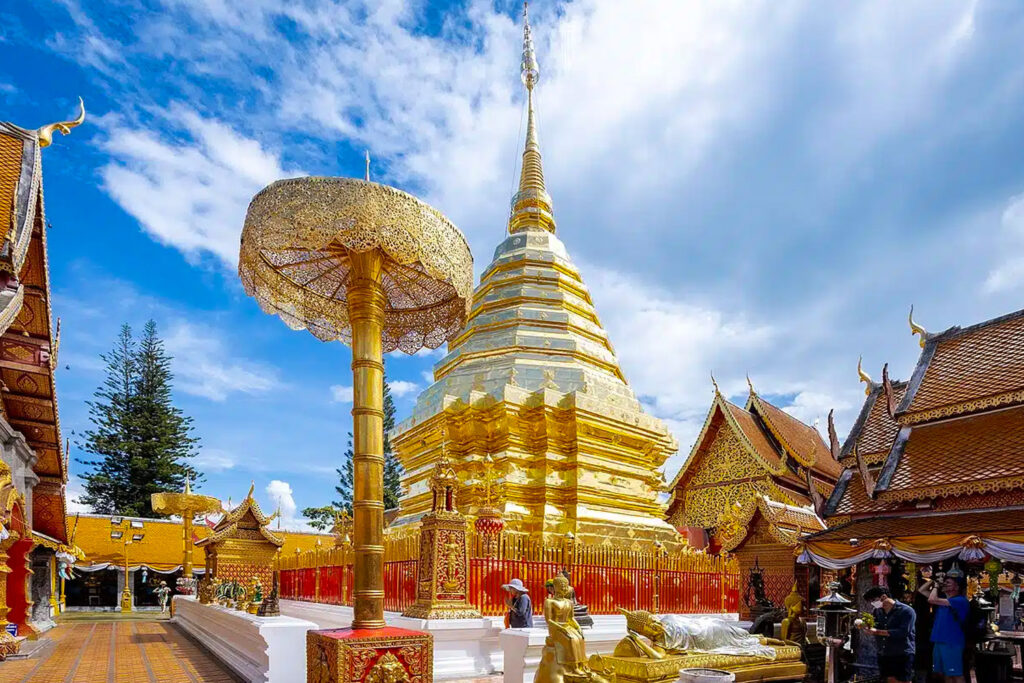
Phra That Doi Suthep, Chiang Mai (Year of the Goat)
Phra That Doi Suthep is located within Wat Phra That Doi Suthep Ratchaworamahawihan in Chiang Mai. It was built during the reign of King Kuena, the sixth ruler of Chiang Mai. It is said that King Kuena ordered the enshrinement of a Buddha relic brought from Sukhothai by the monk Sumana Thera. After the relic arrived in Chiang Mai, it was divided into two parts. One part was enshrined at Wat Suan Dok, while the other was placed on the back of a white elephant for a divine selection. The white elephant eventually stopped at Doi Suthep mountain, where the stupa was built to enshrine the relic. Phra That Doi Suthep is a major landmark of Chiang Mai and the zodiac relic stupa for those born in the Year of the Goat. Visitors can climb the 300-step naga staircase or take a cable car up and down the mountain.
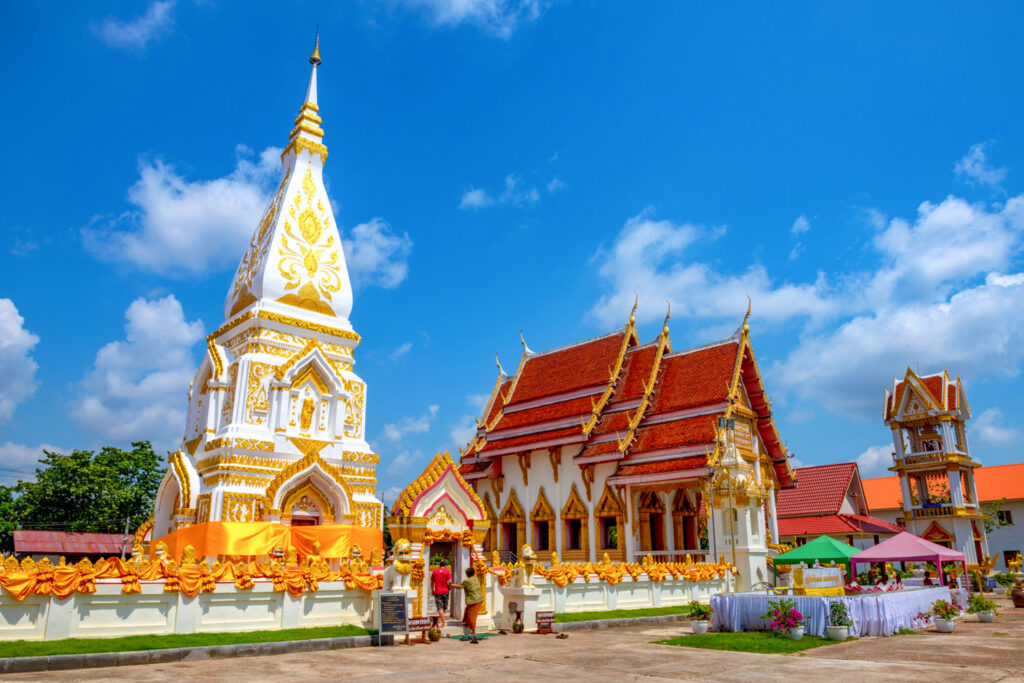
Phra That Phanom, Nakhon Phanom (Year of the Monkey)
Phra That Phanom is located in Nakhon Phanom and is the zodiac relic stupa for those born in the Year of the Monkey. It is also considered a protective stupa for those born on Sunday. Inside the stupa are enshrined Buddha relics and tens of thousands of valuable objects. In particular, the golden umbrella at the top of the stupa weighs 110 kilograms. The stupa is highly revered by people on both sides of the Mekong River, including people from northeastern Thailand and Lao devotees who also cross the border to pay respect. It is believed that if a person visits the stupa seven times, they will be considered a “child of the stupa,” symbolizing good fortune and prosperity.
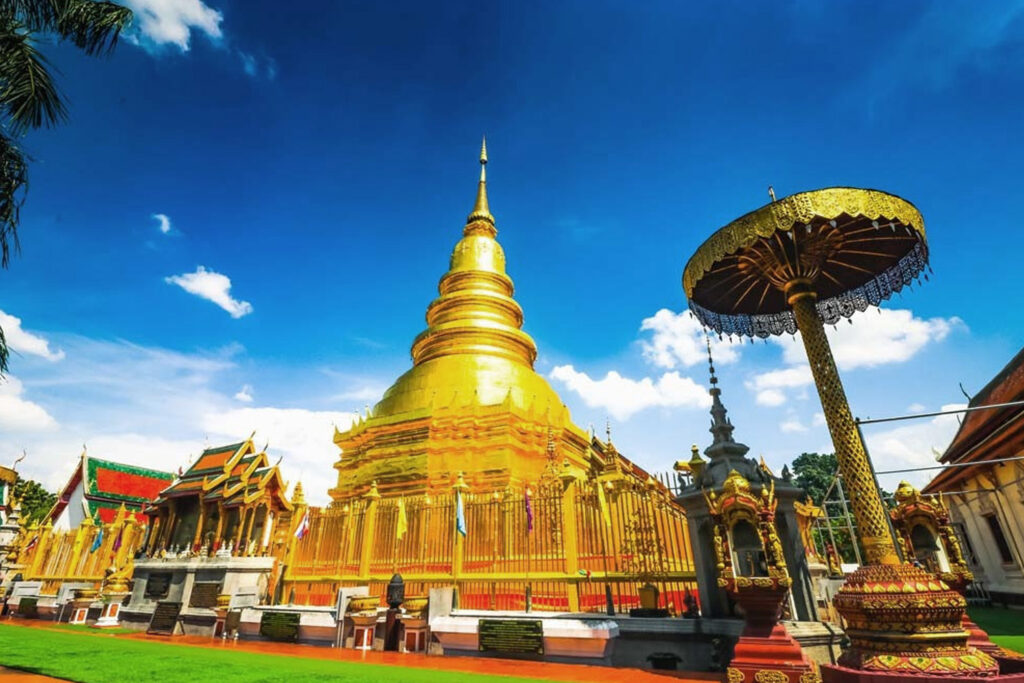
Phra That Hariphunchai, Lamphun (Year of the Rooster)
Phra That Hariphunchai is an important stupa in Lamphun and serves as the zodiac relic stupa for those born in the Year of the Rooster. According to Lanna belief, it is one of the most significant stupas in the Lanna region. It was built in Buddhist Era 1607 by King Athittayaraj to enshrine Buddha relics. According to legend, the original structure followed a Buddha prophecy and was built as a square, palace-like stupa approximately 12 cubits (about 6 meters) high, with passages connecting all four sides. At each corner stood a small stone shrine. Later, during the Mangrai dynasty, the stupa was renovated into a five-spired palace-style structure. In the reign of King Tilokaraj, it underwent major restoration, forming the present-day appearance.
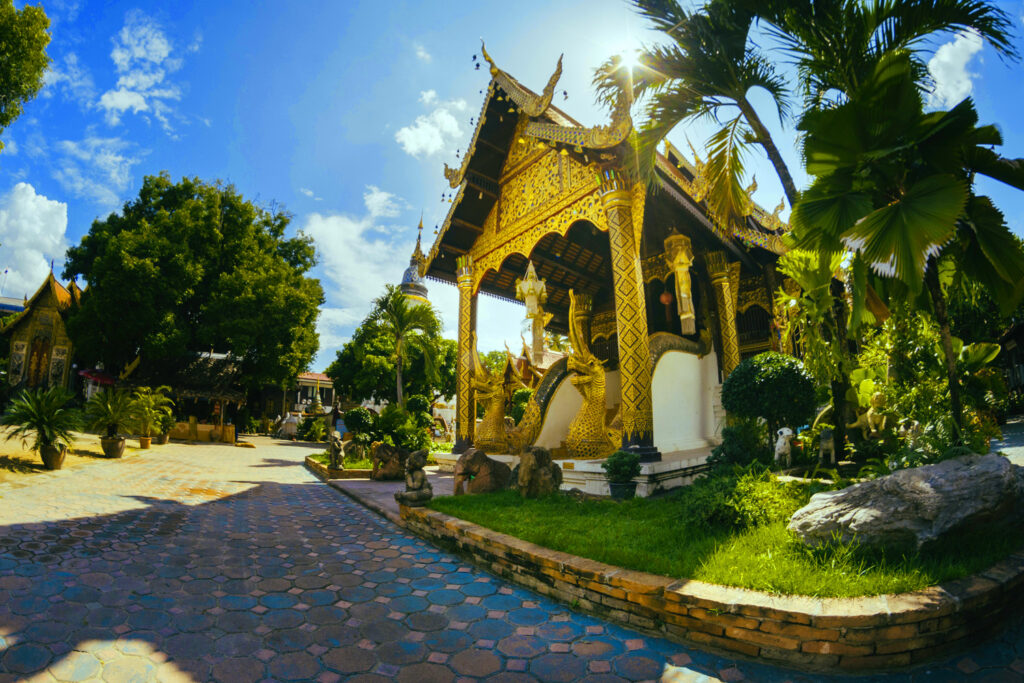
Phra That Kaeo Chulamanee, Chiang Mai (Year of the Dog)
Phra That Kaeo Chulamanee is located within Wat Ket Karam in Chiang Mai. It is the zodiac relic stupa for those born in the Year of the Dog. The temple is situated near the Ping River and was built in Buddhist Era 1971 during the reign of King Samfangkaen. The stupa enshrines the headdress and hair of Prince Siddhartha, as well as Buddha tooth relics from the cremation of the Buddha. For those born in the Year of the Dog, visiting this stupa is considered an especially auspicious act in life.
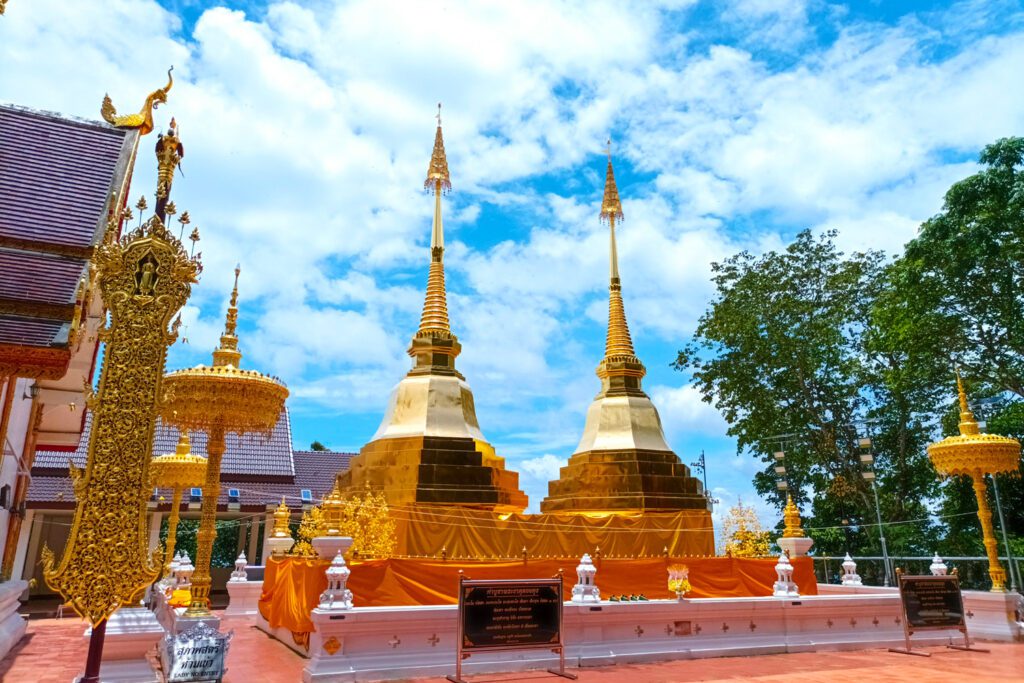
Phra That Doi Tung, Chiang Rai (Year of the Pig)
Phra That Doi Tung is located within Wat Phra That Doi Tung in Chiang Rai and serves as the zodiac relic stupa for those born in the Year of the Pig. According to legend, it was built during the Lanna period under the reign of King Achutarat. The great monk Mahakassapa is said to have brought the Buddha’s Relics and presented it to King Achutarat for enshrinement in the stupa. Following a prophecy of the Buddha, a thousand-wa-long banner was placed on the mountain, and the location where it fell determined the site of the stupa. The stupa was built and later maintained by various communities and underwent multiple restorations throughout history. During the Mangrai dynasty, an additional stupa was built near the original one, resulting in a twin-stupa structure that remains today.
If you enjoy this article, you can follow more content on the website ARM’S ARMOR, or visit the Facebook page ARM’S ARMOR to follow, like, and support us as encouragement.
Thank you everyone for reading and following.