

The Phra Pradaeng City Pillar Shrine was built during the reign of King Rama II, when Nakhon Khuean Khan, now known as Samut Prakan, was established. The shrine was commissioned in B.E. 2358 (1815). A ritual to consecrate the city pillar was held on the tenth day of the waning moon in the seventh lunar month, which fell on a Friday. After the city had been established, Saming Thongma, the son of Phraya Cheng, was appointed to govern the city. Shortly after he assumed his position, the City Pillar Shrine of Nakhon Khuean Khan was built at the site where the city pillar had been consecrated. A large stone image of Ganesha was installed above the consecrated spot to ward off misfortune and protect the city. The Ganesha image is more than 200 years old and is regarded as the oldest Ganesha image in Thailand. Its sacred reputation is well known, and people visit the shrine every day to pay their respects.
Some scholars have suggested that the Ganesha figure placed at the top of the city pillar may have been intended to commemorate Phraya Cheng, the father of Saming Thongma, because the name “Cheng” means “elephant.” According to local legend, while the Ganesha image was being raised onto the city pillar, both freshwater and saltwater crocodiles swam upstream along the Chao Phraya River to the area in front of the City Pillar Shrine. They circled the area before dying on the riverbank. As a result, local people and those attending the ceremony believed that the crocodiles had sacrificed their lives in honor of the city pillar. Their heads were then placed as offerings at the City Pillar Shrine, where they can still be seen today.
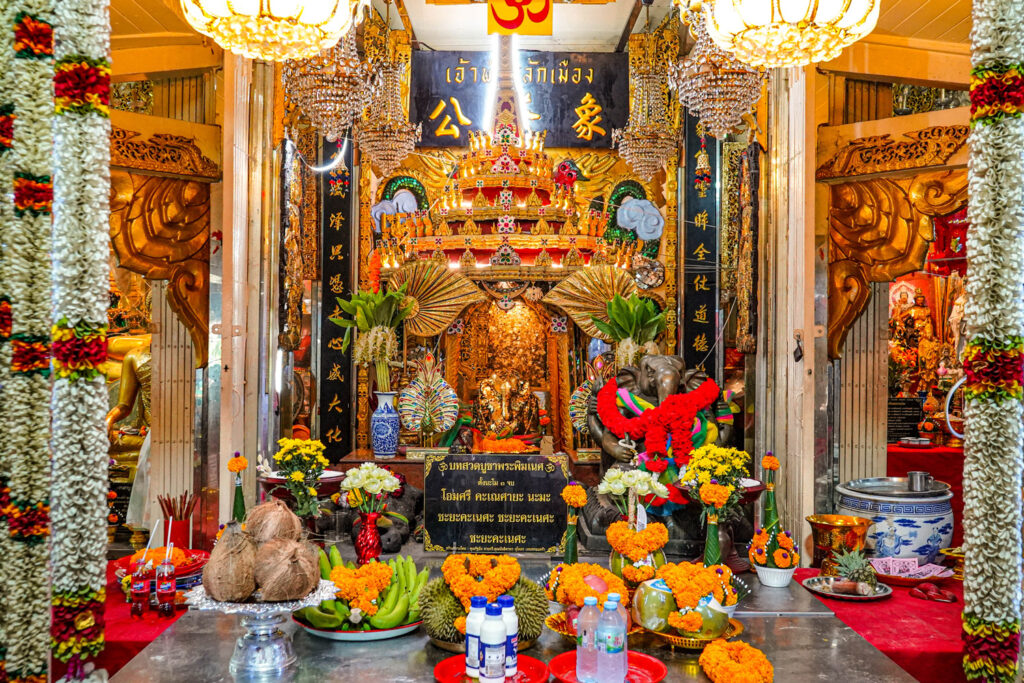
The Ganesha enshrined at the Phra Pradaeng City Pillar Shrine is more than 200 years old and has been enshrined there since the shrine was established. As Ganesha is already widely revered among devotees, people come every day to pay their respects. The Ganesha image here is considered to be the oldest in Thailand, and is well known for its sacredness. It is believed that those who wish to start a company, begin a business, or engage in trade will achieve success after paying respect to Ganesha here, just as the establishment of Nakhon Khuean Khan was successful. In addition, the City Pillar Shrine also houses other sacred objects for devotees to worship.
Ganesha is a deity in Hinduism and has long been worshipped by many Thai people. Those who worship Ganesha believe that he helps remove obstacles, brings success, and grants the fulfillment of one’s wishes. As the deity of great wisdom, Ganesha has become one of the most popular deities among those who believe in spiritual blessings.
The Background of Ganesha
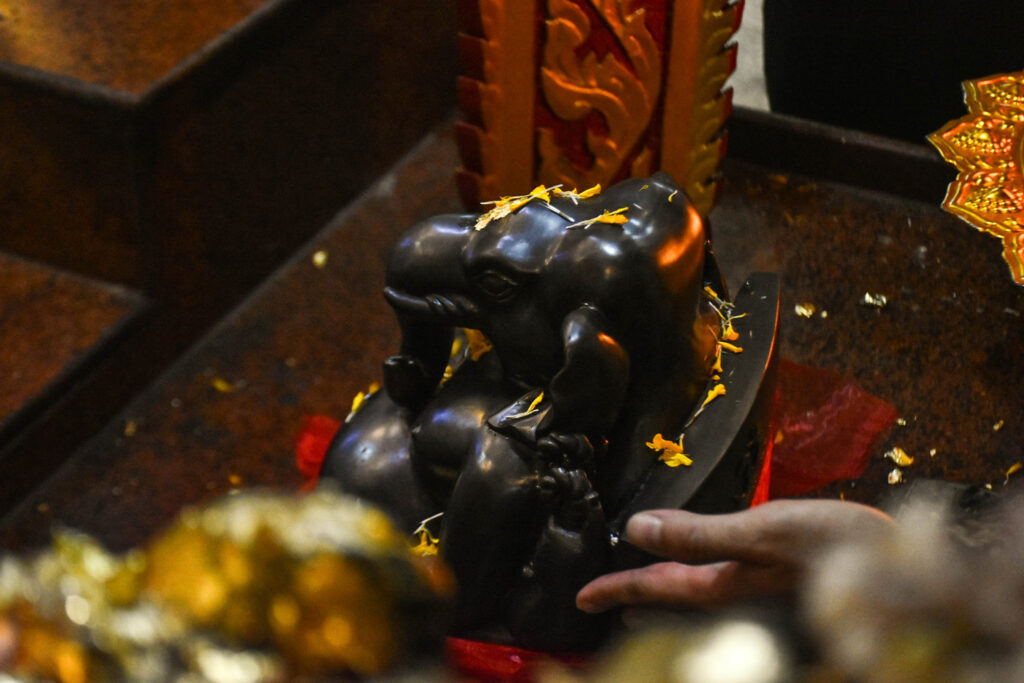
Ganesha, also known as Gajanana, is the son of Shiva and Parvati. He has a human body with the head of an elephant, large ears, a long trunk, and a single tusk. Each feature symbolizes auspiciousness:
- Head – Represents great wisdom.
- Ears – Symbolize listening to prayers and learning from all things.
- Trunk – Represents the ability to distinguish right from wrong, good from evil, and to carefully consider one’s actions. Wisdom helps overcome obstacles in life and leads to success.
- Single Tusk – Represents a life that includes both good and evil.
- Mushika (the Mouse) – Ganesha’s companion, representing human desires.
- Noose – Symbolizes guiding people to follow him.
- Axe – Ganesha’s weapon, representing protection from evil and the removal of obstacles.
- Modak – A sweet made from cooked rice and sugar, given as a reward to those who follow his teachings.
- Blessing Gesture – Symbolizes happiness, prosperity, and success bestowed upon his devotees.
What Can People Pray to Ganesha For?
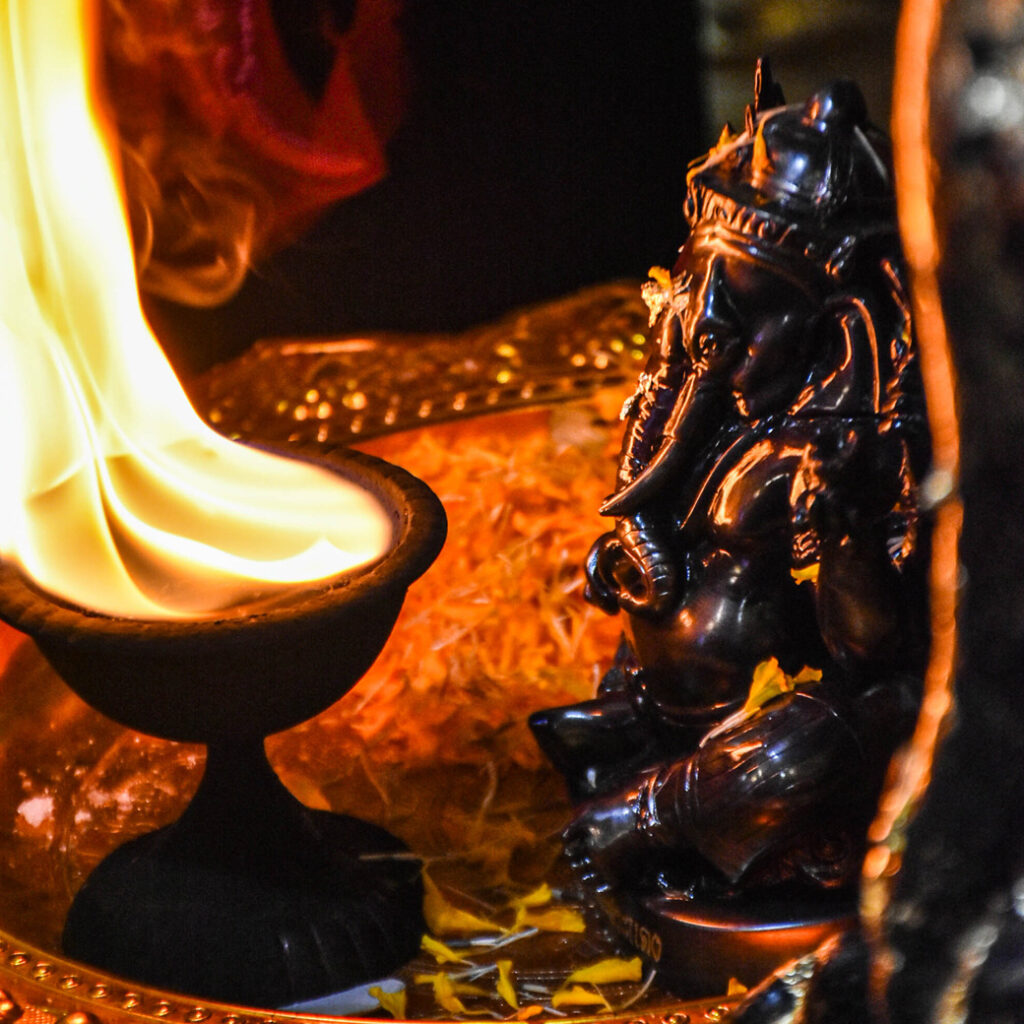
Those who worship Ganesha believe that any wish they pray for, if it is within their merit and destiny, may be fulfilled as they hope. Ganesha is regarded as the God of Wisdom and the God of Success. Whether it is for education, career, finances, or love, devotees believe that Ganesha grants blessings for success and the fulfillment of their wishes.
Worshipping Ganesha
Ganesha may be worshipped on any day. However, according to traditional belief, those who wish to begin worshipping Ganesha should start on Tuesday or Thursday as a way of dedicating themselves as devotees. After that, worship may be performed on any day. A local belief associated with the Ganesha enshrined here is that he favors Chatri dance performances, followed by offerings of fruit and traditional sweets. In addition, the City Pillar Shrine houses many other sacred figures from different beliefs and cultural traditions, including Luang Pho Sothon, Goddess Lakshmi, Guanyin, and Jatukam Ramathep, allowing devotees to pay their respects to them as well.
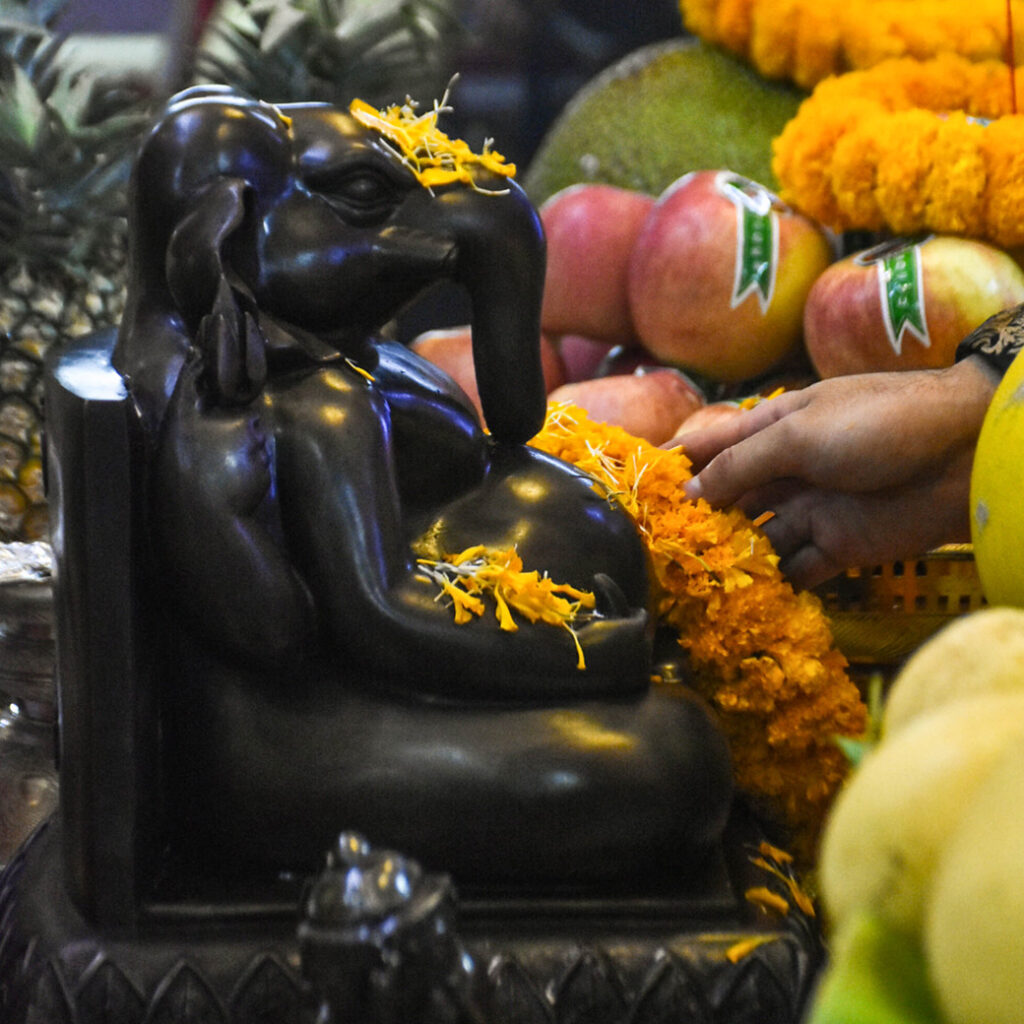
Offerings for Worshipping Ganesha
- Fruit: Sugarcane
- Drinks: Sugarcane juice and cow’s milk
- Thai and Indian sweets: Modak, Red Rice Dumplings, White Rice Dumplings, and Laddu
- Other offerings: Uncooked rice, salt, vegetables, and plants
Note: Do not offer any kind of meat. Sweets containing eggs may be used, but they are best avoided.
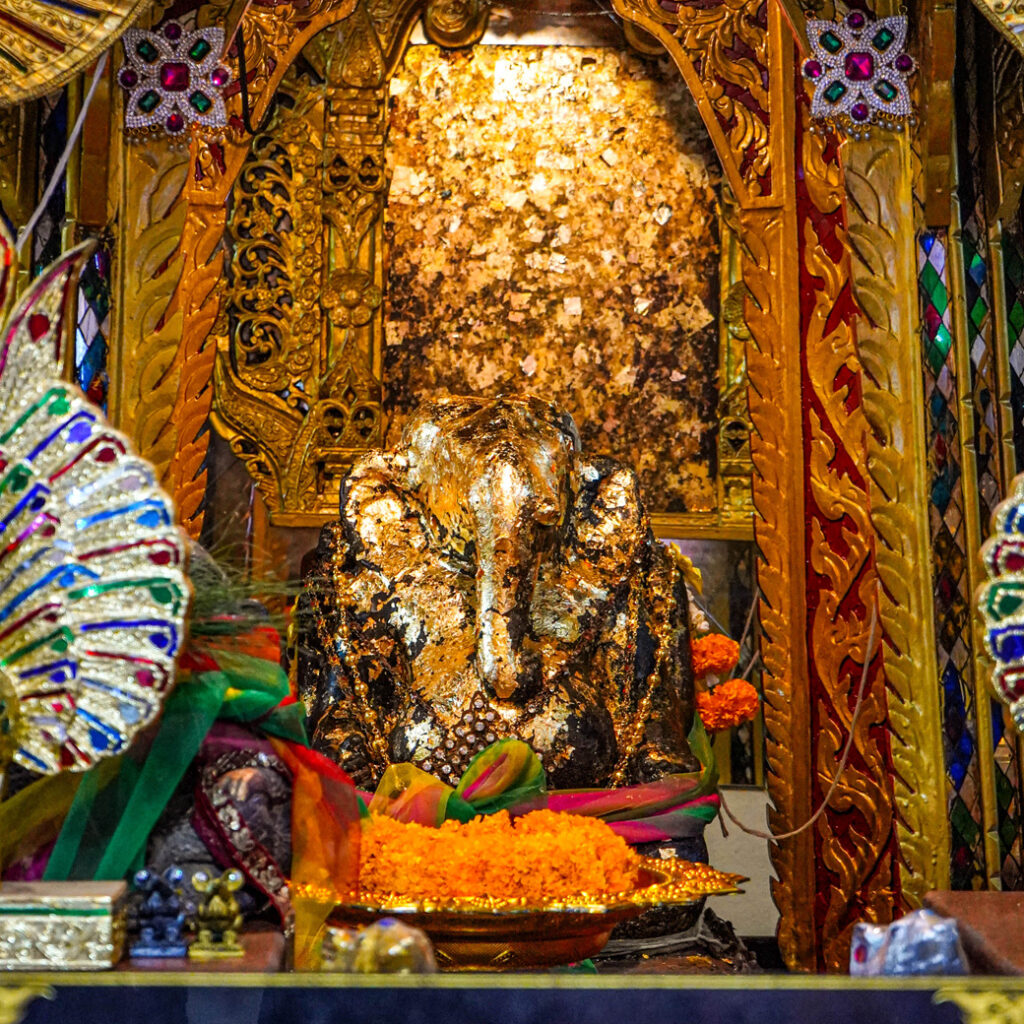
Steps for Worshipping Ganesha
- Place the offerings in front of the Ganesha image.
- Place flowers in front of the image. If offering a flower garland, hang it over the deity’s arm.
- Light candles, incense sticks, and incense resin in front of the image.
- Calm your mind, recite Namo three times, followed by a Ganesha prayer.
- After finishing the prayer, make your wish and conclude by chanting “Om Shanti” three times to pray for peace. This completes the worship.
There are many prayers dedicated to Ganesha. You may choose to recite just one, or several prayers according to your own faith. Reciting these prayers may help strengthen your faith and confidence. However, whether your wishes come true also depends on your own actions. If you enjoyed this article, you can read more on the ARM’S ARMOR website or follow and like the ARM’S ARMOR Facebook page. Thank you for your support.