Trying one’s luck has long been part of Thai culture. Many people enjoy trying their luck, hoping that as long as there is hope, they may have a chance to win a big prize and live comfortably for the rest of their lives. As a result, those who enjoy games of chance often travel to famous places believed to bring good fortune and lucky numbers, hoping to hit the jackpot at least once. Many people who have won major prizes later return to fulfill their vows by hosting Chinese banquet feasts, arranging outdoor movie screenings, or making other offerings. Today, our team has gathered some of the most popular places where people go to seek lucky numbers and test their luck. Let’s see which places made the list.
1. Mae Nak Phra Khanong Shrine
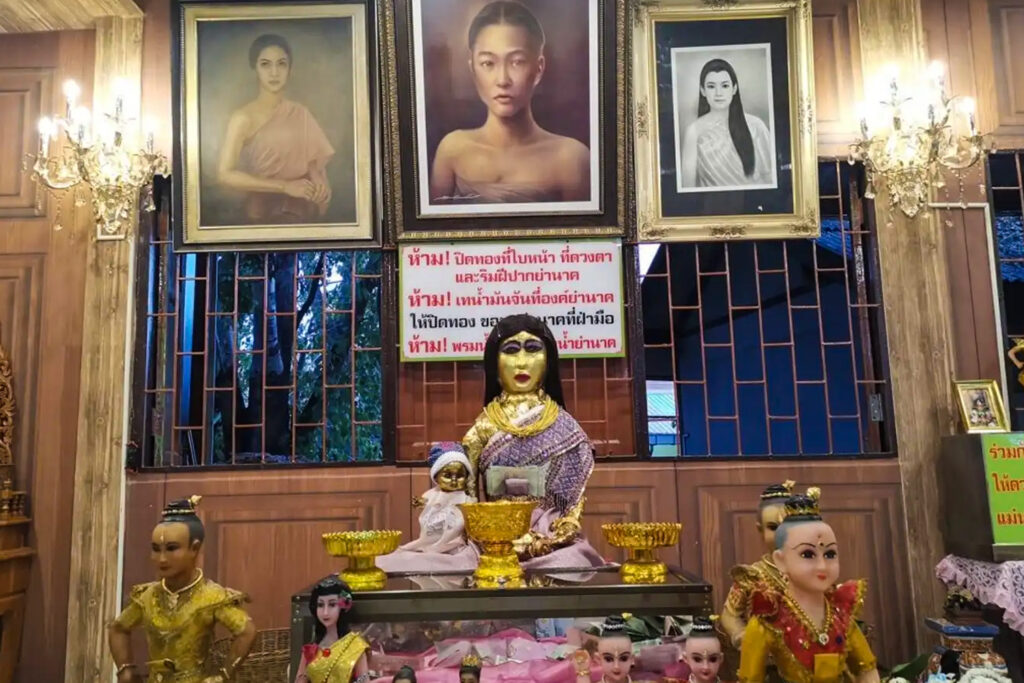
Mae Nak Phra Khanong Shrine is located within Wat Mahabut in Phra Khanong District, Bangkok. The shrine is widely known as a sacred place and is visited by both local residents and people from all over the country. Many believe that Mae Nak Phra Khanong possesses spiritual power and can help those who come to pray for blessings.
The legend of Mae Nak Phra Khanong has been passed down through generations and is well known throughout Thai society, especially in Bangkok. According to the story, a young woman named Nak deeply loved her husband, Mak. However, after she died while giving birth, her spirit could not rest in peace and remained to protect and watch over her husband and child.
Visitors to Mae Nak Phra Khanong Shrine often bring offerings such as flowers, incense, candles, and perfume. They pray for blessings related to love, finances, careers, and health. In addition, those who enjoy trying their luck also come here to seek lucky numbers.
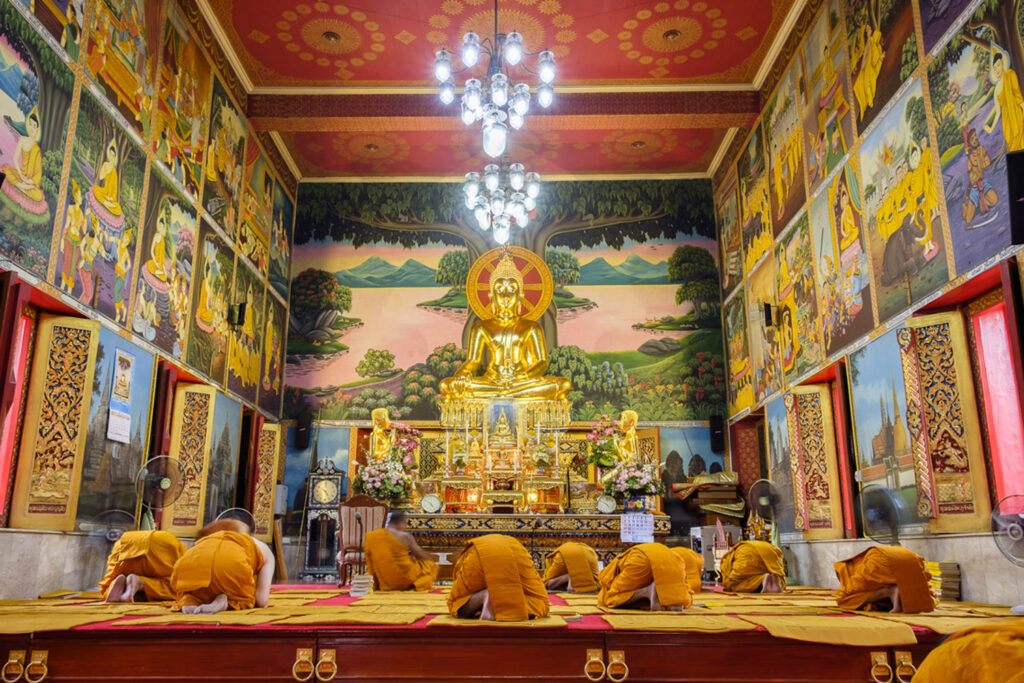
2. Luang Pho Luea, Wat Soi Thong, Bang Sue
Luang Pho Luea is an important Buddha image enshrined at Wat Soi Thong in Bang Sue District, Bangkok. It is widely known and revered by local residents as well as devotees from many places. Luang Pho Luea is depicted in the Mara-Vijaya posture. The name “Luang Pho Luea” originated from the fact that the image was cast using leftover metal from the construction of the temple’s principal Buddha image. Inside the statue are relics of five arahants. Therefore, many people come here to pray for good fortune and seek lucky numbers.
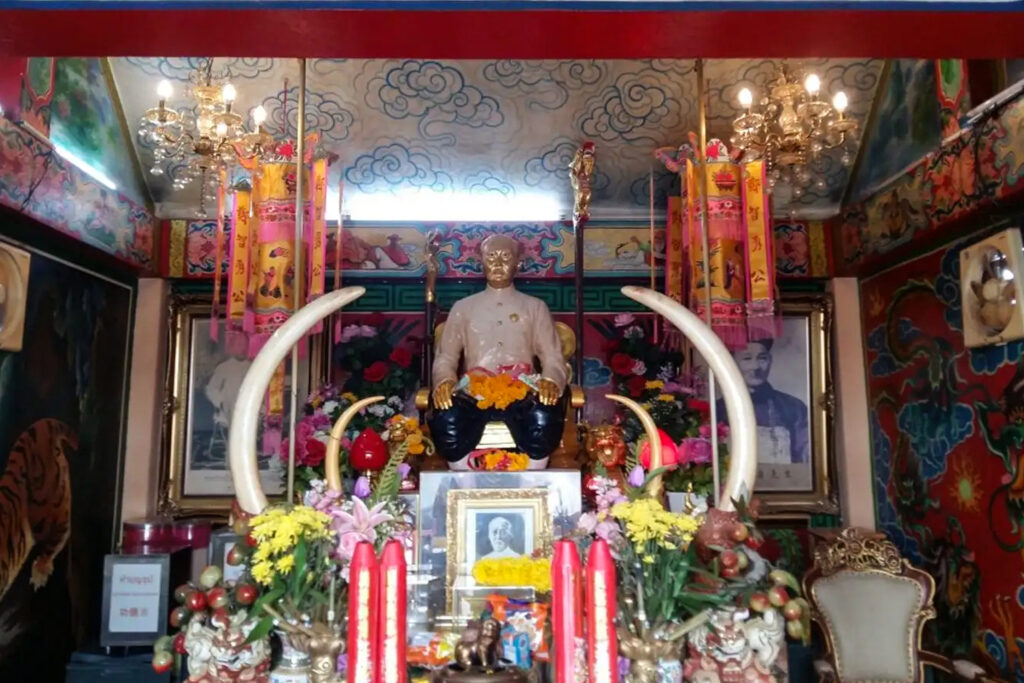
3. Yi Ko Hong Shrine
Yi Ko Hong Shrine is located on the fourth floor of Phlapphla Chai Police Station. It is highly respected by Thai-Chinese people and devotees of Yi Ko Hong. Yi Ko Hong was a real person who lived during the reign of King Rama VI. During his lifetime, he built his fortune through his lottery business and was very fond of playing the lottery. He was also known for his generosity and dedication to charitable work, often helping those in need. Devotees believe that Yi Ko Hong can grant blessings, bringing good fortune and success to those who pray to him, especially in matters related to luck and lotteries. As a result, he has earned the title of “The First Lottery God of Siam.”
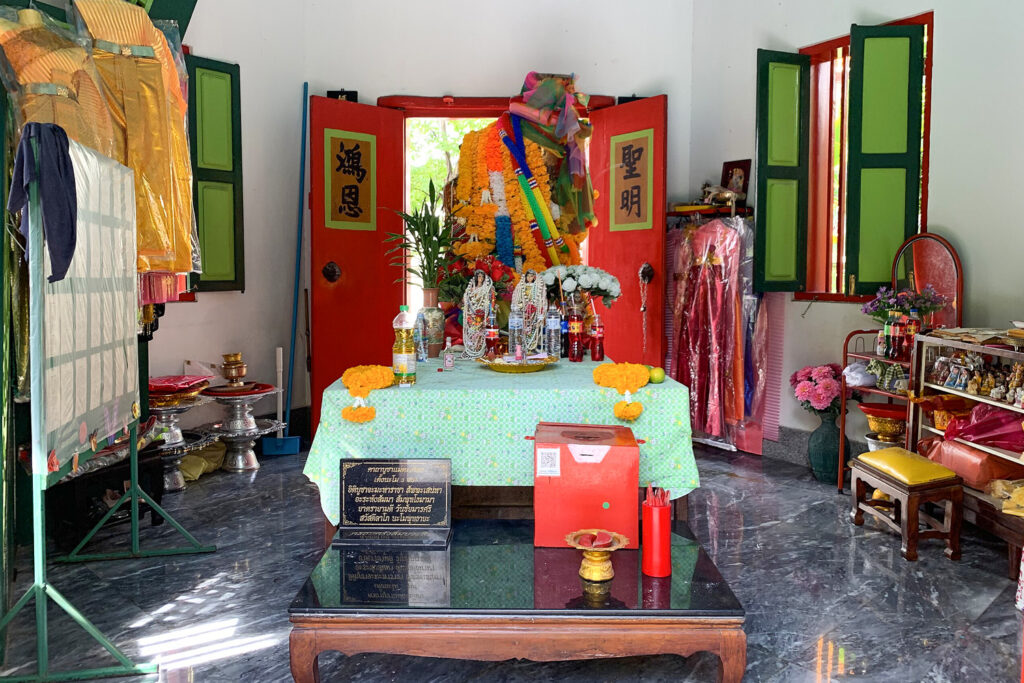
4. Chao Mae Takhian Thong Shrine, Saranrom Park
Chao Mae Takhian Thong Shrine is located in Saranrom Park. Built during the reign of King Rama VI, the shrine features a three-story hexagonal Chinese pavilion. Inside, there is a section of a takhian tree wrapped with colorful clothes. Many people come here to try their luck by drawing fortune sticks or rubbing the stump of the golden takhian tree to look for lucky numbers. The park is also open to visitors who wish to relax and enjoy the surroundings. There are three popular ways to pray for good fortune at Chao Mae Takhian Thong Shrine: 1. Light incense and pray for Chao Mae Takhian Thong to appear in a dream and reveal lucky numbers. 2. Draw fortune sticks. 3. Rub the takhian stump to seek lucky numbers. Many people believe that their wishes have been fulfilled after praying here.
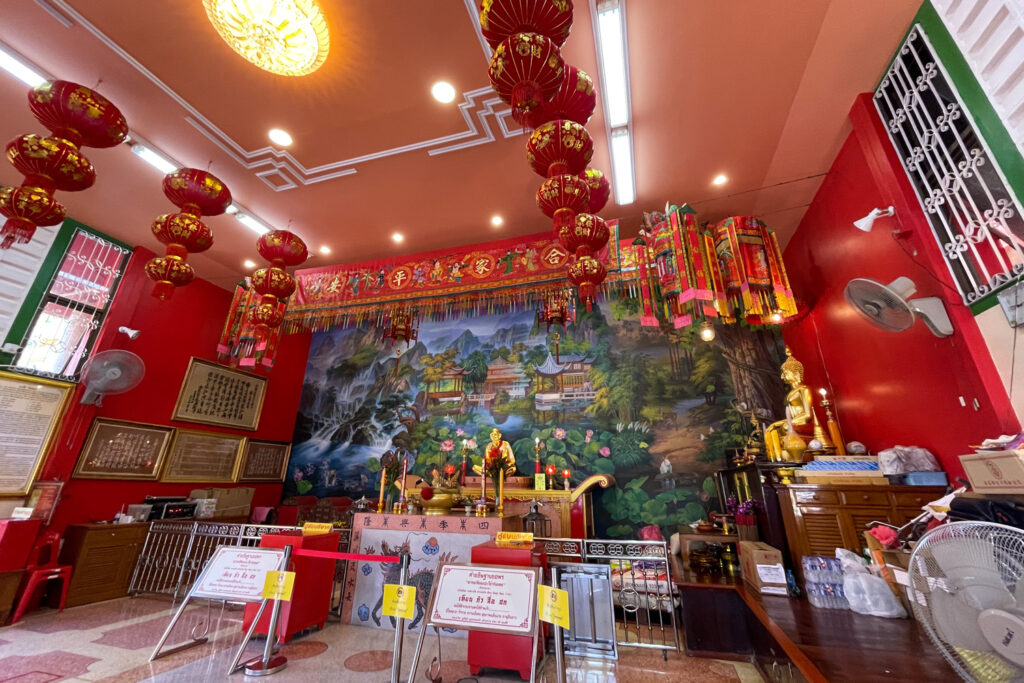
5. Wat San Chao (Sian Pae Rongsi), Pathum Thani
Wat San Chao is located on the banks of the Chao Phraya River in Pathum Thani, next to Wat Makham. The temple is home to the shrine of Xian Pae Rong Si, also known as Ngow Kim Khoi, a renowned master of Chinese rituals and feng shui. He lived and operated a rice mill business in Pathum Thani. Every day, many people come to pray and seek blessings from him. Besides being known for bringing good fortune to those who enjoy trying their luck, he is also famous for offering protection against fire and warding off negative influences.
6. Wat Pa Khlong 11, Pathum Thani
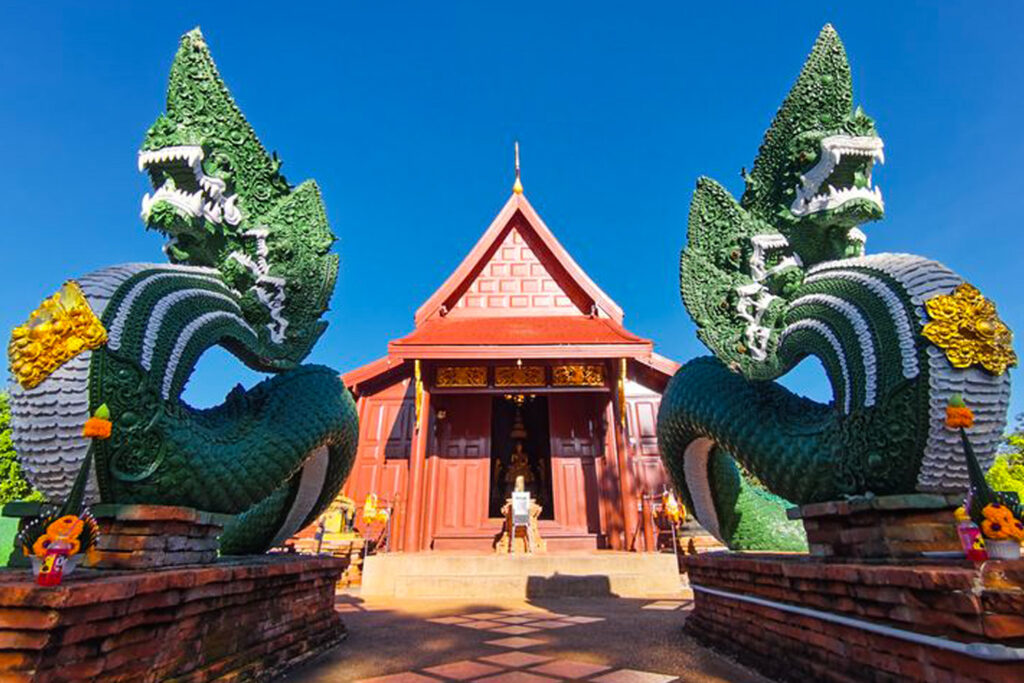
This peaceful meditation center has earned the nickname “Kham Chanod 2” because of its resemblance to Wat Pa Kham Chanod in Udon Thani. As a result, it has become one of the popular destinations where people continuously come to pray for blessings and try their luck. One of the highlights of Wat Pa Khlong 11 is the magnificent giant Naga statue located near the wooden ordination hall in the middle of a pond. Inside the hall is enshrined Luang Pho Nak Prok Kaew Manee Chot, along with sacred images of Pu Sri Sutho and Ya Sri Pathumma. In addition, there are four Naga statues at the temple:
- Anantanagaraja, the first king of the Nagas and ruler of all Nagas, known for his great power and merit.
- Muchalinda Nagaraja, also known as Phaya Koncha, the younger brother of Anantanagaraja, possessing immense power and radiant glory.
- Phaya Phuchong Nagaraja, a Naga king renowned for his profound meditative powers and regarded as the guardian Naga of Lord Shiva.
- Phaya Sri Sutho Nagaraja, the Naga king of the Brahmaprakai World and the guardian Naga of Lord Sakka Devaraja.
7. Wat Chulamanee, Samut Songkhram
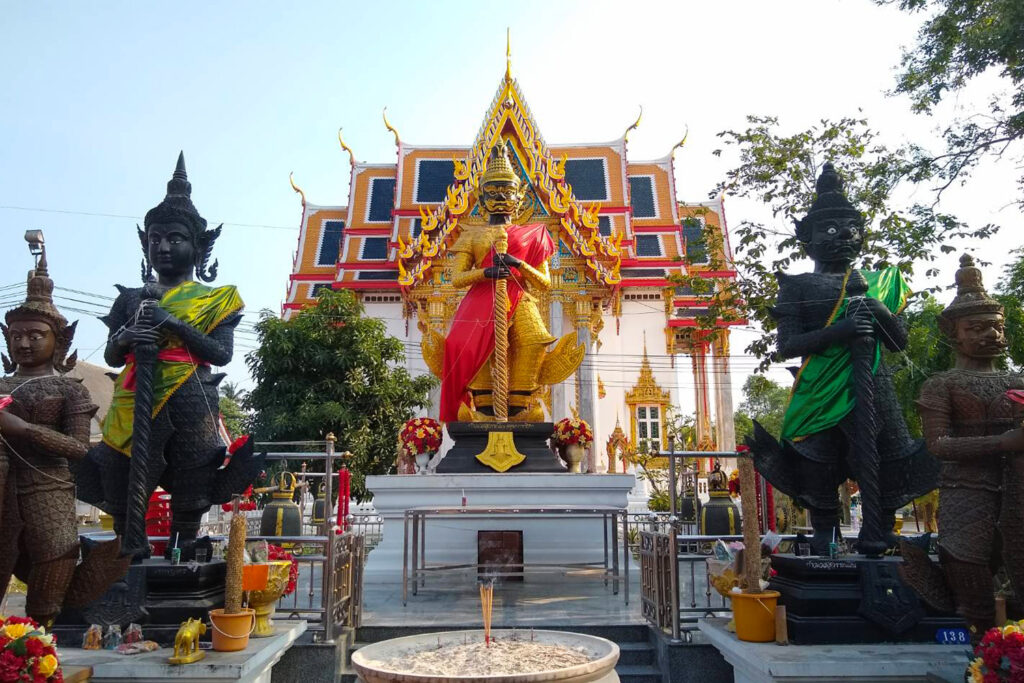
Wat Chulamanee is an ancient temple located along the banks of Amphawa Canal. It was built during the late Ayutthaya period, in the reign of King Prasat Thong. Originally known as “Wat Mae Chao Thip,” the temple was named after Lady Thip, who supported and restored the temple during that time. In the past, Wat Chulamanee served as a school for teaching Thai and Khmer languages. Today, the temple welcomes devotees and visitors to pay their respects at various sacred sites. Among the most popular are the preserved bodies of Luang Pho Nueng Kovit, a renowned monk and disciple of Luang Pho Chaem, and Thao Wessuwan. Among those who enjoy trying their luck, it is widely believed that prayers made here can grant wishes, especially those related to wealth and good fortune.
8. Wat Sawang Arom, Nakhon Pathom
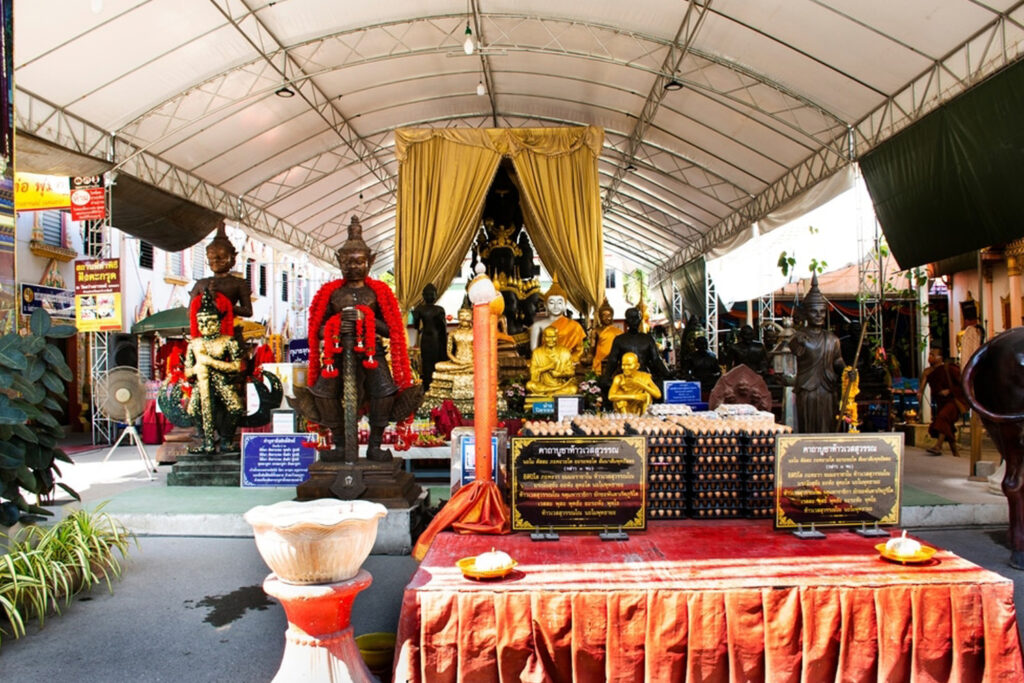
Wat Sawang Arom is located in Nakhon Chai Si District, Nakhon Pathom Province. The temple is well known for dispelling misfortune, resolving conflicts associated with one’s zodiac year, and enhancing one’s fortune. It is one of the temples that attracts many devoted worshippers.The temple houses numerous deities and sacred objects, but the most popular among visitors are Grandfather Sri Sutho and Grandmother Pathumma. According to local belief, worshippers should hold the Naga noose of Grandfather Sri Sutho while making their wishes. Many people also pray to Ta Thong Ngiu Rai, who is believed to bring good fortune to those who come to seek blessings.
9. Wat Thap Kradan, Suphan Buri
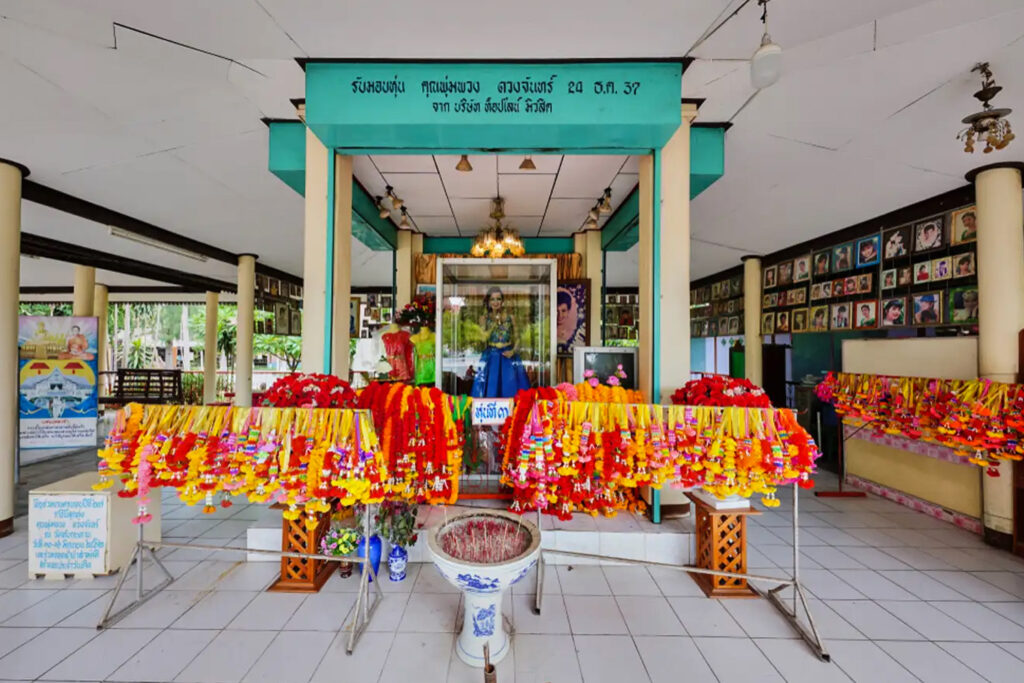
When it comes to Thailand’s legendary queen of Luk Thung music, few people would fail to recognize Phumphuang Duangchan. A statue in her likeness stands at Wat Thap Kradan in Suphan Buri. Every year, a memorial event is held in her honor, attracting large crowds of visitors. Many singers and artists from the Luk Thung music industry gather to perform songs in remembrance of her. Around this time each year, lottery enthusiasts also flock to the temple in search of lucky numbers, especially as the anniversary approaches. Many people believe that their wishes have come true after visiting the site.
10. Wat Phrommani (Luang Pho Pak Daeng), Nakhon Nayok
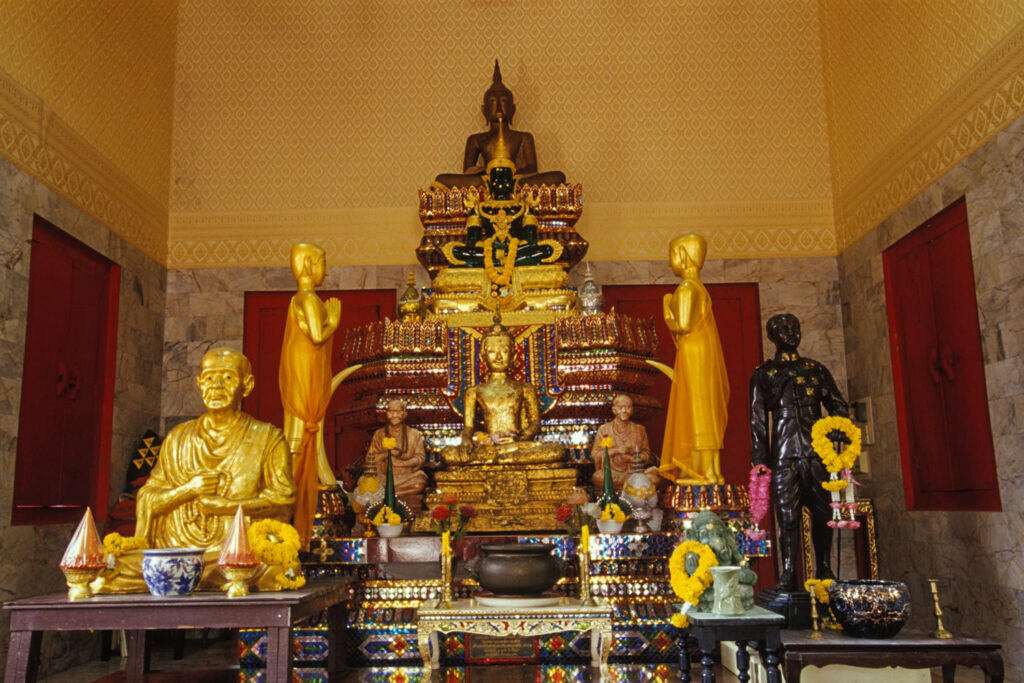
When mentioning Wat Luang Pho Pak Daeng, many people are likely to be familiar with it, especially lottery enthusiasts, as the temple is widely known for its reputation for revealing lucky numbers. As the lottery draw date approaches, large numbers of visitors come to the temple, often causing long lines of traffic in front of the temple.
Wat Phrommani, also known as Wat Luang Pho Pak Daeng, was built during the reign of King Rama V and has a history spanning more than a century. Enshrined inside the temple is Luang Pho Pak Daeng, a seated Buddha image in the meditation posture cast in bronze in the Lan Xang artistic style, with a robe decorated with Spanish cherry flower patterns. However, the most striking feature is the Buddha image’s red lips, which is why local people affectionately call it “Luang Pho Pak Daeng” (the Red-Lipped Buddha).
11. Wat Pa Kham Chanod, Udon Thani
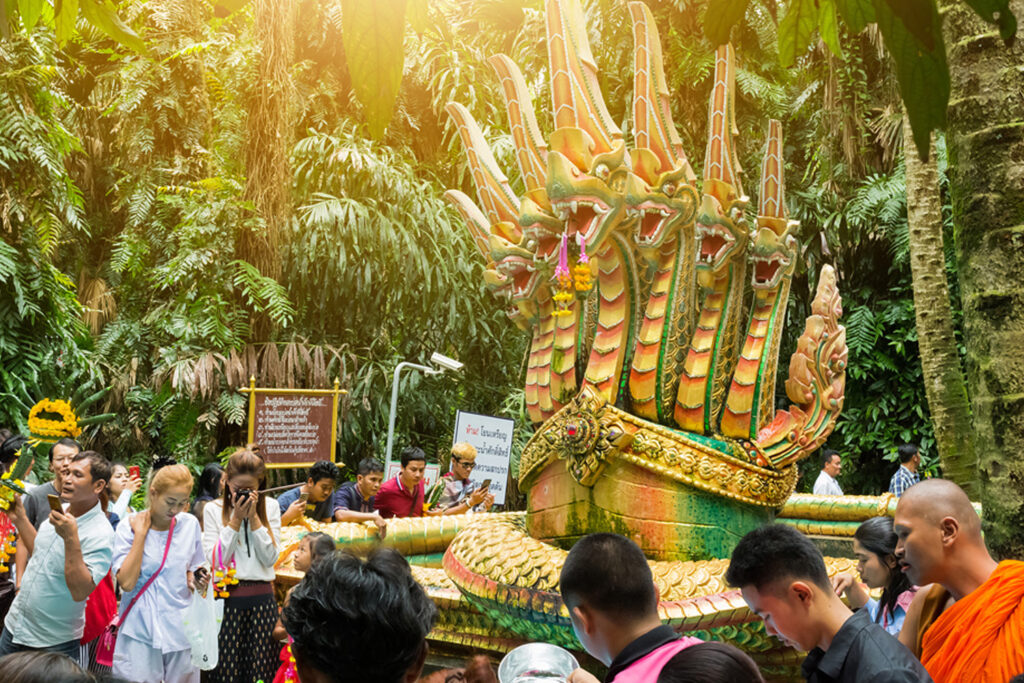
Wat Pa Kham Chanod is one of the most popular destinations for people who enjoy trying their luck. The site is a floating island covering approximately 20 rai and is home to a unique species of tree known as the “Chanod tree,” which grows only on this island. According to local beliefs, the island rises with the water level during high tide and lowers when the water recedes, without ever sinking. As a result, local residents believe that Kham Chanod is the dwelling place of the Nagas. There is also a sacred pond known as the “Naga Vent.” It is said that people once joined three bamboo poles together and lowered them into the water, yet they could not reach the bottom. Strangely, however, coins thrown into the pond can still be clearly seen. Because of these mysterious stories, Kham Chanod has become another popular destination for those seeking good fortune and lucky numbers.
12. Wat Chedi (Ai Khai), Nakhon Si Thammarat
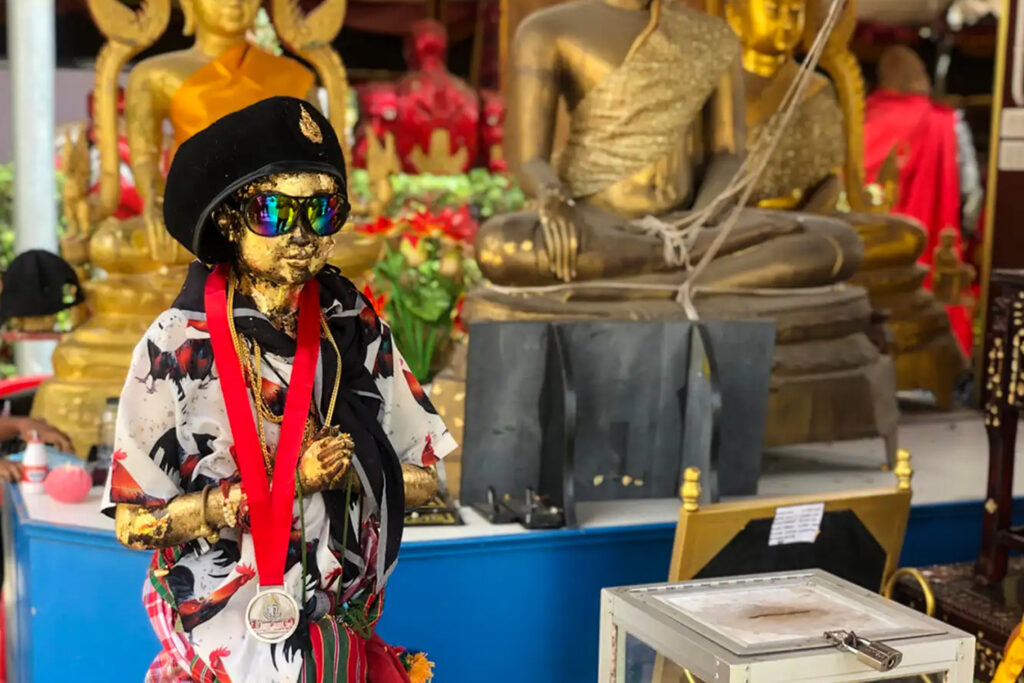
Wat Chedi, also known as Wat Ai Khai, is located in Sichon District, Nakhon Si Thammarat. It is believed that the temple was built thousands of years ago and was later abandoned, leaving only an ancient chedi in the area where the present-day ordination hall now stands. In 1957, the temple was restored, and monks once again came to reside there. The highlight of Wat Chedi is Ai Khai, a statue of a young boy enshrined in a pavilion. There are many legends surrounding Ai Khai, but what draws the most attention is the belief that he brings good fortune and success. Many people who come to pray to Ai Khai believe that their wishes have been granted, and they later return to fulfill their vows. As a result, Ai Khai of Wat Chedi has become well known among devotees and those who try their luck.
If you enjoy our articles, feel free to visit the website ARM’S ARMOR for more content. You can also like and follow the ARM’S ARMOR page. We have many more interesting articles waiting for you.