The worship of Hindu deities has long been a part of Thai culture. Over the years, Hindu beliefs have become increasingly influential in Thailand, especially among those who believe in worshipping Hindu gods to enhance career success, attract good fortune, and improve their luck. Some people even keep statues of these deities at home for worship. Faith in sacred beings has long been a part of Thai society. However, these practices are ultimately based on each individual’s personal belief and devotion. Let’s take a look at the ten Hindu deities that are most widely worshipped in Thailand.
1. Indra
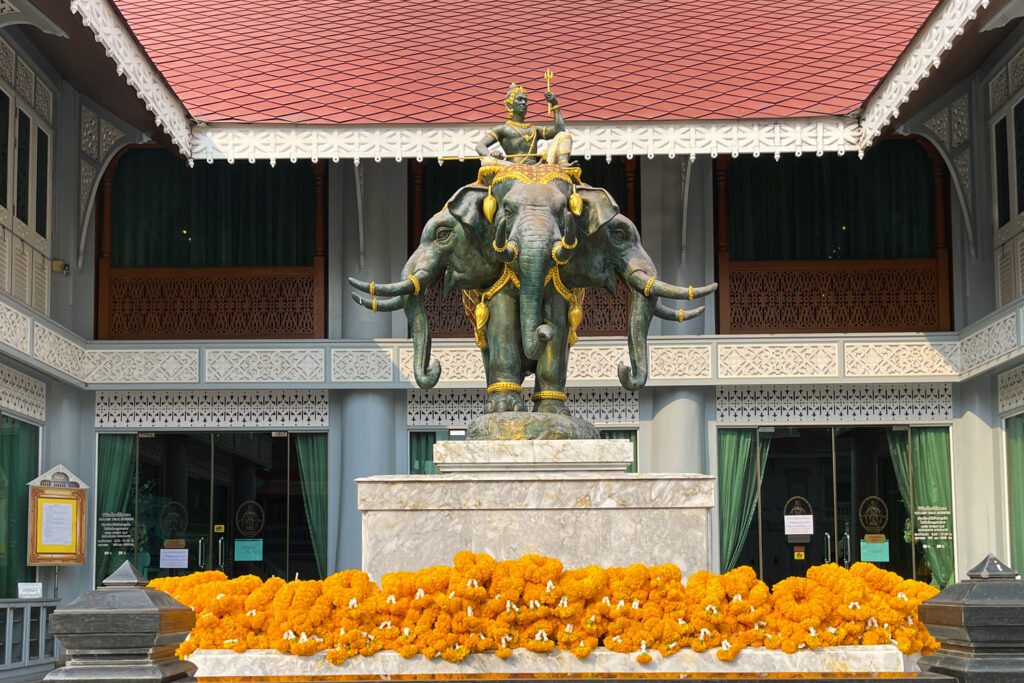
Indra is regarded as the ruler of the Trāyastriṃśa Heaven and the god of rain, thunder, and lightning. He is also the protector of righteousness. Indra is commonly depicted riding Airavata, the divine white elephant with three heads, although some traditions describe it as having thirty-three heads. His principal weapon is the Vajra, or thunderbolt, which is believed to summon rain, thunder, and lightning, split mountains, and even cleave the sky. According to traditional scriptures, Indra’s body is green, while some beliefs describe it as golden yellow or dark red. He is often depicted wearing a serpent as a necklace and adorned with precious jewels. Indra is also believed to possess the power to change his form and become invisible.
2. Shiva
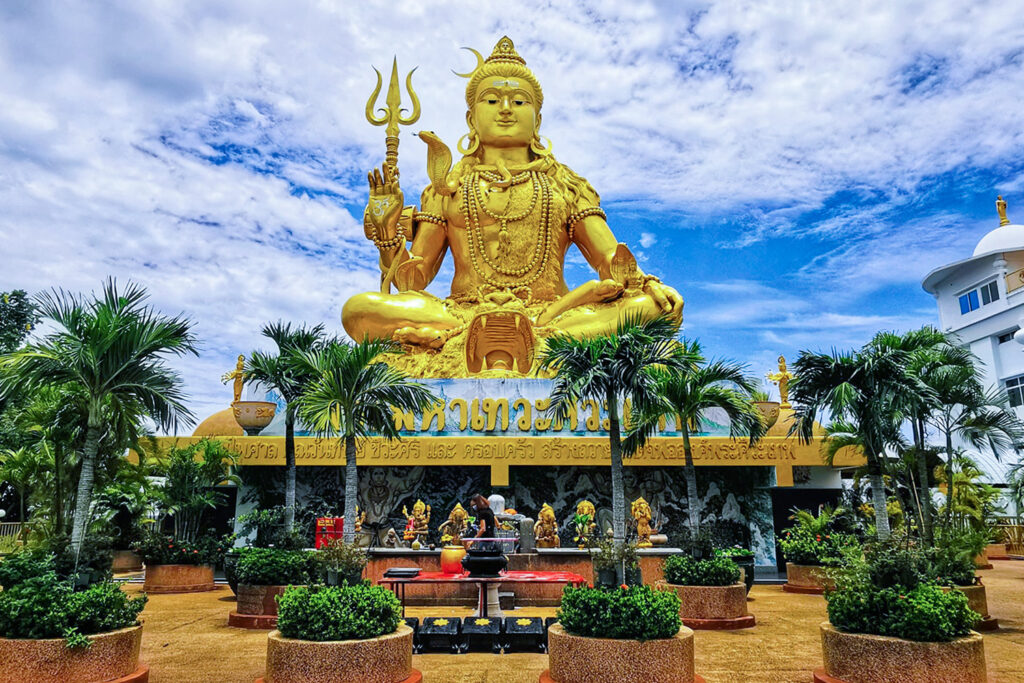
Shiva is one of the principal deities in Hinduism and a member of the Trimurti, the three supreme deities consisting of Brahma (the Creator), Vishnu (the Preserver), and Shiva (the Destroyer and the Recreator). Shiva represents destruction and renewal, symbolizing transformation and rebirth. He is often depicted as an ascetic yogi who has withdrawn from worldly life to practice deep meditation. One of his most recognizable symbols is the trident (Trishula), representing divine power. Shiva is commonly portrayed seated on a tiger skin or together with his sacred bull, Nandi, and his body is traditionally covered with white sacred ash.
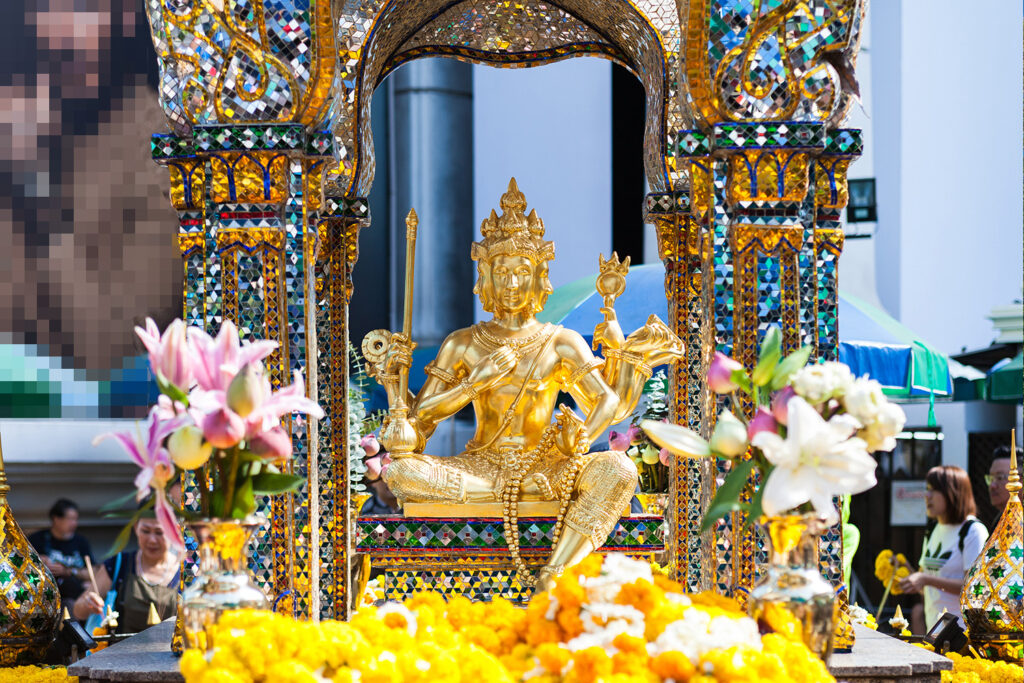
3. Erawan Brahma
Brahma is one of the three supreme deities in Hinduism, together with Vishnu (the Preserver) and Shiva (the Destroyer and the Recreator). He is regarded as the creator of the universe and all living beings. Brahma is commonly depicted with four faces, symbolizing wisdom and the ability to see in all four directions, representing his all-encompassing knowledge of the universe. In Thailand, Brahma is deeply revered. The Erawan Shrine, located at the Ratchaprasong Intersection in Bangkok, is one of the country’s most famous sacred sites, attracting both Thai people and international visitors who come to pray for blessings and good fortune.
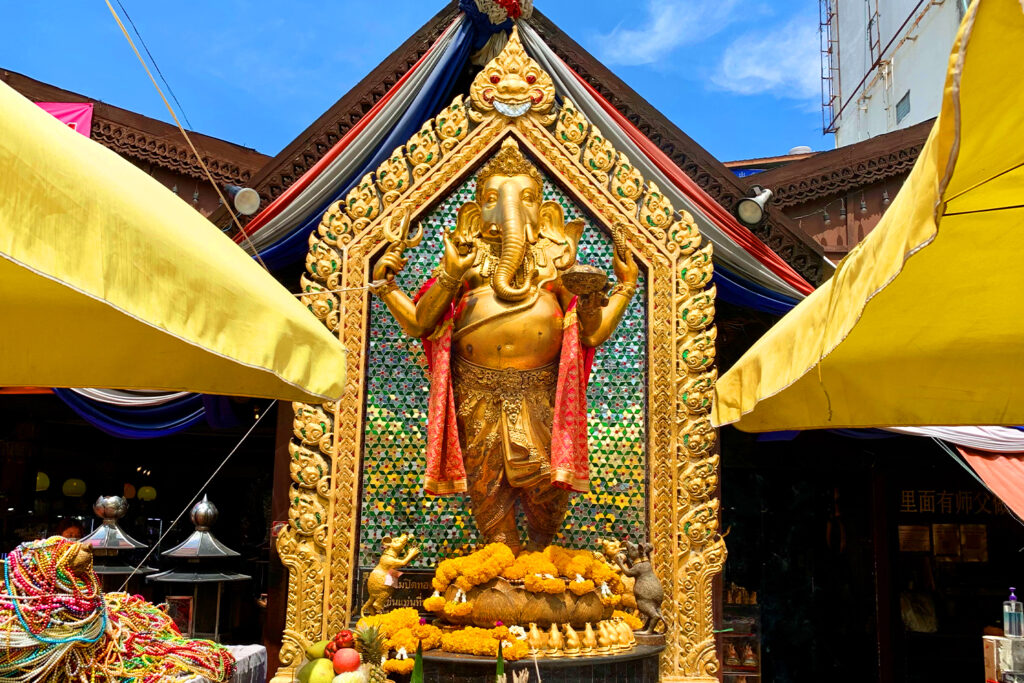
4. Ganesha
Ganesha, also known as Ganesh, is the Hindu deity of success, wisdom, and knowledge. He has the head of an elephant and the body of a human. Ganesha is the son of Shiva and Parvati. There are many legends about his origin, one of which says that Parvati created him from clay or sacred paste. Ganesha is widely known as the “Remover of Obstacles” and is commonly worshipped before beginning new endeavors, such as starting a business, taking examinations, traveling, or other important milestones in life, in the hope of achieving success and a smooth path ahead. In Thailand, Ganesha is one of the most widely worshipped Hindu deities. Popular places of worship include Sri Maha Mariamman Temple (Wat Khaek Silom) and the Ganesha Shrine at Huai Khwang Intersection.
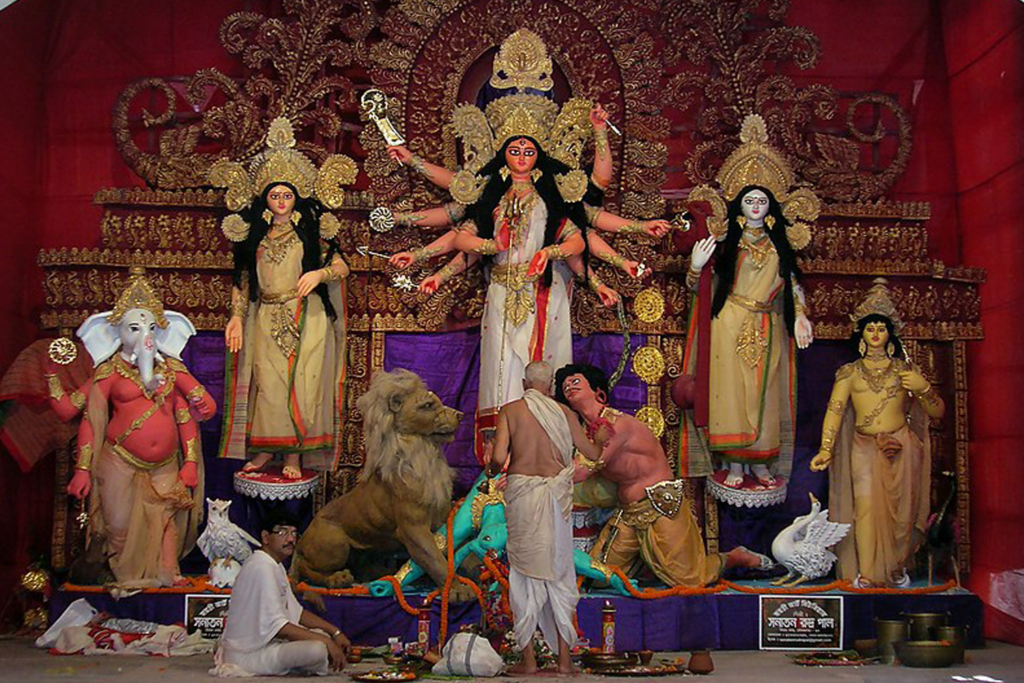
5. Uma Devi (Parvati)
Uma Devi, also known as Parvati, is the consort of Shiva, one of the three principal deities of the Trimurti. She is known by many names and manifestations, including Parvati in her role as a mother, Durga as the warrior goddess, and Kali as the goddess of destruction. Each manifestation represents different qualities and attributes. According to Hindu mythology, Uma is the daughter of Himavat, the god of the Himalayas, and Mena (Menā). She is worshipped as the goddess of power and purity, and is believed to bring peace and balance to the universe and to human life.
Uma Devi is also the mother of Ganesha and Kartikeya (Skanda), both of whom play important roles in Hindu mythology. She is commonly depicted as a beautiful goddess wearing elaborate garments and ornaments, and is often associated with symbols of divine power and purity, such as the lotus and various sacred weapons.
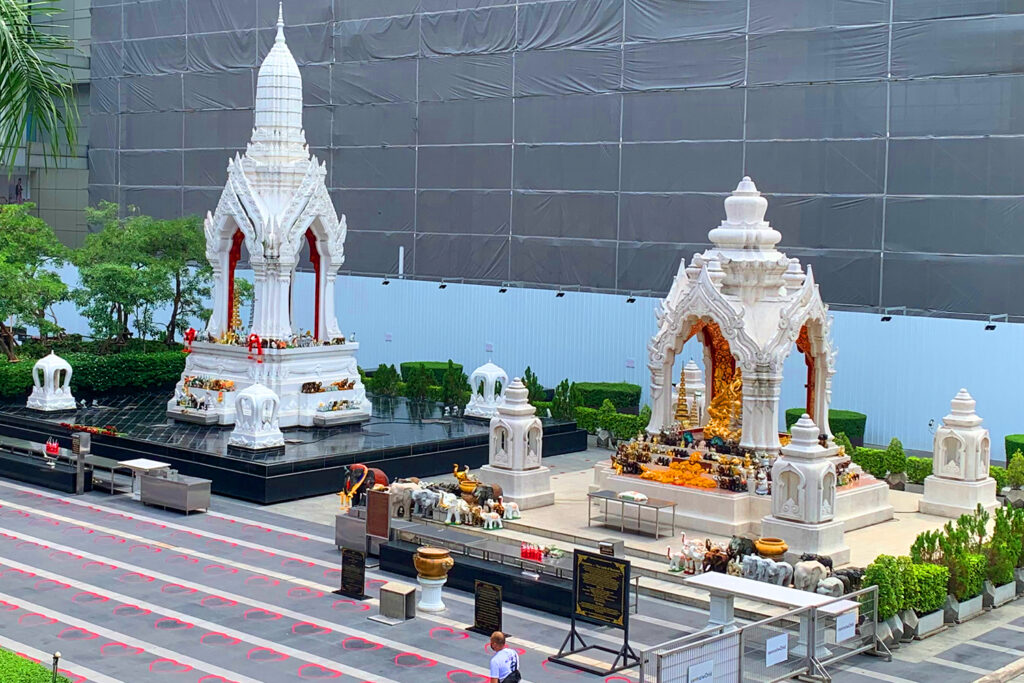
6. Trimurti
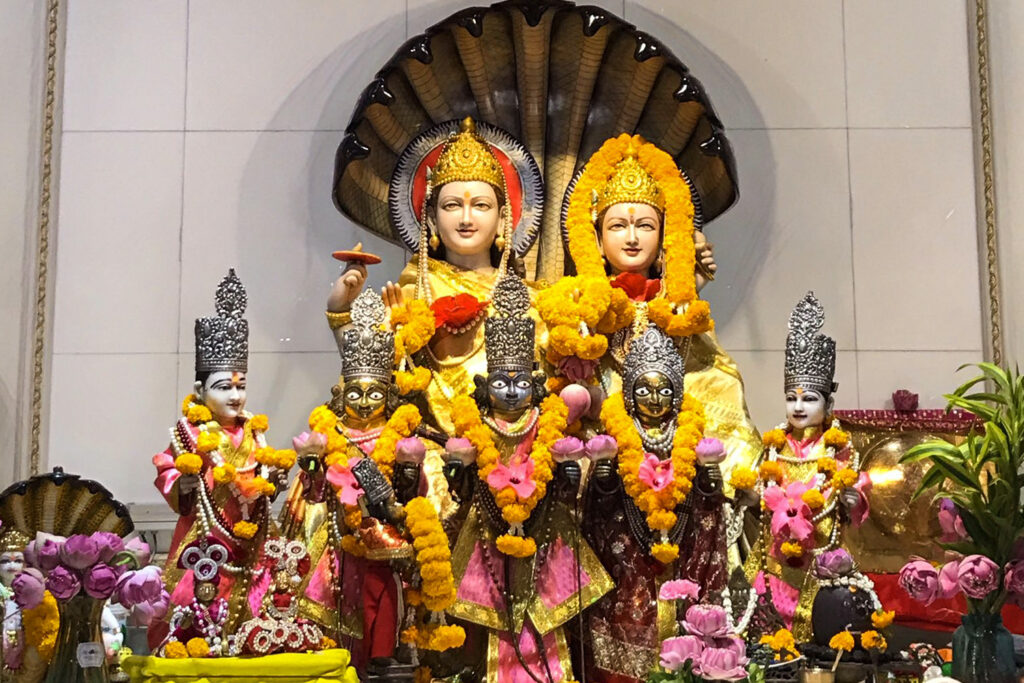
Trimurti literally means “three forms” and refers to the unified form of the three principal deities in Hinduism: Brahma (the Creator), Vishnu (the Preserver), and Shiva (the Destroyer and the Recreator). Together, these three deities represent the divine power responsible for creation, preservation, and transformation throughout the universe. In Thailand, the most well-known place associated with Trimurti worship is the Trimurti Shrine in front of CentralWorld. However, according to Hindu iconography, the deity enshrined there is actually Sadashiva (Panchamukha Shiva), the five-faced form of Shiva, rather than the Trimurti. The image of the Trimurti that conforms to traditional Hindu iconography is enshrined at the Trimurti Shrine beside Empire Tower.
7. Vishnu
Vishnu is one of the supreme deities in Hinduism and a central figure of the Trimurti. As the Preserver, he is responsible for protecting the universe and maintaining cosmic balance whenever disasters or forces of chaos threaten peace. According to Hindu belief, Vishnu descends to the world in various incarnations whenever it is necessary to restore order and uphold balance. Vishnu is traditionally depicted with blue skin and four arms, each holding a sacred object: the Sudarshana Chakra (symbolizing justice), the Kaumodaki mace (symbolizing power), the Shankha (symbolizing the sacred sound), and the lotus (symbolizing purity). He is often portrayed reclining on Ananta, the divine serpent, or riding Garuda, his sacred mount.
8. Kali
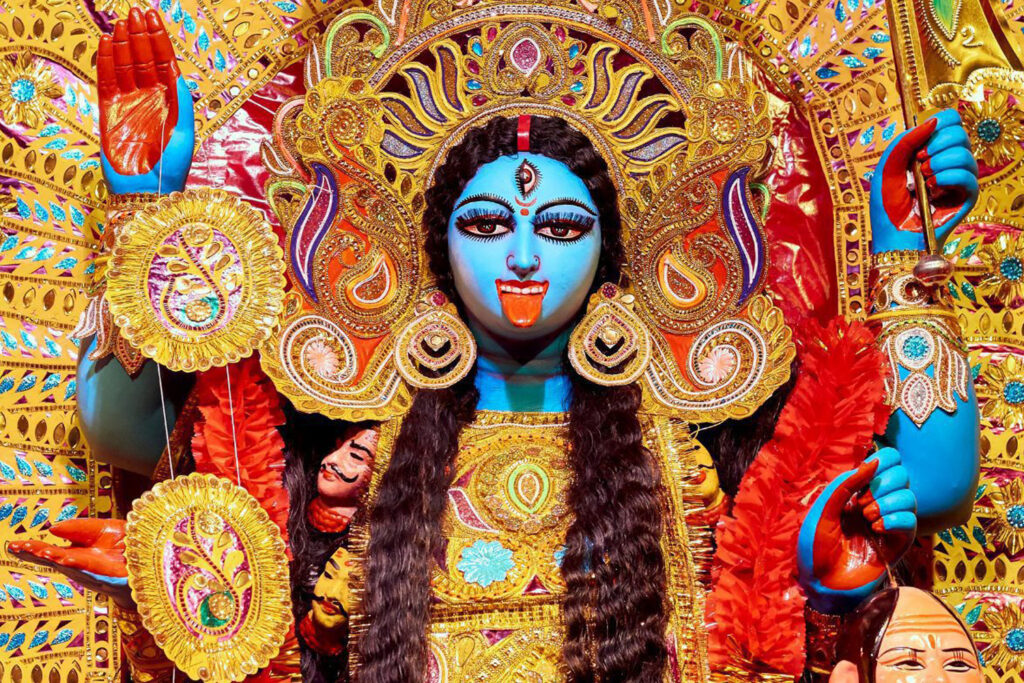
Kali is one of the manifestations of Uma Devi (Parvati), the consort of Shiva. She symbolizes power, destruction, and protection against evil. Although she is known as the goddess of death and transformation, she is also revered as a compassionate protector of those who worship her with sincere devotion. Kali is traditionally depicted with black or dark blue skin, wearing a garland of human skulls, and having four or ten arms, each carrying different weapons used to destroy evil. She is also recognized by her long protruding tongue, which, according to some legends, resulted from drinking the blood of the demon Raktabija. Kali is often portrayed standing upon the body of Shiva, symbolizing her overwhelming divine power.
According to Hindu mythology, Kali manifested when Uma Devi sought to defeat the demon Raktabija, whose blood could create a new demon every time a drop touched the ground. Kali drank his blood to prevent new demons from being born and ultimately destroyed him. In Thailand, one of the most popular places to worship Kali is Sri Maha Mariamman Temple (Wat Khaek Silom), where the Navaratri Festival is held annually in her honor.
9. Lakshmi
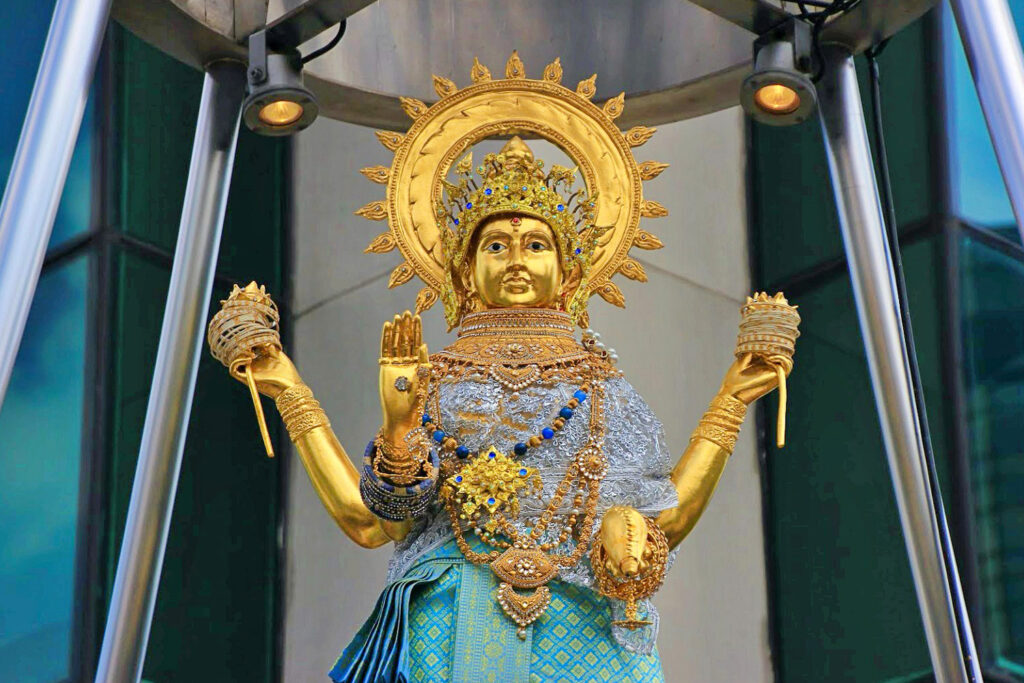
Lakshmi is the Hindu goddess of wealth, prosperity, and beauty. She is the consort of Vishnu, one of the deities of the Trimurti, and is widely worshipped as the goddess who bestows prosperity in both financial matters and family life. Lakshmi is commonly depicted as a beautiful goddess dressed in garments adorned with gold and precious jewels. She has four arms, holding lotus flowers, while gold coins flow from one of her hands. These symbols represent purity, wealth, and abundance. She is often portrayed standing or seated upon a lotus, accompanied by two elephants pouring water over her from ceremonial vessels, symbolizing everlasting prosperity and good fortune. According to Hindu mythology, Lakshmi emerged during the Churning of the Ocean of Milk, when the gods and demons worked together to churn the cosmic ocean in search of Amrita, the nectar of immortality. During this event, Lakshmi arose from the ocean together with many other auspicious treasures.
10. Saraswati
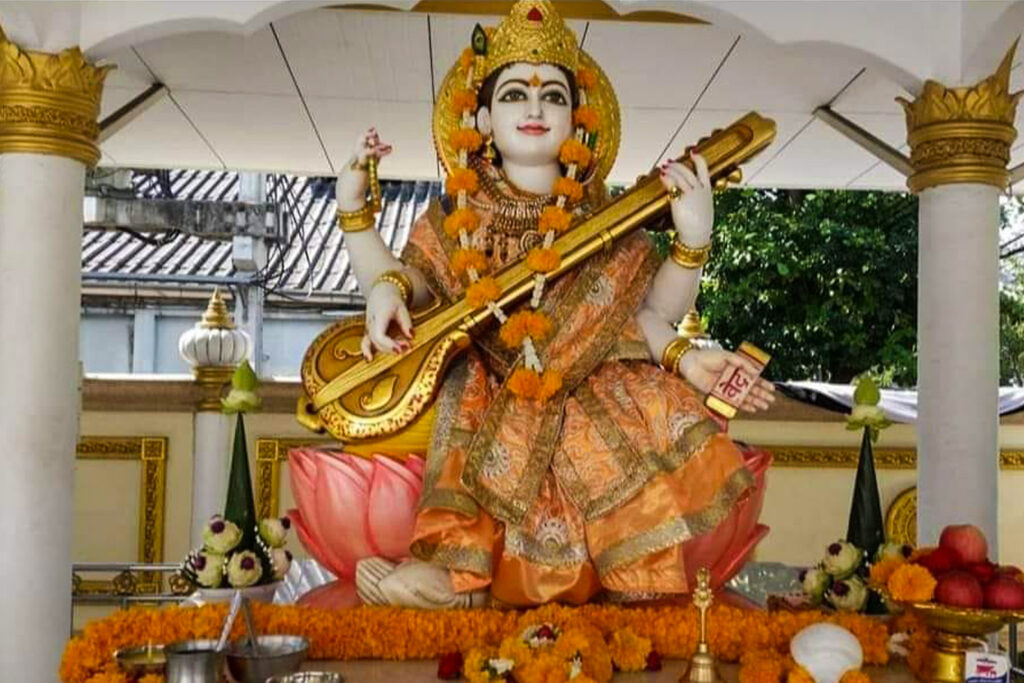
Saraswati is the Hindu goddess of knowledge, wisdom, arts, and music. She is revered as the source of learning and inspiration for students, writers, musicians, and artists. Saraswati is usually portrayed as a graceful and elegant goddess.
Saraswati is commonly depicted with the following characteristics:
Four arms: She holds sacred objects symbolizing knowledge and the arts, such as the Vedas, a veena, and a rosary.
Seated on a lotus: Symbolizing purity and beauty.
White complexion: Representing purity, wisdom, and enlightenment.
If you enjoyed this article and would like to read more, please visit the ARM’S ARMOR website. You can also like and follow the ARM’S ARMOR Facebook page to stay updated with our latest content.