
Visiting temples and making merit has long been an important part of Thai culture. Whether in the past or the present day, when people experience stress, sadness, or difficulties in life, many choose to visit temples to calm their minds and find inner peace. Spending time at a temple helps ease emotional burdens and brings a sense of comfort. On Buddhist holy days and other important religious occasions, Thai people also commonly visit temples to make merit, believing that good deeds will bring happiness, prosperity, and blessings into their lives. The New Year holiday is no exception, as many people pay respects to sacred places and revere Buddha images to welcome a fresh start and an auspicious year ahead. In this article, our team would like to introduce nine renowned temples in Bangkok where many people visit to make merit and seek blessings.
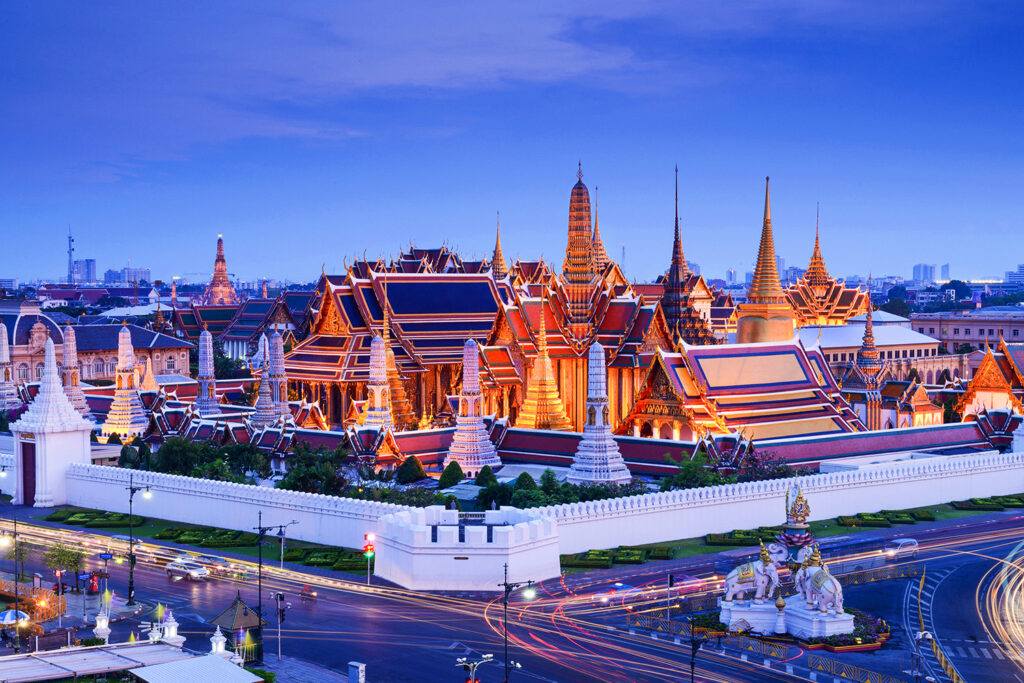
Wat Phra Si Rattana Satsadaram (The Temple of the Emerald Buddha)
Wat Phra Kaew, officially known as Wat Phra Si Rattana Satsadaram, is Thailand’s most sacred royal temple and one of the country’s most important cultural landmarks. Renowned for its magnificent architecture and exquisite craftsmanship, the temple was commissioned by King Rama I in 1782, at the same time as the establishment of Rattanakosin, the present capital of Thailand. The temple enshrines the Phra Phuttha Maha Mani Rattana Patimakon, better known as the Emerald Buddha. This highly revered Buddha image, created in the early Chiang Saen artistic style, is carved from a single piece of dark green jade and depicted in the meditation posture. Many Thai people believe that paying respect to the Emerald Buddha brings prosperity, wealth, and abundance. Another highlight is the Royal Pantheon (Prasat Phra Thep Bidon), the only four-gabled royal pavilion in Thailand decorated entirely with glazed ceramic tiles. Inside are bronze statues of the nine kings of the Chakri Dynasty, where visitors can pay their respects.
Location: Na Phra Lan Road, Phra Borom Maha Ratchawang Subdistrict, Phra Nakhon District, Bangkok 10200
Admission: Free for Thai nationals; 500 THB for foreign visitors
Opening Hours: Daily, 8:30 a.m. – 3:30 p.m.
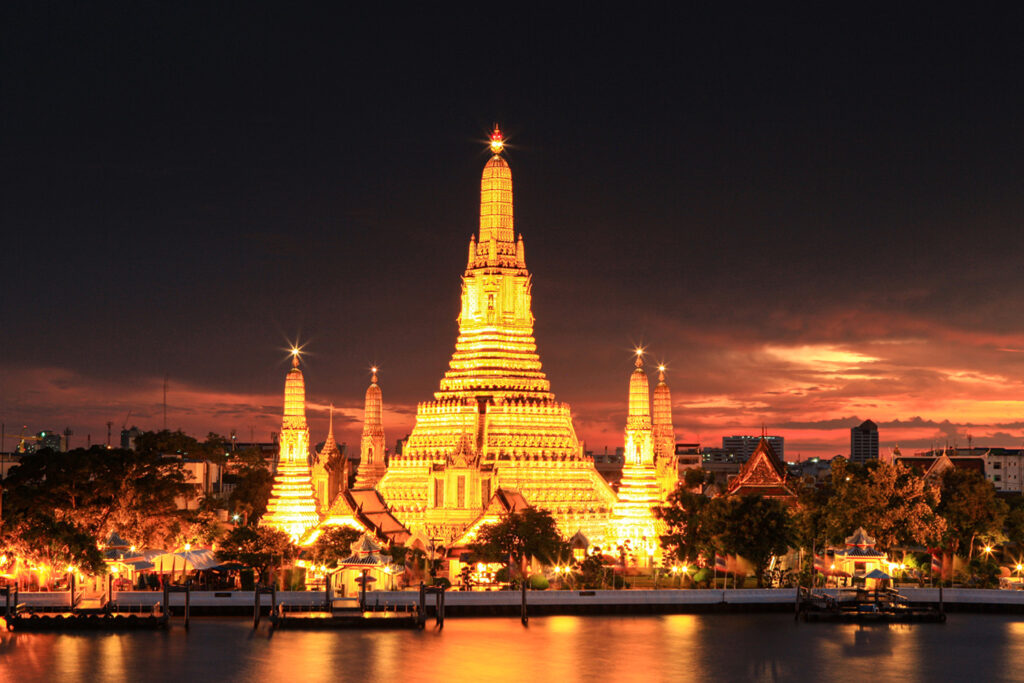
Wat Arun Ratchawararam Ratchawaramahawihan (Temple of Dawn)
Wat Arun, officially known as Wat Arun Ratchawararam Ratchawaramahawihan, is one of Bangkok’s most iconic temples. During the reign of King Taksin the Great, after he established Thonburi as the capital in 1767, he arrived at this temple at daybreak. In commemoration of that moment, the temple was renamed Wat Chaeng (“Temple of Dawn”), a name that later evolved into Wat Arun. The temple’s most recognizable landmark is its magnificent central prang (Khmer-style tower), beautifully decorated with colorful porcelain and ceramic mosaics. Guarding the entrance to the ordination hall are two giant guardian statues: Tosakanth, the green giant, and Sahassadecha, the white giant. Inside the ordination hall sits Phra Buddha Dhammamisraraj Lokathat Dilok, a Rattanakosin-period Buddha image in the Maravijaya (Subduing Mara) posture. Many Thai people believe that paying respect at Wat Arun’s prang brings prosperity, success, and a bright future.
Location: 34 Wang Doem Road, Wat Arun Subdistrict, Bangkok Yai District, Bangkok 10600
Admission: Free for Thai nationals; 100 THB for foreign visitors
Opening Hours: Daily, 8:00 a.m. – 6:00 p.m.
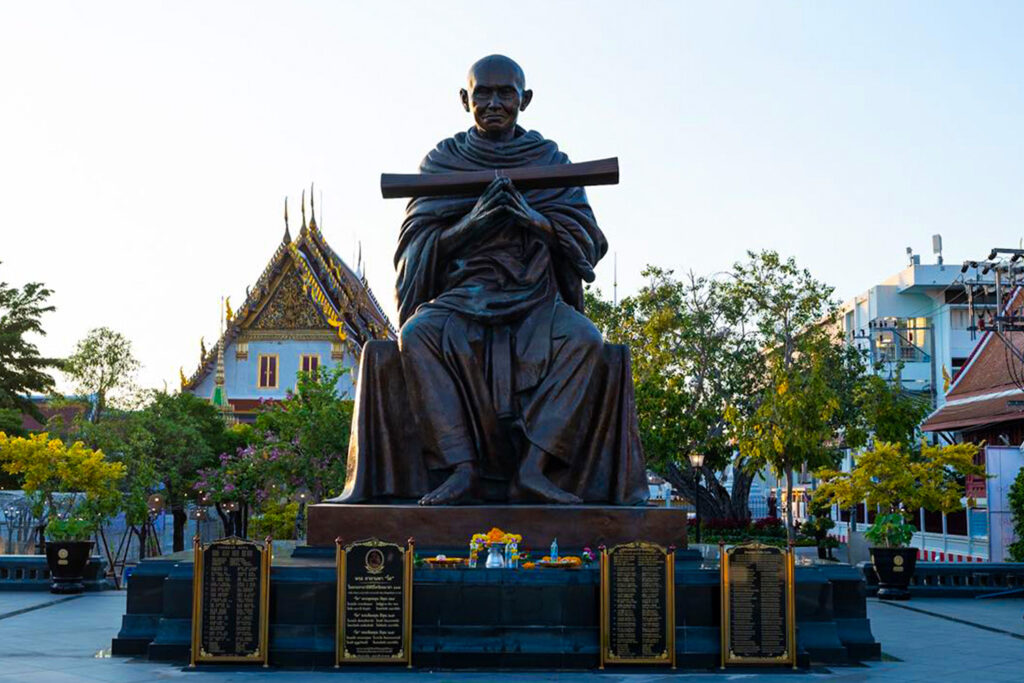
Wat Rakhang Khositaram Woramahawihan (Wat Rakhang)
Wat Rakhang, formerly known as Wat Bang Wa Yai, is an ancient temple dating back to the Ayutthaya Kingdom. During the reign of King Taksin the Great, it was elevated to the status of a royal monastery. The temple is also closely associated with Somdet Phra Phutthachan (To Phrommarangsi), one of Thailand’s most revered Buddhist monks, who once resided here. On one occasion, when King Rama V visited the temple to present the annual Kathina robes, he remarked to those accompanying him: “No other temple is quite like Wat Rakhang. Every time I enter the ordination hall, the principal Buddha image seems to greet the sky with a smile.” Inspired by this, the King bestowed the Most Exalted Order of the White Elephant and the Ancient and Auspicious Order of the Nine Gems upon the principal Buddha image, giving rise to the well-known name “The Smiling Buddha.” According to local tradition, visitors should ring the temple bell after paying their respects. The ringing bell symbolizes a far-reaching reputation, and many people believe that worshipping at Wat Rakhang and ringing the bell will bring fame, recognition, and success throughout the year.
Location: 250 Arun Amarin Road, Siriraj Subdistrict, Bangkok Noi District, Bangkok 10700
Admission: Free admission for both Thai and foreign visitors
Opening Hours: Daily, 8:00 a.m. – 4:00 p.m.
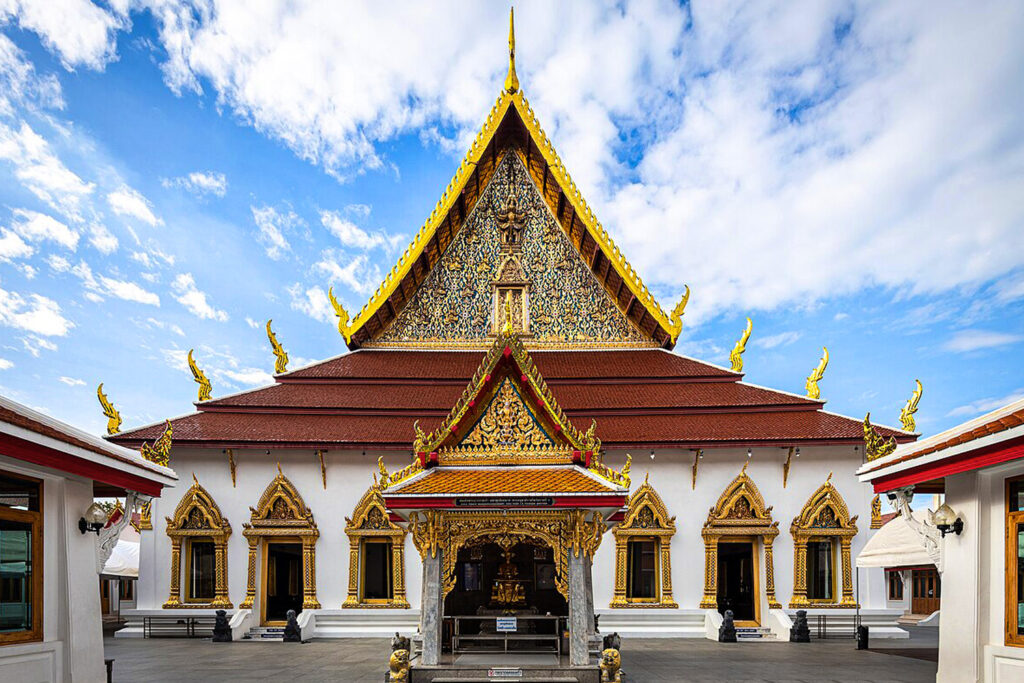
Wat Chana Songkhram Ratchaworamahawihanวัดชนะสงครามราชวรมหาวิหาร
Located directly opposite Khao San Road, Wat Chana Songkhram Ratchaworamahawihan is an ancient temple dating back to the Ayutthaya period. Enshrined inside its main ordination hall is the principal Buddha image Phra Buddha Narasi Trilok Chet, affectionately known as Luang Pho Pu. The image is depicted in the Maravijaya (Subduing Mara) posture. Surrounding Luang Pho Pu are 16 Buddha images, symbolizing the Buddha’s victorious virtues over all obstacles and enemies. Many devotees believe that paying respect to Luang Pho Pu and Somdet Krom Phra Ratchawang Bowon Maha Surasinghanat will bring victory over challenges, help overcome obstacles, and lead to success in life.
Location: 77 Chakraphong Road, Chana Songkhram Subdistrict, Phra Nakhon District, Bangkok 10200
Admission: Free for both Thai and foreign visitors
Opening Hours: Daily, 8:00 a.m. – 4:00 p.m.
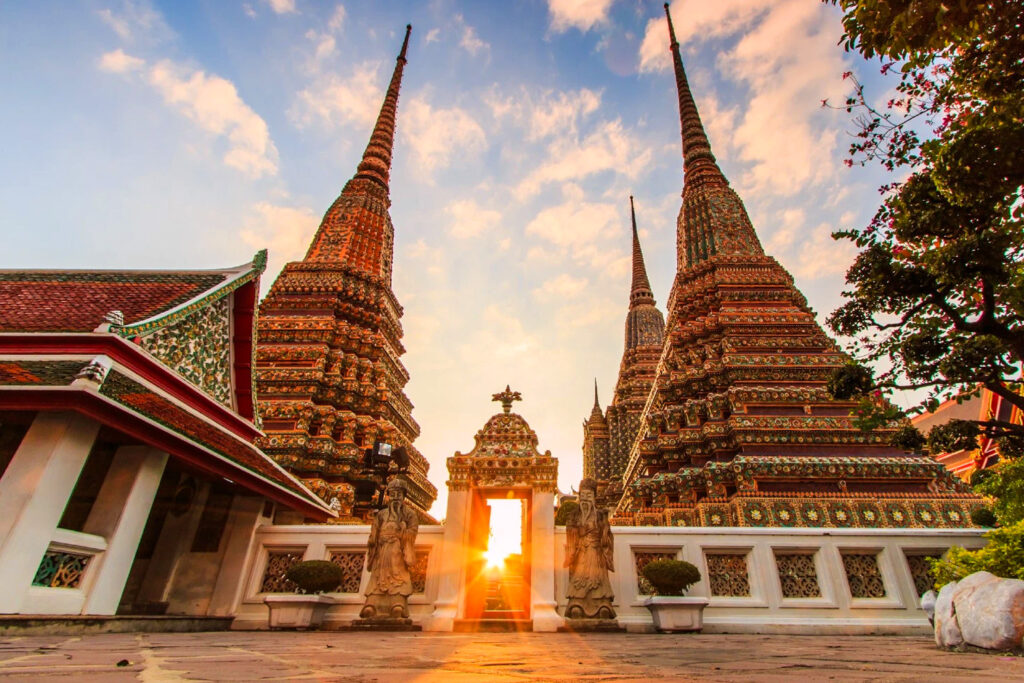
Wat Phra Chetuphon Wimon Mangkhalaram Ratchaworamahawihan (Wat Pho)
When people think of Wat Pho, officially known as Wat Phra Chetuphon Wimon Mangkhalaram Ratchaworamahawihan, they often think of traditional Thai massage, for which the temple is world-famous. To this day, Wat Pho continues to offer courses in traditional Thai massage. Often regarded as Thailand’s first public university, Wat Pho served as a center of learning for a wide range of disciplines. In 2008, UNESCO recognized the temple’s ancient inscriptions under the Memory of the World Register for Asia and the Pacific. Another highlight of the temple is its collection of 24 hermit statues demonstrating traditional Thai stretching and self-massage postures. Many visitors come to Wat Pho to pray for a peaceful and prosperous life, inspired by the Thai belief of living under the protective shade of the Bodhi and Banyan trees. Others visit to pray for love and fulfilling relationships before the magnificent Reclining Buddha, which is enshrined inside the Hall of the Reclining Buddha.
Location: 2 Sanam Chai Road, Phra Borom Maha Ratchawang Subdistrict, Phra Nakhon District, Bangkok 10200
Admission: Free for Thai nationals; 100 THB for foreign visitors
Opening Hours: Daily, 8:00 a.m. – 4:00 p.m
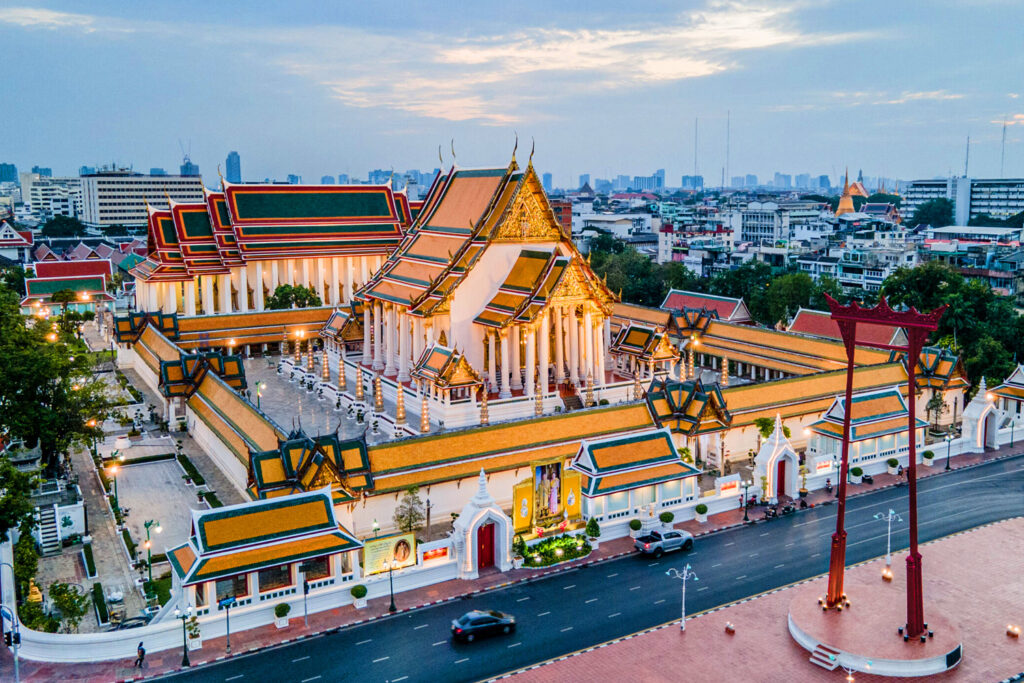
Wat Suthat Thepwararam Ratchaworamahawihan
Wat Suthat Thepwararam is the royal temple associated with King Rama VIII. Construction began during the reign of King Rama I, who bestowed upon it the original name Wat Maha Sutthawat. However, the temple was not completed during his reign. During the reign of King Rama II, construction continued, and the temple became popularly known as Wat Phra To, Wat Phra Yai, or Wat Sao Chingcha, due to its location near the famous Giant Swing. The temple was finally completed during the reign of King Rama III, who bestowed its present name, Wat Suthat Thepwararam. One of the temple’s most remarkable features is its ordination hall, which is the longest in Thailand. Many devotees visit to pay homage to Phra Si Sakyamuni, believing that doing so will bring good fortune and blessings. Students and learners also come to pay respects to Phra Sunthari Wani, as it is believed to bestow wisdom, knowledge, and academic success.
Location: 146 Bamrung Mueang Road, Wat Ratchabophit Subdistrict, Phra Nakhon District, Bangkok 10200
Admission: Free for Thai nationals; 20 THB for foreign visitors
Opening Hours: Daily, 8:00 a.m. – 4:00 p.m.
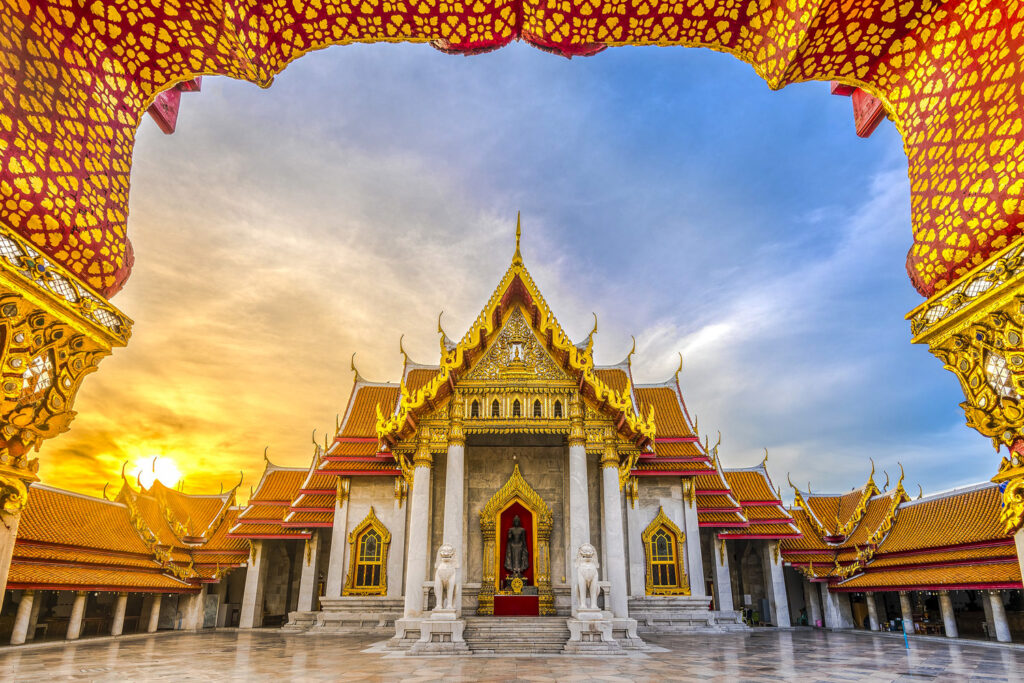
Wat Benchamabophit Dusitvanaram Ratchaworawihan (The Marble Temple)
Wat Benchamabophit Dusitvanaram, widely known as The Marble Temple, has been known by several names throughout its history, including Wat Laem and Wat Sai Thong. During the reign of King Rama IV, it was renamed Wat Benchabophit, meaning “the temple restored by five royal princes.” Later, during the reign of King Rama V, Dusit Palace was established, and the temple underwent a major expansion. On March 1, 1899, the King officially renamed it Wat Benchamabophit, meaning “the temple of King Rama V.” He also granted additional land known as Dusit Vanaram to serve as the temple’s consecrated boundary, and the temple has since been officially known as Wat Benchamabophit Dusitvanaram. The temple is celebrated for its elegant architecture and is especially famous for its extensive use of Italian Carrara marble, earning it the international nickname “The Marble Temple.” Inside the ordination hall stands a magnificent replica of Phra Phuttha Chinnarat, one of Thailand’s most revered Buddha images, originally enshrined at Wat Phra Si Rattana Mahathat in Phitsanulok Province. Many devotees believe that paying respect here will bring career success, smooth progress in work, and prosperity in life.
Location: 69 Rama V Road, Dusit Subdistrict, Dusit District, Bangkok 10300
Admission: Free for Thai nationals; 50 THB for foreign visitors
Opening Hours: Daily, 8:30 a.m. – 5:30 p.m.
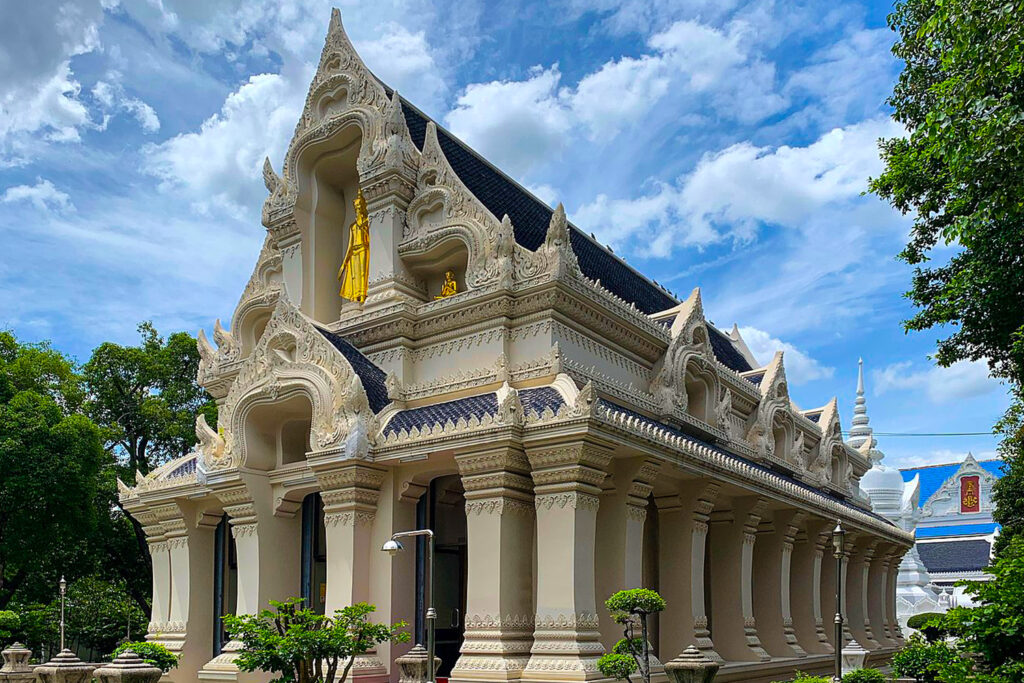
Wat Ratchathiwat Worawihan
Wat Ratchathiwat Worawihan literally means “the temple where the king resides.” It is historically significant as the first temple of the Dhammayut Nikaya, making it one of Thailand’s most important royal temples of the Dhammayut order. The temple stands along the eastern bank of the Chao Phraya River in Bangkok. One of its architectural highlights is the ordination hall, designed in a Khmer-inspired style reminiscent of Angkor Wat by Prince Narisara Nuwattiwong, one of Thailand’s greatest architects and artists. Inside the ordination hall are magnificent murals depicting the story of the Vessantara Jataka, the final birth story of the Buddha before his enlightenment. Many devotees believe that paying respects at this temple brings honor, prestige, career advancement, and stability in one’s professional life, making it a popular destination for those seeking promotion and success in their careers.
Location: 3 Samsen Road, Wachira Phayaban Subdistrict, Dusit District, Bangkok 10300
Admission: Free for both Thai and foreign visitors
Opening Hours: Daily, 7:00 a.m. – 6:00 p.m.
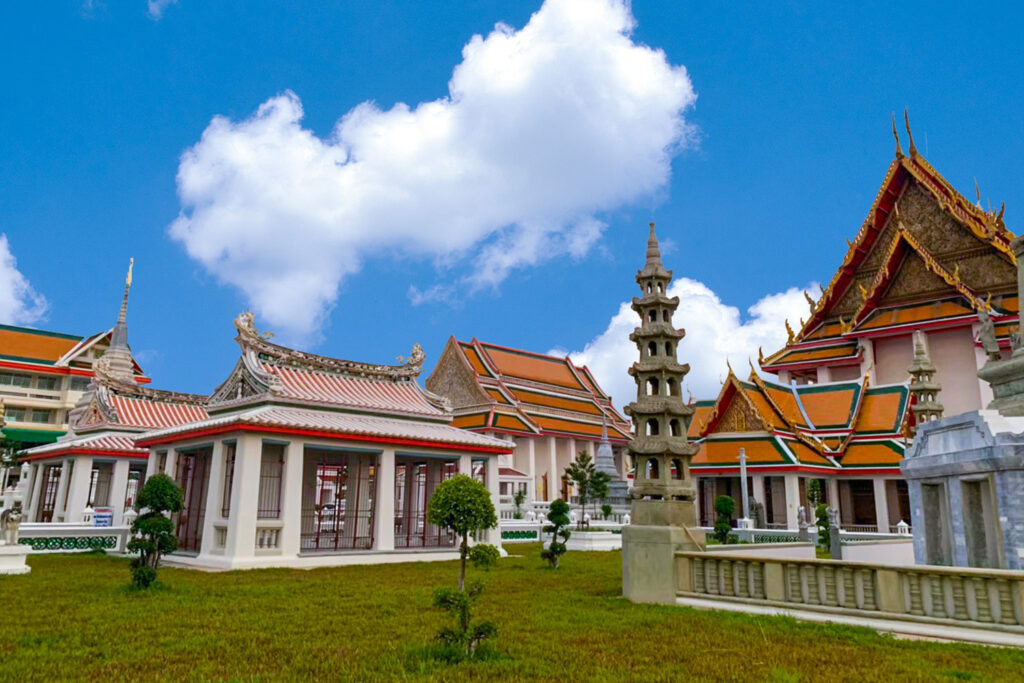
Wat Kalayanamit Woramahawihan
Wat Kalayanamit Woramahawihan, also widely known as Wat Sampokong, is an ancient temple on the Thonburi side of Bangkok, built during the reign of King Rama III. Situated along the banks of the Chao Phraya River, the temple was bestowed with its present name by King Rama III, who also commissioned the construction of the royal assembly hall and presented its principal Buddha image, Phra Phuttha Trai Rattana Nayok, affectionately known as Luang Pho To. This magnificent stucco Buddha image in the Maravijaya (Subduing Mara) posture is especially revered by the Thai-Chinese community, who commonly refer to it by its Chinese name Sam Po Hud Kong or simply Sampokong. Many devotees believe that paying respect to Luang Pho Sampokong brings good fortune, victory, and protection throughout the year. Visitors also come to pray for career success, academic achievement, financial prosperity, and thriving businesses. In addition, paying homage to the Palilai Buddha enshrined inside the ordination hall is believed to attract good friends and supportive relationships, reflecting the temple’s name, Kalayanamit, which means “good friendship.”
Location: 371 Soi Arun Amarin 6, Wat Kanlaya Subdistrict, Thonburi District, Bangkok 10600
Admission: Free admission
Opening Hours: Daily, 8:00 a.m. – 4:00 p.m.
What do you think of these nine famous temples in Bangkok? If you have the opportunity, try visiting all of them to pay your respects and receive blessings for good fortune. At the same time, remember that making merit should be a regular practice. According to Thai Buddhist belief, if we do not continue to accumulate new merit, the merits we have earned in the past will gradually diminish over time.If you enjoyed this article, you can explore more interesting content on the ARM’S ARMOR website. You can also follow the ARM’S ARMOR Facebook page to stay updated with our latest


