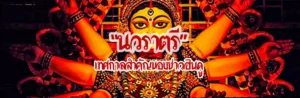
Navratri is a festival dedicated to Goddess Durga and the nine forms of Goddess Parvati. It is one of the most important festivals in the Hindu calendar. Hindus of Indian origin living around the world celebrate the festival, including those in Thailand. The word “Navratri” literally means “nine nights” in Sanskrit. However, the celebration actually lasts for ten days, with the tenth day, known as Vijayadashami or Dussehra, being the most important day of the festival. Navratri is observed four times each year, but the celebration held in late autumn is the most widely celebrated. It is regarded as a sacred period for worshipping Goddess Durga, although the traditions and ceremonies vary from one region to another.
Legends of the Navratri Festival
There is more than one legend associated with the Navratri festival. The three best-known legends are as follows:
– In eastern and southeastern India, people believe that Goddess Durga defeated the demon Mahishasura and restored peace to the world.
– In some parts of southern India, the festival celebrates the victory of Goddess Durga. Others believe it honors Goddess Kali, based on the Shakti tradition described in the Devi Mahatmyam, which teaches that the Supreme Power of the universe takes the form of the Divine Feminine.
– In parts of India such as Bihar, Odisha, West Bengal, and Assam, Navratri is regarded as the same festival as Durga Puja, which is the form of the celebration most familiar to many Thai people. According to this legend, Mahishasura was a fierce demon who received a boon from Brahma that no male—whether a god, a human, or another demon—could kill him. Misusing this power, he spread chaos throughout the world. In the end, the gods called upon Goddess Durga, who defeated and killed Mahishasura.
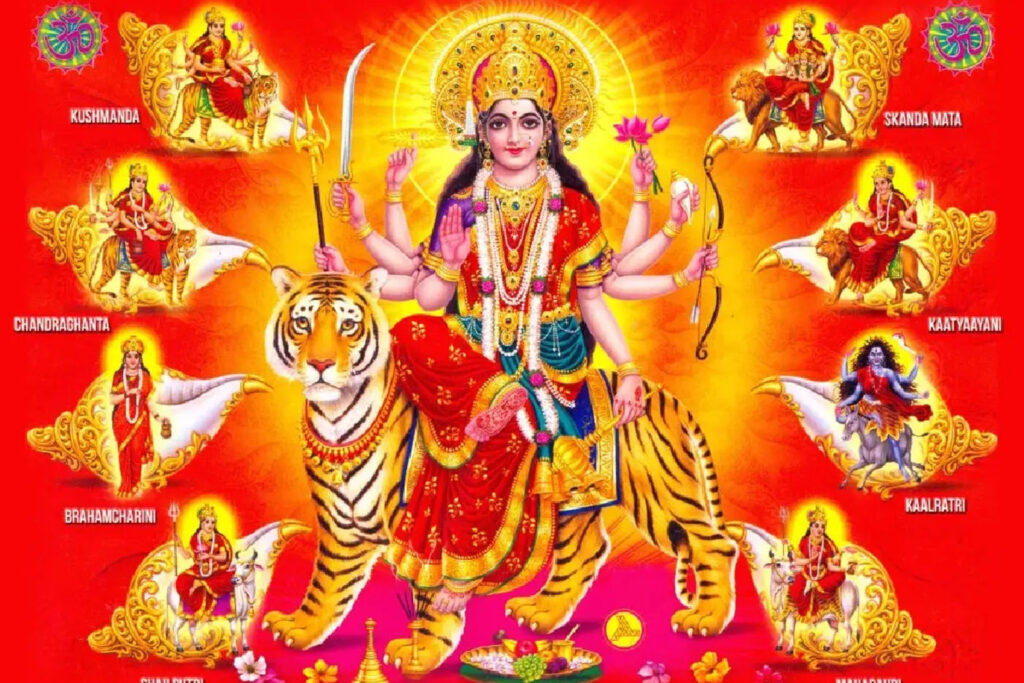
As mentioned above, Navratri is celebrated over nine nights. Each night is dedicated to the worship of one of the nine forms of Goddess Durga, as follows:
- Shailaputri – The form of Goddess Parvati as the daughter of Himavat, the ruler of the Himalayas.
- Brahmacharini – The form of Goddess Uma performing austerities in devotion to Lord Shiva until she won his approval and married him.
- Chandraghanta – The form of Goddess Durga who defeated the demon Ghanta and restored peace to the world.
- Kushmanda – The radiant form of the Goddess as the creator of the universe.
- Skandamata – The form of the Goddess holding Skanda (Kartikeya) on her lap, symbolizing a mother’s love for her child.
- Katyayani – The four-armed form of the Goddess who destroys inner evil and blesses her devotees with good health.
- Kalaratri – The dark-complexioned form of the Goddess, representing the destruction of ignorance and transcendence beyond time.
- Mahagauri – The form of the Goddess who blesses her devotees with happiness and auspiciousness.
- Siddhidatri – The form of the Goddess who grants blessings to the gods, sages, siddhas, celestial beings, gandharvas, demons, yakshas, and all devotees who seek her audience.
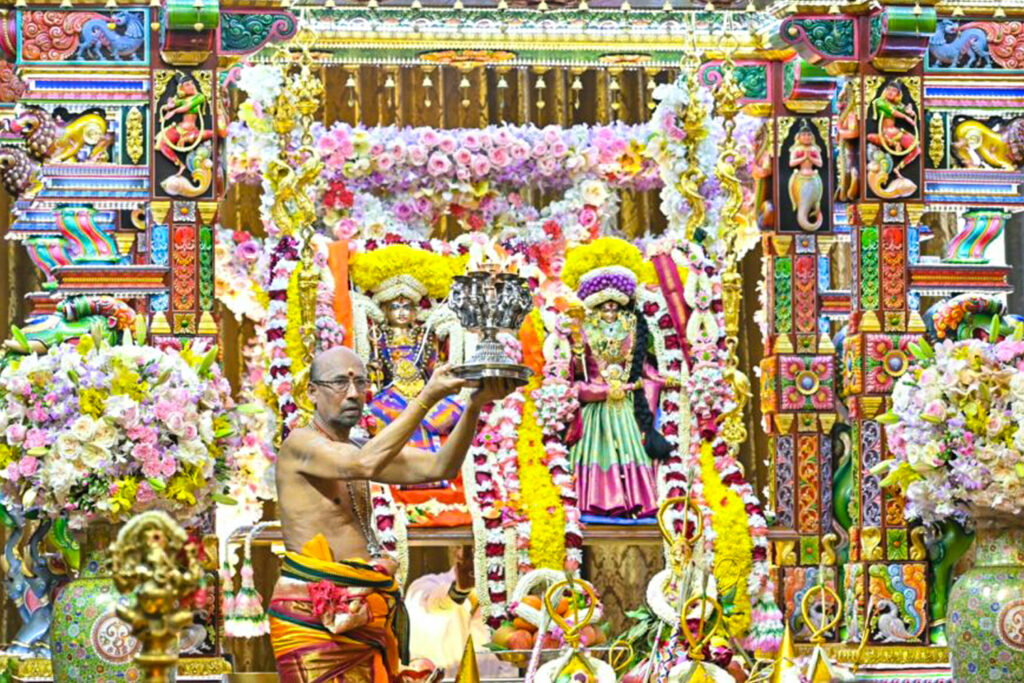
Navratri Festival at Sri Maha Mariamman Temple, Silom
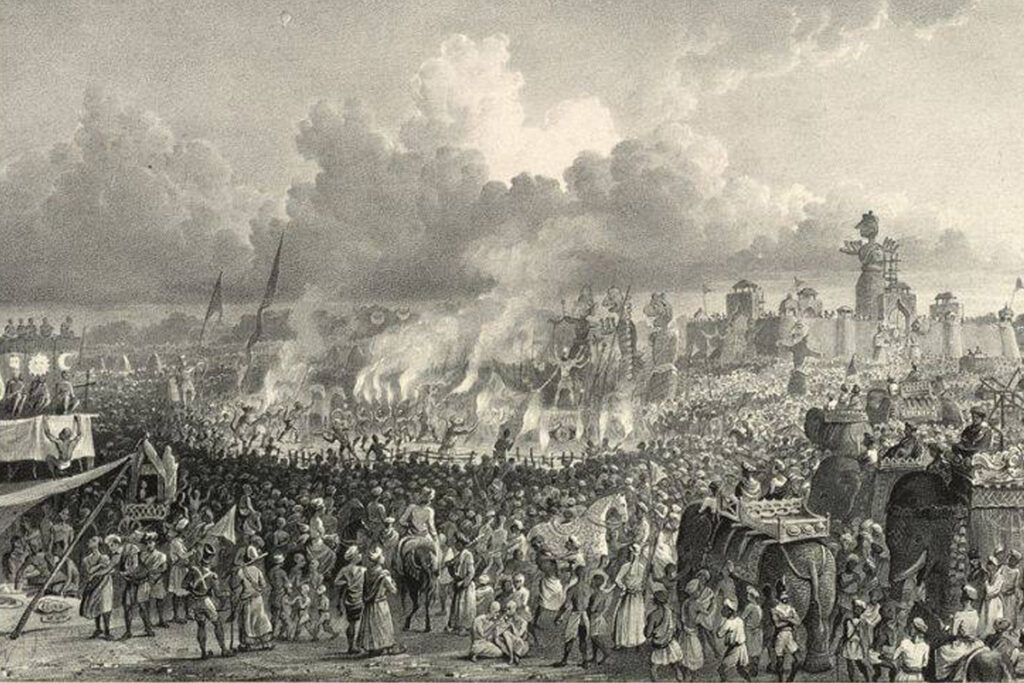
Navratri, also known as Dussehra, is an ancient Hindu festival that dates back to the Vedic period. It is one of the most important Hindu festivals, during which devotees worship the nine forms of Goddess Uma Devi (Goddess Durga) over a period of nine days. The highlight of the celebration takes place on the final day, when Brahmin priests carry the sacred image of Goddess Uma Devi (Mariamman), together with other sacred images, in a grand procession along Silom Road and through the surrounding area. Every year, the procession attracts more than a thousand devotees. It begins in front of Sri Maha Mariamman Temple on Pan Road. Participants traditionally prepare coconut water to cleanse the road before the procession of Goddess Uma Devi passes by.
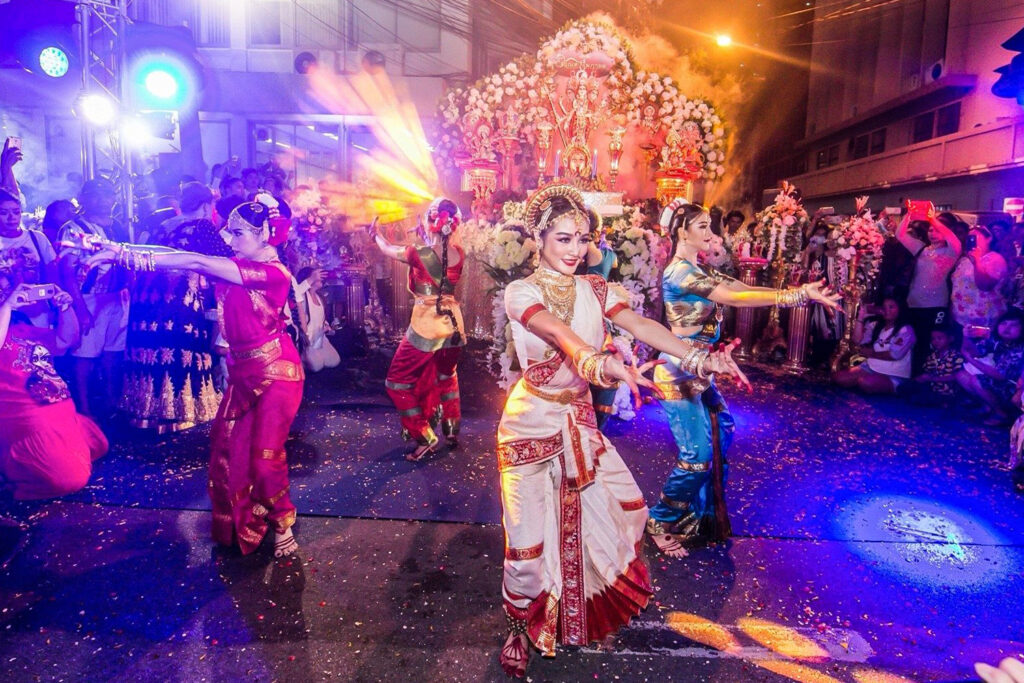
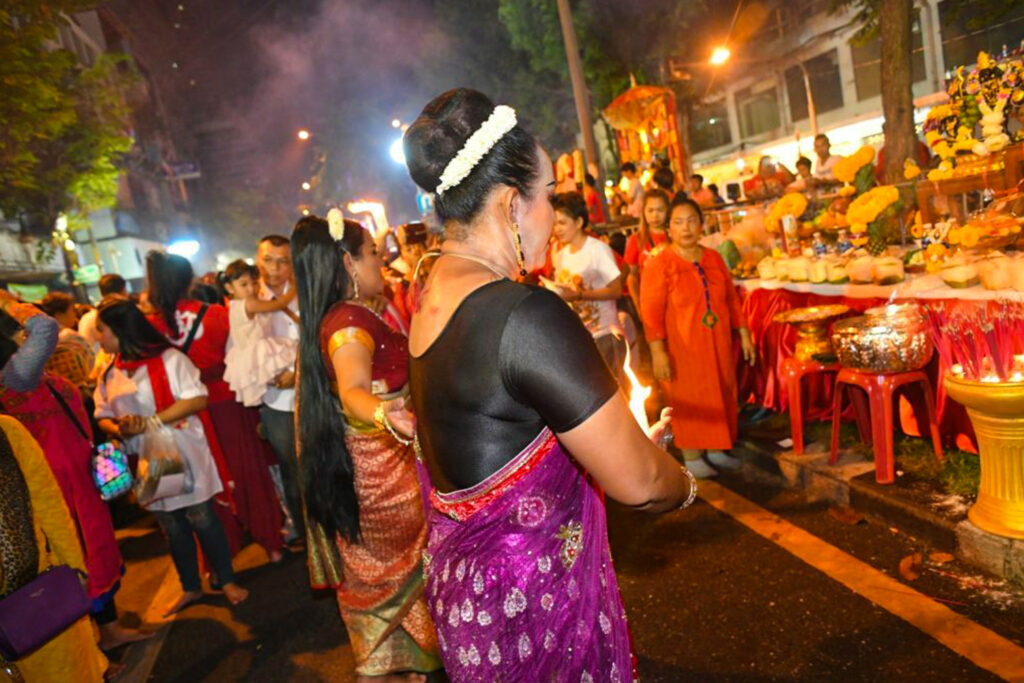
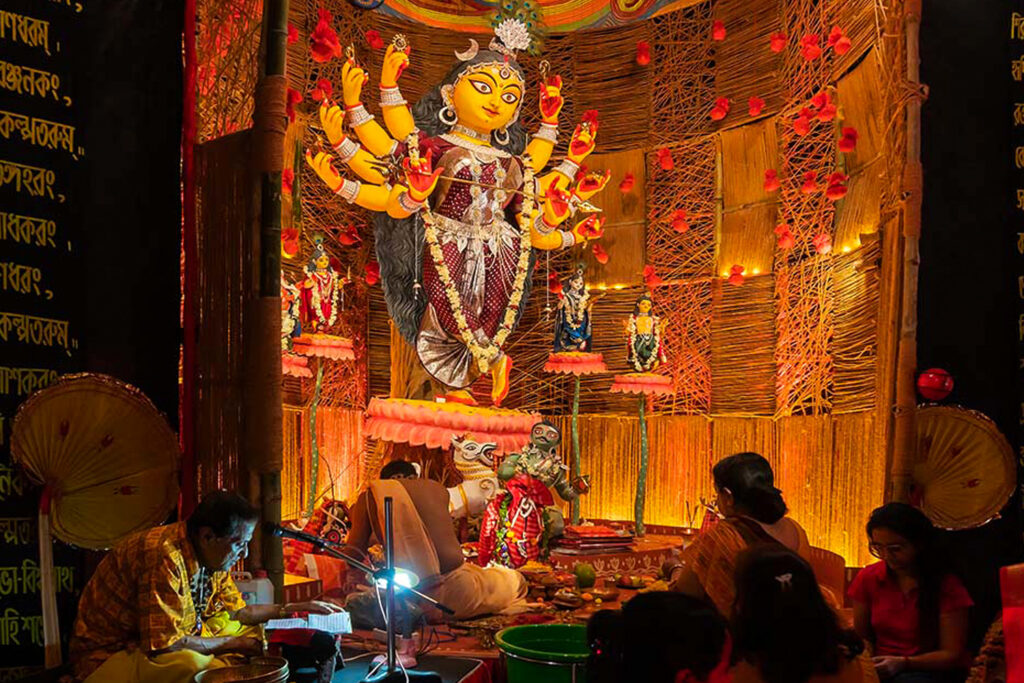
This year, the Navratri Festival will be held from 2–14 October 2024. Anyone who is interested is welcome to join the celebration at Sri Maha Mariamman Temple, Silom. If you would like to read more articles, please visit the ARM’S ARMOR website, and don’t forget to follow the ARM’S ARMOR Facebook page. Thank you for your support.


