
When people mention Yama or King Yama, many think of the deity who judges the good and evil deeds of souls after death. However, in the Tipitaka (Pali Canon), Yama is not merely associated with death. He also serves as a teacher of the Dharma, reminding people to live mindfully and not be careless in the way they live their lives.
One of the most well-known Buddhist tales about Yama is “King Yama Questions the Deceased.” Although the story is simple, it carries profound lessons about the impermanence of life and the law of karma, from which no one can escape.
King Yama Questions the Deceased
In Yamaloka, a man had just passed away and was brought before King Yama by Yama’s messengers, where he awaited the judgment of his karma.
King Yama asked him:
“While you were still living in the human world, did you ever see an old person?”
The man replied, “Yes, I did.”
Yama then continued:
“When you saw an old person, what did you think?”
The man answered, “I thought that one day I too would become old.”
Yama continued:
“Have you ever seen someone who was ill?”
The man replied, “Yes, I have.”
“When you saw someone who was sick, what did you think?”
He answered, “I thought that one day I too would become ill.”
Yama continued asking:
“Have you ever seen someone die?”
The man replied, “Yes, many times.”
“When you saw someone die, what did you think?”
The man answered, “I thought that one day I too would die.”
King Yama then said:
“If you already knew all this, why did you still live carelessly? You knew that one day you would die, yet you did not hurry to do good deeds, accumulate merit, or refrain from doing evil. Instead, you continued to live in delusion. The human world had already given you many warnings, but you paid no attention to them.”
The man fell silent and accepted the truth of Yama’s words. After that, King Yama instructed Yama’s messengers to take him to receive the karmic consequences of his own actions.
Lessons from the Buddhist Tale “King Yama Questions the Deceased”
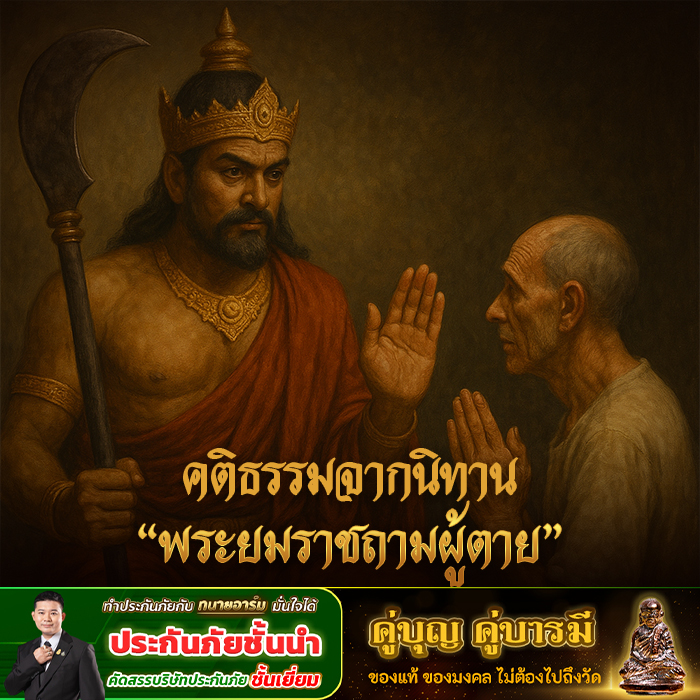
This story is one of the most powerful Buddhist teachings because it clearly conveys the principle of mindfulness (Appamada), or living without negligence. Its key lessons include:
1. Death Is Certain
Yama reminds us that everyone witnesses old age, sickness, and death throughout life. Yet many people fail to learn from these realities or use them as inspiration to live a virtuous life.
2. Life Is Limited—Do Not Live Heedlessly
In this story, heedlessness means living as though our time in this world is unlimited. The tale serves as a reminder to be aware of the value of life and to begin doing good deeds without delay.
3. Karma Is the True Judge
Although Yama appears to be the judge of life after death, he is, in fact, only the one who asks the questions. It is each person’s karma that ultimately determines the final outcome.
4. Knowing Without Acting Is No Different from Not Knowing
The man in the story understood that old age, sickness, and death are inevitable, yet he failed to live mindfully. This reminds us that knowing alone is not enough—we must put it into practice.
Yama as a Reminder to Humanity
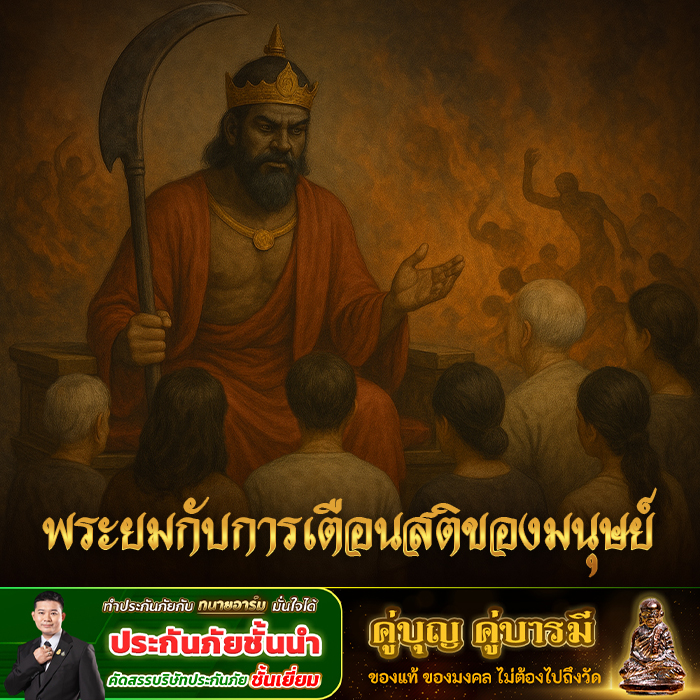
In this story, Yama is not a deity who punishes out of anger or power. Instead, he serves as a teacher who awakens people, a mirror reflecting the truth of life, and a symbol of the Dharma, which teaches that no one can escape the consequences of karma.
Yama is therefore not merely a representative of Yamaloka or the afterlife. He also serves as a guide, reminding people not to lose their way, to reflect on their lives, and to awaken to the present moment.
The Tale of Yama and Our Daily Lives
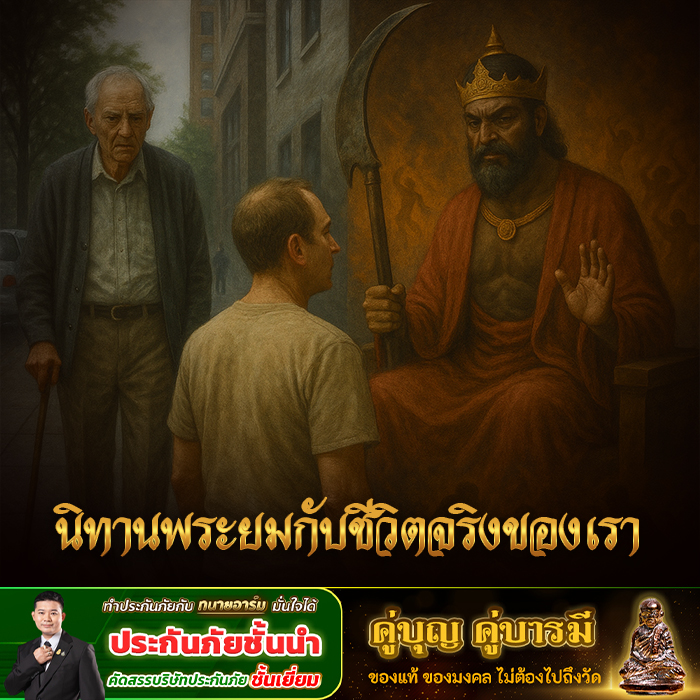
Although this story takes place in the setting of Yamaloka and its deities, its message is deeply relevant to our everyday lives. In reality, we all encounter old age, sickness, and death every day. The question is: how many of us truly reflect on these realities and act before it is too late?
The story “King Yama Questions the Deceased” is therefore more than an ancient Buddhist tale. It is a mirror that reflects the value of life and reminds us that: “It is never too early to begin doing good.”
If you enjoy meaningful articles that offer valuable life lessons, don’t forget to follow the ARM’S ARMOR website. We regularly share Buddhist teachings, inspirational stories, articles about Yama, and many other topics related to Buddhist beliefs.
For those who have faith in sacred objects, we also offer a wide selection of 100% authentic sacred amulets, including King Yama amulet coins, Phra Somdet King Yama amulets, and sacred objects blessed through proper Buddhist consecration ceremonies, helping to enhance good fortune, accumulate merit, and provide spiritual encouragement.