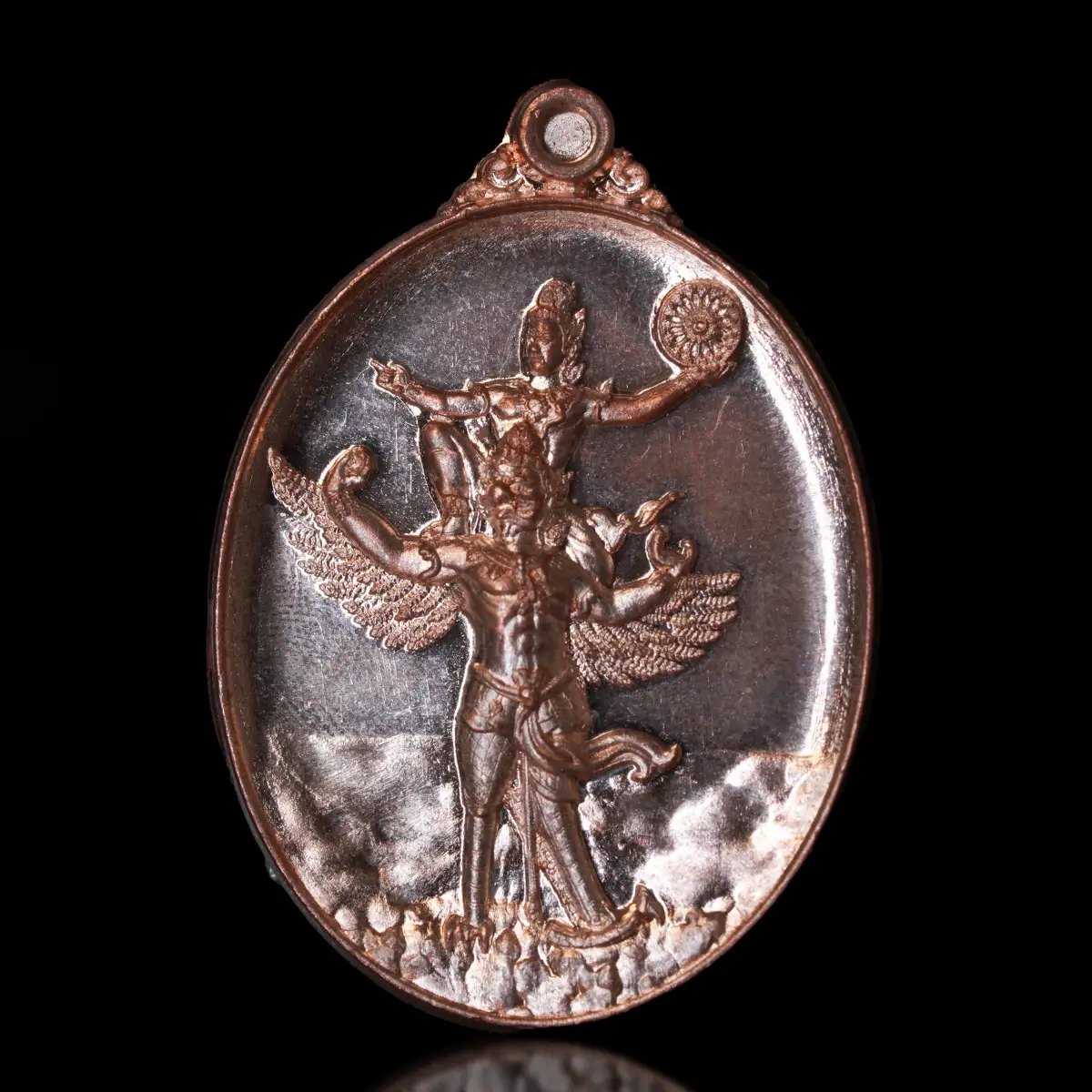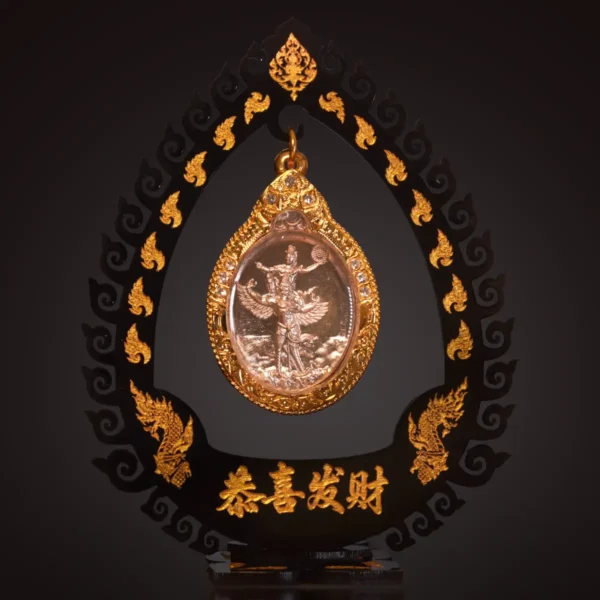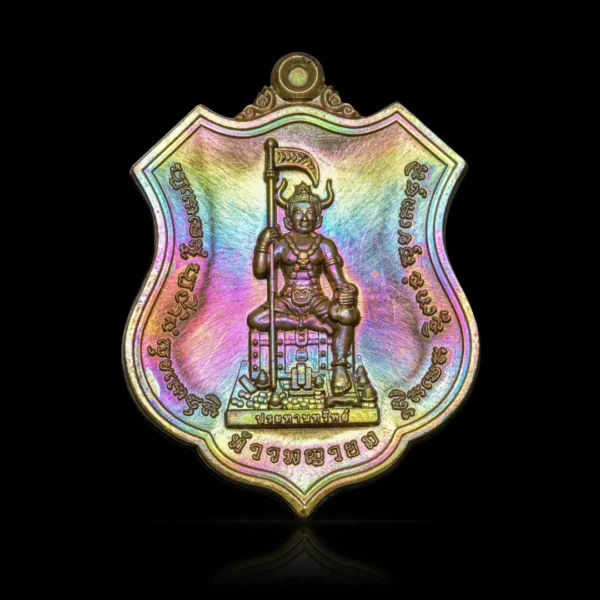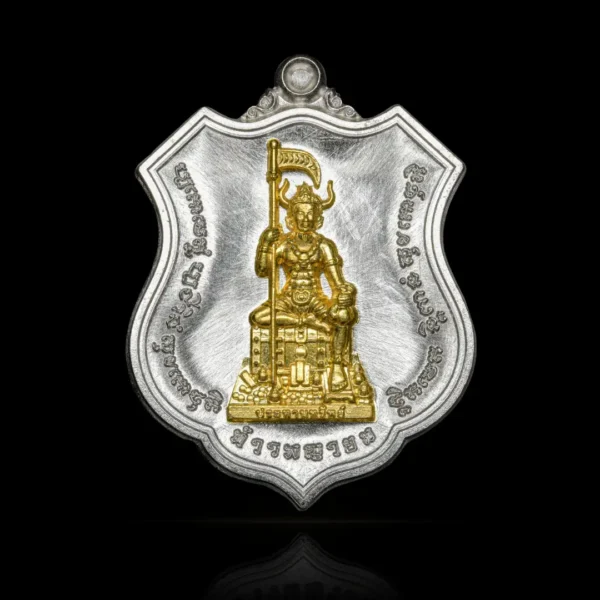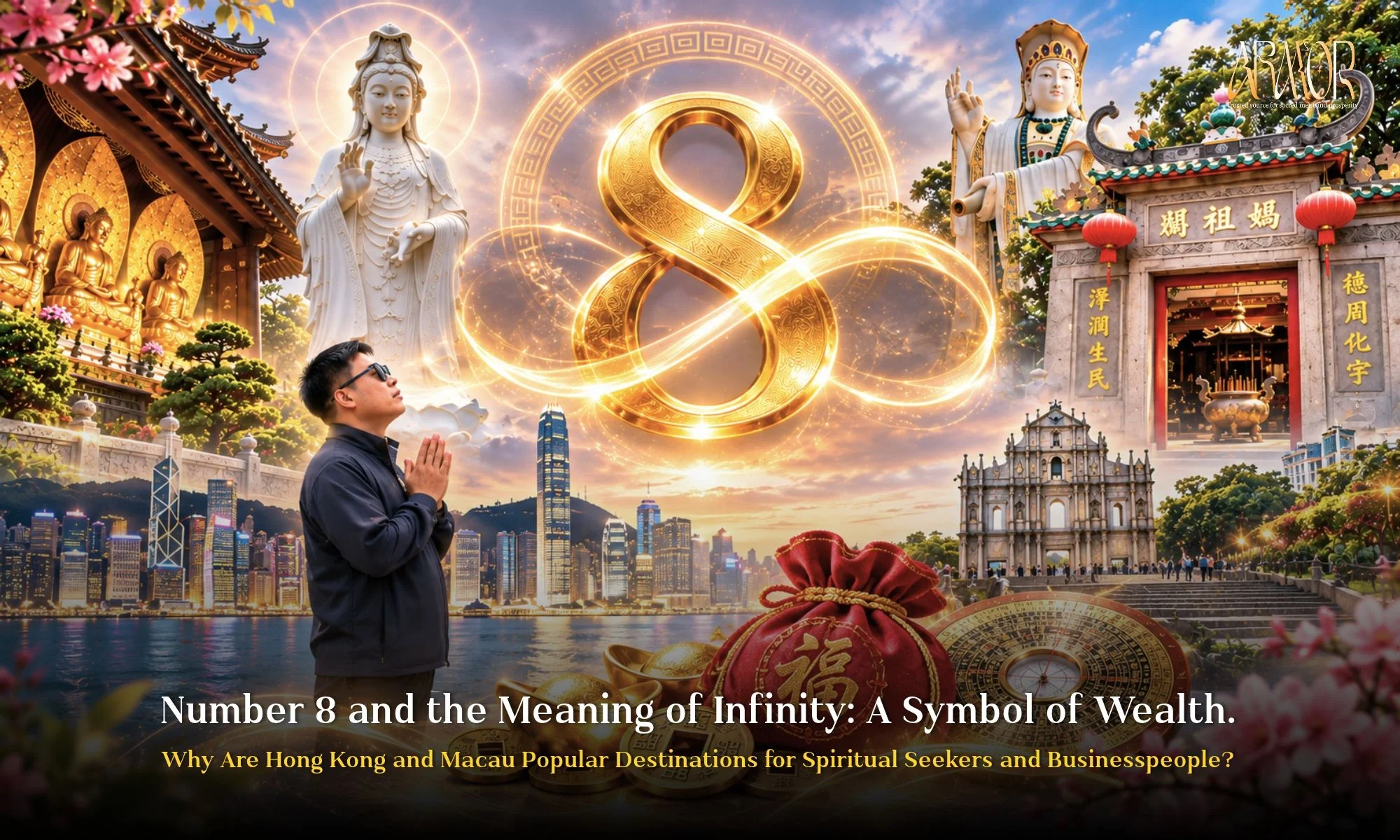
ARM’S ARMOR and spiritual journeys across Asia: Hong Kong and Macau are two destinations that immediately come to mind, especially when it comes to wealth, good fortune, success, and career advancement.
One of the symbols that Lawyer Arm has clearly observed in Chinese culture, and which is closely associated with beliefs about wealth and prosperity, is the Arabic numeral 8. It is not merely an ordinary number but also carries an auspicious meaning that has been passed down through generations.
Furthermore, when the number 8 is rotated horizontally, it becomes the Infinity symbol, representing something that has no end.
Number 8 in Chinese Culture: A Symbol of Wealth and Prosperity

The popularity of the number 8 in Chinese culture is partly rooted in its pronunciation in Mandarin and Cantonese. The number 8 is written as 八 (Bā) in Chinese, which sounds similar to 发(Fā), a word associated with growth, prosperity, and wealth. This association is particularly evident when it is used in the phrase 发财(Fā Cái), which means to become wealthy or accumulate wealth.
For this reason, many people regard the number 8 as an auspicious number symbolizing financial prosperity, success, and favorable opportunities in life. Its popularity is not limited to China but can also be found in Chinese communities around the world, including Hong Kong and Macau, where Chinese cultural roots remain deeply established.
This is particularly evident in the selection of telephone numbers, house numbers, vehicle license plates, and important business dates. Many people pay special attention to the number 8 because they believe it is a symbol that brings good fortune and reflects their wishes for business prosperity.
Number 8 and Infinity: The Meaning of Endless Possibilities

Another interesting aspect of the number 8 is its shape, which consists of two connected loops. When the number 8 is rotated 90 degrees horizontally, it resembles the Infinity symbol (∞), a mathematical symbol used to represent something without end.
In terms of symbolic interpretation, many people associate the image of Infinity with continuity, sustainability, and endless growth. Particularly when applied to business and finance, it may represent the wish for a business to grow, generate a continuous stream of income, and attract new opportunities on an ongoing basis.
It is important to understand that the meaning of the number 8 in Chinese culture in relation to wealth originates from the similarity in pronunciation between words, while the meaning of Infinity comes from a mathematical symbol. These two concepts can be associated with each other as part of personal beliefs, but they do not share the same origin.
Why Is Hong Kong So Popular for Lucky Numbers and Feng Shui?

Hong Kong is one of Asia’s major business and financial centers. It also has a long-standing Chinese cultural tradition that places great importance on Feng Shui and auspicious numbers. These beliefs can be seen in everyday life, from choosing an opening date for a business and signing business contracts to selecting telephone numbers and vehicle license plates.
One interesting example is the auction of special vehicle license plate numbers in Hong Kong. Numbers containing the digit 8 attract particular attention because people consider them auspicious and believe they symbolize wealth and prosperity. Studies in economics have also analyzed Hong Kong’s vehicle license plate auction market, finding that beliefs about numbers can genuinely influence the prices people are willing to pay.
Beyond the significance of numbers, Hong Kong is also home to many temples and sacred sites that people visit to pay their respects, such as Wong Tai Sin Temple, Che Kung Temple, and Kwun Yam Shrine at Repulse Bay. Each place has its own stories and beliefs, making this city an attractive destination for those interested in cultural tourism and spiritual travel.
Macau: A City of Culture, Faith, and Chinese Architecture

Macau has a unique cultural identity shaped by a blend of Chinese and Portuguese influences. However, the traditional beliefs of its Chinese community remain clearly visible, particularly in its ancient Chinese temples, which serve as spiritual centers for the local people and reflect beliefs passed down through generations.
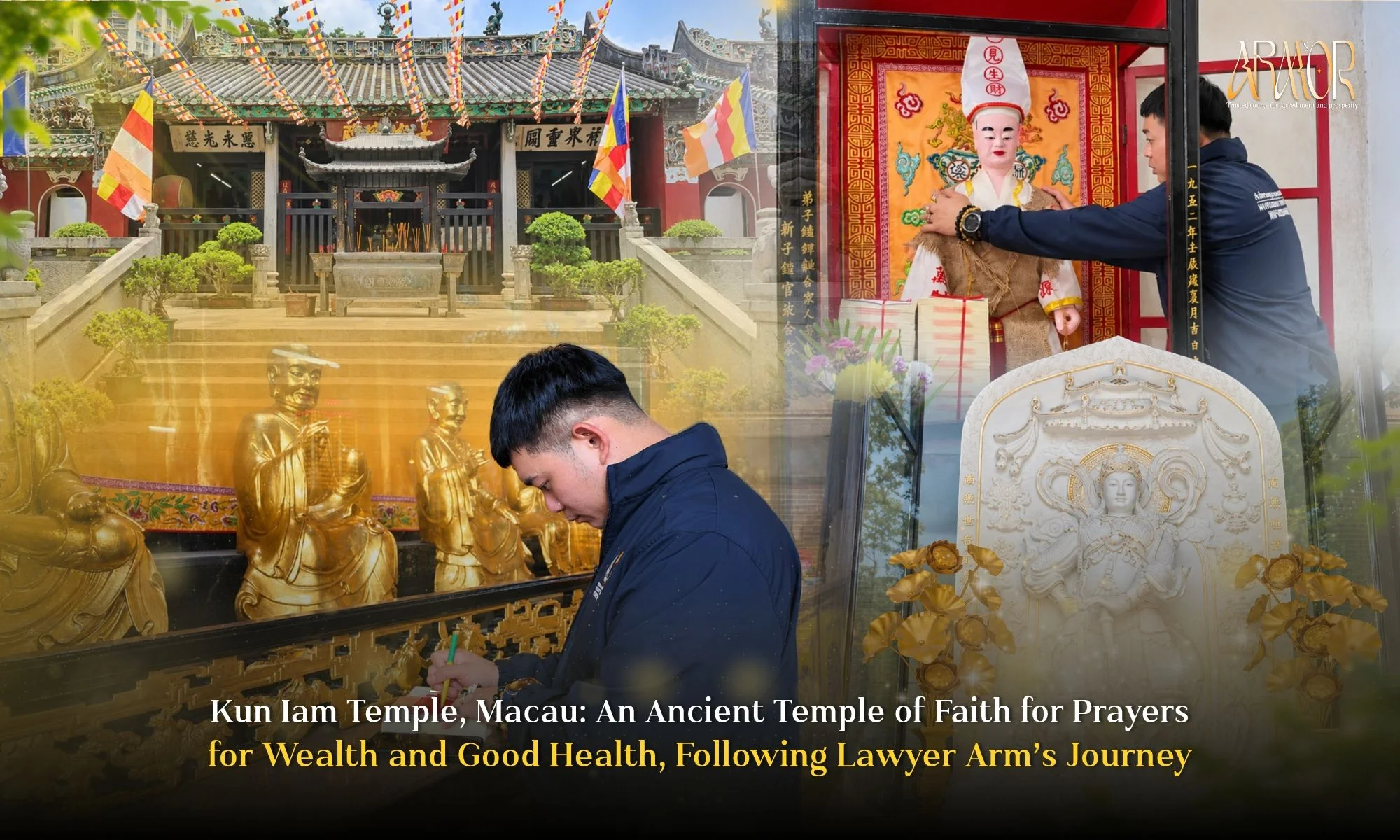
Places that spiritual travelers may wish to visit include A-Ma Temple, an ancient temple associated with the worship of the goddess Mazu; Kun Iam Tong Temple, dedicated to the Goddess of Mercy (Guanyin); and other temples with long histories. Visiting these places is therefore not only about praying for blessings but also offers an opportunity to learn about Macau’s culture, history, and way of life.
Why Do Businesspeople Like to Visit Hong Kong and Macau for Spiritual Blessings?

For businesspeople, spiritual travel does not necessarily mean placing all their hopes in sacred powers. For many, visiting and paying respects at places they believe in is an opportunity to make wishes, reflect on their goals, and find encouragement for their work. The same is true for Lawyer Arm.
Hong Kong and Macau offer a combination of ancient temples, sacred sites, Chinese culture, and beliefs related to Feng Shui and auspicious numbers. These destinations therefore appeal to people who wish to travel to refresh their spirits while experiencing the unique atmosphere of each city.
For those who place importance on the number 8, it may be seen as a symbol of wealth and success. Meanwhile, the Infinity symbol can represent the wish for continuous growth and progress. However, the most important thing is that beliefs should go hand in hand with planning, management, and dedicated action, because business success does not come from numbers or making wishes alone.
Ultimately, from the perspective of ARM’S ARMOR, spiritual travel is another dimension of travel that brings together beliefs, culture, and the pursuit of encouragement. Whether it is the number 8, which symbolizes wealth, or the Infinity symbol, which represents endlessness, both serve as reminders to remain committed to achieving continuous success and never stop improving ourselves.