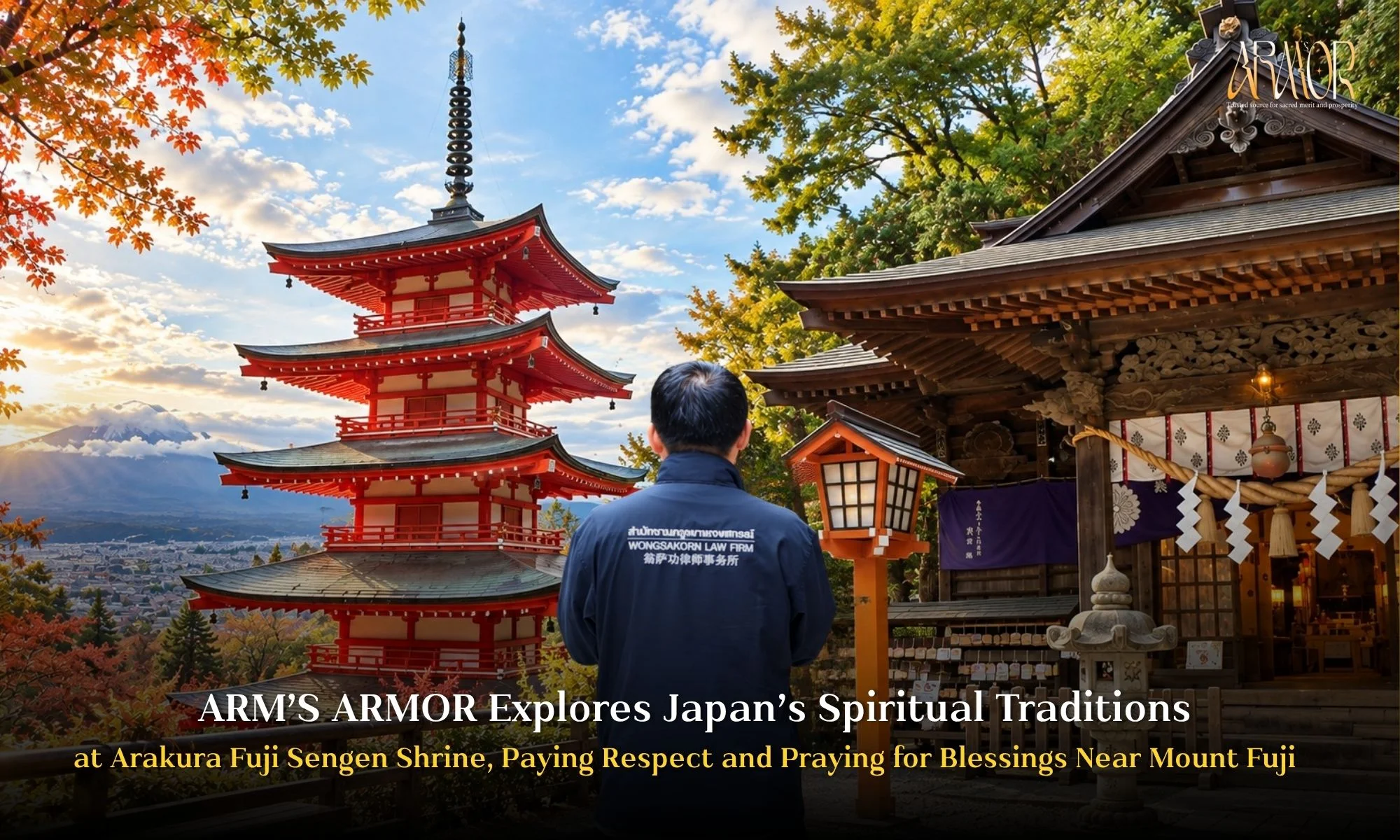
When people think of Japan, besides its famous natural landscapes and cultural attractions, the country is also a popular destination for those interested in visiting shrines, praying for blessings, and experiencing local beliefs. Today, ARM’S ARMOR invites everyone to experience the atmosphere of faith at Arakura Fuji Sengen Shrine, an ancient shrine located in Fujiyoshida City, Yamanashi Prefecture, Japan, near Mount Fuji, one of Japan’s most iconic landmarks.
For Lawyer Arm Supasit Siri, this was not his first visit to the shrine. He had previously visited to pay his respects approximately four times. Returning to the same place on multiple occasions has become another personal experience that he would like to share with those interested in spiritual beliefs and exploring ways to enhance their fortune in the style of ARM’S ARMOR.
Getting to Know Arakura Fuji Sengen Shrine, an Ancient Shrine Near Mount Fuji

Arakura Fuji Sengen Shrine has a long history. According to information from the official tourism sources of Fujiyoshida City, the shrine was established around 705 AD. Its history is associated with rituals performed to pray for peace in the country during past eruptions of Mount Fuji.
The shrine enshrines deities from Japanese Shinto beliefs. One of the principal deities worshipped here is Konohanasakuya-hime no Mikoto, who is associated with Mount Fuji and flowers.
Another highlight of the surrounding area is its mountainous location, which allows visitors to experience the natural atmosphere and enjoy views of Mount Fuji from Arakurayama Sengen Park. The area attracts large numbers of tourists, particularly during the cherry blossom season.
With its distinctive history and atmosphere, the shrine is an ideal destination for those interested in cultural tourism, learning about Japanese beliefs, and traveling in search of inner peace.
ARM’S ARMOR and the Experience of Paying Respect to Thao Wessuwan No in Japan

One of the stories that particularly caught Lawyer Arm’s interest during his visit to Arakura Fuji Sengen Shrine was the belief surrounding Thao Wessuwan No, which he had heard about. Lawyer Arm shared that he had heard people describe a connection between this deity and the heavenly realm.
However, this information is based on accounts that Lawyer Arm has heard and cannot yet be verified as historical fact or as an established traditional belief of the shrine itself. It should therefore be regarded as a story or belief that requires further research.
For Lawyer Arm, each visit to pay respect and worship is an opportunity to calm his mind and pray for what he wishes to achieve. His focus is not solely on asking for blessings to bring success, but also on taking time to reflect on his thoughts and personal goals.
Lawyer Arm shared that after praying for blessings on a previous visit, he had the opportunity to return to this place several more times. As a result, he has developed a personal connection with the shrine and would like to share his experience with those who are interested. Nevertheless, returning to the shrine is a personal experience and does not constitute evidence that praying for blessings directly caused the events that followed.
Lawyer Arm’s Tips for Praying for Blessings: Chanting and Maintaining a Focused Mind

When paying respect to Thao Wessuwan No, Lawyer Arm follows his personal beliefs by first calming his mind before reciting familiar prayers, such as the chant dedicated to Thao Wessuwan No, which begins with “Puttakamo Laphe Puttang, Thanakamo Laphe Thanang...” according to the prayer he regularly recites.
For those interested in following this practice, it is advisable to verify the prayer from reliable sources and choose practices that are appropriate to their own beliefs. Most importantly, visitors should respect the customs of Japanese shrines, which follow Shinto worship traditions. It is not necessary to perform exactly the same rituals as those practiced at sacred places in Thailand.
Lawyer Arm believes that chanting and praying help him concentrate, take a break from the busyness of daily life, and reflect on what he wants in life. However, from his perspective, success still requires action, planning, and responsibility alongside faith.
The Steps to the Shrine, Making Offerings, and Drawing Fortune Slips in a Japanese Atmosphere
Visiting Arakura Fuji Sengen Shrine involves walking up slopes and some sections of stairs. Those planning a visit should therefore wear comfortable walking shoes and allow enough time to explore the surrounding area.
Lawyer Arm observed that some expressions of faith in Japan are similar to those in Thailand, such as making monetary offerings or donations according to local customs, as well as drawing fortune slips, a practice that tourists may encounter at many sacred places throughout Japan.
For those who would like to follow in the footsteps of ARM’S ARMOR, a visit to this shrine can be combined with exploring Arakurayama Sengen Park and enjoying views of Mount Fuji. Visitors should check travel routes, opening hours, and weather conditions before setting out.
Seeking Blessings at Arakura Fuji Sengen Shrine According to Personal Beliefs

Lawyer Arm concluded by sharing that returning to worship at Arakura Fuji Sengen Shrine on several occasions has been a meaningful experience for him. He feels that the blessings he has prayed for on many previous visits have aligned with his wishes, and he would like to share this story with those who enjoy spiritual travel.
However, praying for blessings is a matter of personal belief and cannot guarantee results or success in life. Visitors can use the opportunity to calm their minds, reflect on their goals, and return to their daily lives with renewed determination to take action.
If you have the opportunity to visit Japan, especially the area near Mount Fuji, be sure to experience the history and atmosphere of Arakura Fuji Sengen Shrine. For those interested in spiritual travel and new experiences, follow stories about journeys, visits to sacred places, and personal experiences of faith through ARM’S ARMOR.