
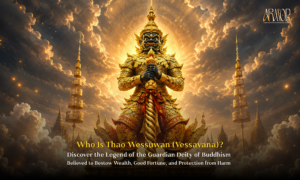
Today, when it comes to sacred figures widely revered in Thailand, Thao Wessuwan (Vessavana) is one of the first names that comes to mind. Revered as a guardian deity in Buddhism, he is widely believed to protect devotees, ward off misfortune and negative influences, and symbolize wealth, prosperity, and good fortune. As a result, temples across Thailand that enshrine Thao Wessuwan continue to attract large numbers of worshippers seeking blessings and paying their respects.
This article is based on the insights and Buddhist knowledge shared by Group Captain Suphawit Thammasitthiruj. It aims to help readers gain a deeper understanding of the significance and role of Thao Wessuwan (Vessavana) from the perspectives of Buddhist teachings and long-standing traditional beliefs.
Who Is Thao Wessuwan (Vessavana)?
Many people know Thao Wessuwan (Vessavana) as the deity of wealth and good fortune. In fact, his role extends far beyond that.
According to Buddhist tradition, Thao Wessuwan (Vessavana), also known as Kubera, is one of the Four Heavenly Kings, who are responsible for protecting the world and guarding the four cardinal directions. Thao Wessuwan is the guardian of the Northern Direction and the ruler of the Yakshas, a class of supernatural beings.
Although he is regarded as the king of the Yakshas, Thao Wessuwan is also revered as a devoted protector of Buddhism. He is described as having profound faith in the Three Jewels—the Buddha, the Dharma, and the Sangha. Some Buddhist traditions further state that he attained the stage of Sotapanna (Stream-enterer), the first stage of enlightenment in Buddhism.
Why Does Thao Wessuwan Have a Fierce Appearance?
Many people may wonder: if Thao Wessuwan (Vessavana) is a devoted protector of Buddhism, why is he commonly depicted with such a fierce and awe-inspiring appearance, holding a massive mace or sacred staff?
According to traditional beliefs, Thao Wessuwan’s (Vessavana’s) powerful and formidable appearance is not intended to instill fear in those who do good. Rather, it symbolizes his sacred duty to protect Buddhism, safeguard all beings, and subdue those who harbor evil intentions.
The mace or sacred staff carried by Thao Wessuwan (Vessavana) therefore symbolizes authority, justice, and protection. It is not a weapon intended to harm the innocent, but rather an emblem of maintaining peace and order while preventing evil forces from encroaching upon Buddhism.
For this reason, statues of Thao Wessuwan (Vessavana) are commonly enshrined at the entrances of temples and other sacred places. Their presence symbolizes the protection of these auspicious sites, the safeguarding of Buddhism, and the prevention of evil forces from entering.
Why Do People Commonly Worship Thao Wessuwan (Vessavana)?
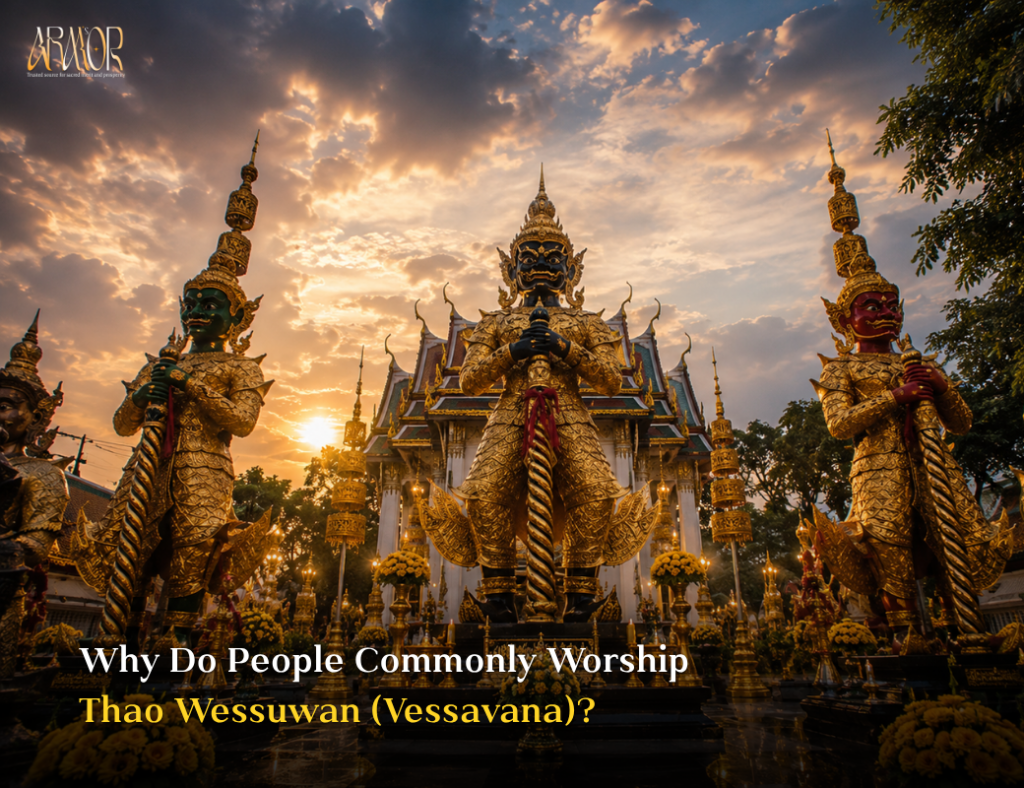
When people speak of Thao Wessuwan (Vessavana), many immediately associate him with wealth, prosperity, and success—beliefs that have been passed down through generations.
Those with sincere faith commonly pay homage to Thao Wessuwan in the hope of receiving blessings in various aspects of life, such as:
- Success and advancement in their careers;
- Smooth and prosperous business operations;
- Good fortune, financial stability, and abundance;
- Protection from obstacles and misfortune;
- Strength, encouragement, and resilience in facing life’s challenges.
From the perspective of Buddhism, however, venerating sacred beings serves primarily as a source of spiritual encouragement and inspiration. Lasting success ultimately depends on one’s own diligence, honesty, and earning a livelihood through righteous and ethical means. These qualities, together with faith, are believed to lead to enduring well-being and prosperity.
Thao Wessuwan (Vessavana) and the Protection of Buddhism
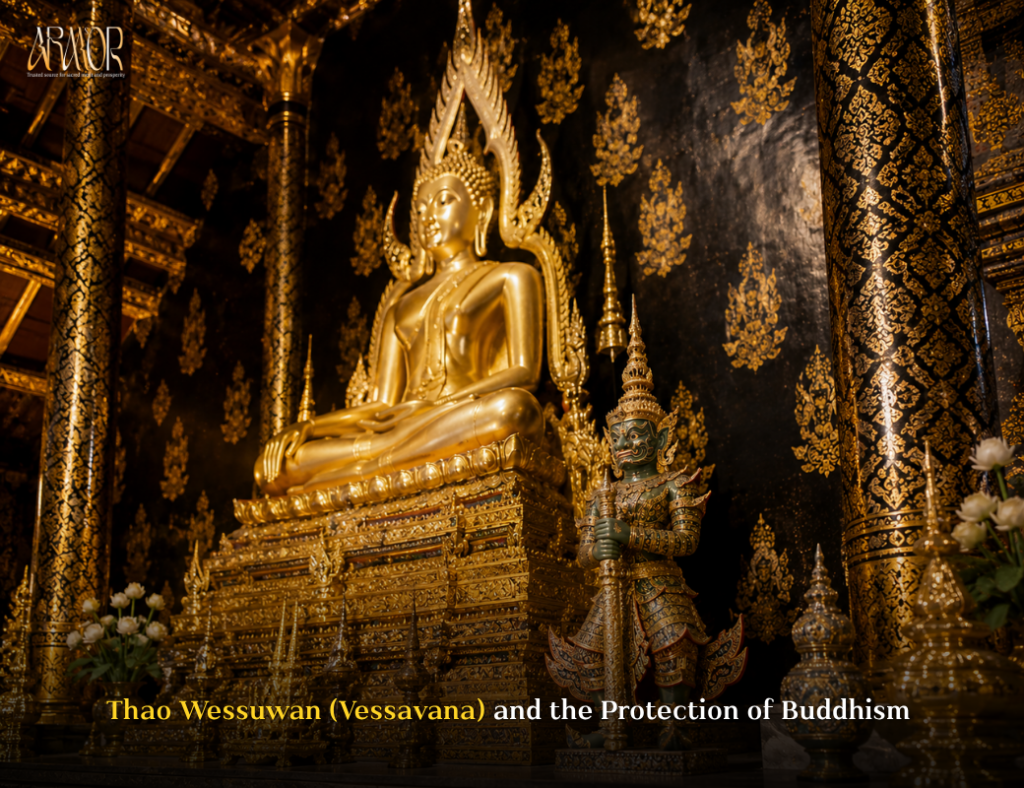
What distinguishes Thao Wessuwan (Vessavana) from many other deities is his important role as a protector of Buddhism.
Out of his profound faith and devotion to the Buddhist teachings, he made a solemn vow to safeguard the Dharma, the Sangha, and Buddhist sacred sites from those who seek to harm or undermine them.
For this reason, his statues are traditionally portrayed as majestic and awe-inspiring, holding a mace or sacred staff in his hand. This imagery symbolizes his duty as a guardian of the faith, rather than an intention to frighten people.
This belief gives many devotees a sense of reassurance when paying homage to Thao Wessuwan. They believe that those who live with honesty, integrity, and righteousness will receive his protection from misfortune and harmful influences.
How Should Thao Wessuwan (Vessavana) Be Worshipped?
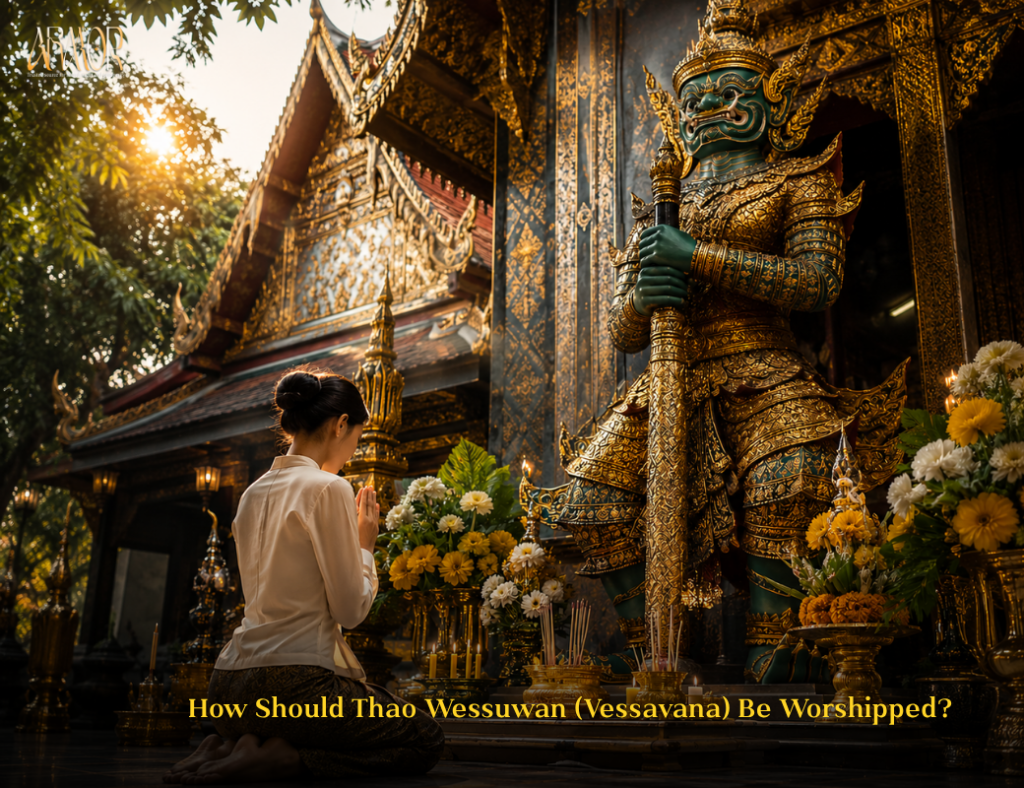
Worshipping Thao Wessuwan (Vessavana) does not require elaborate rituals. What matters most is sincere respect and a pure, wholehearted intention.
Devotees may observe the following practices:
- Dress respectfully when visiting a temple;
- Calm the mind before offering prayers;
- Pray with sincerity and genuine faith;
- Ask only for blessings that are righteous and do not harm others;
- Regularly make merit, observe the Buddhist precepts, and cultivate wholesome deeds.
Many people believe that living an ethical and virtuous life is the highest form of devotion to Thao Wessuwan, as it reflects the very ideals of the guardian deity who is dedicated to protecting Buddhism.
Reflections from Group Captain Suphawit Thammasitthiruj
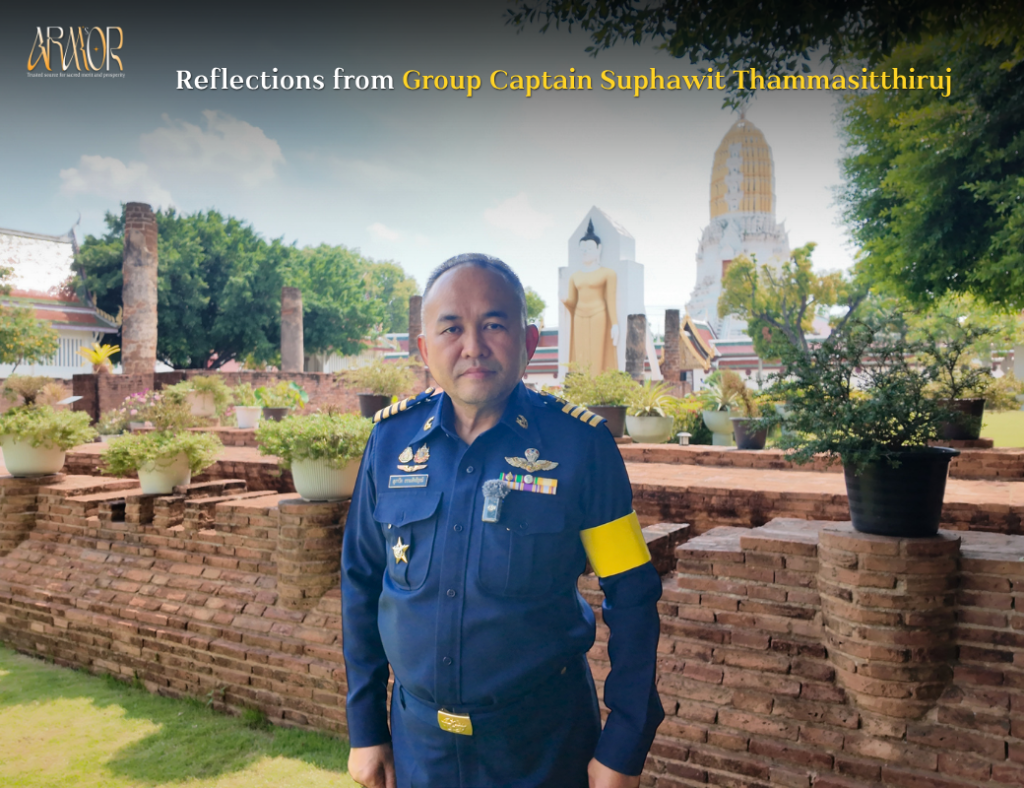
Group Captain Suphawit Thammasitthiruj offers an insightful perspective: the reason so many people revere Thao Wessuwan (Vessavana) is not solely because he is associated with wealth and prosperity. More importantly, he represents steadfast faith and a willingness to devote himself to protecting Buddhism.
For this reason, those who pay homage to Thao Wessuwan are not merely praying for material success. They also seek inner strength, resilience, and wisdom to overcome life’s challenges and move forward with confidence.
Even during life’s most difficult moments, having determination, perseverance, and earning an honest livelihood through righteous means provides the essential foundation for lasting stability, meaningful progress, and long-term prosperity.
Faith Accompanied by Action
Faith in Thao Wessuwan (Vessavana) provides encouragement and inner strength for many people. However, the core teaching of Buddhism has always emphasized one’s own actions and conduct.
For this reason, praying to Thao Wessuwan should be accompanied by a sincere commitment to doing good, observing the Buddhist precepts, fulfilling one’s responsibilities with integrity, and earning an honest livelihood. When faith is combined with diligence and righteous action, it becomes a powerful force that helps guide life forward with confidence and stability.
For this reason, Thao Wessuwan is not merely a symbol of wealth and good fortune. He also represents courage, responsibility, and the protection of virtue and righteousness—qualities that are worthy of being embraced and practiced by everyone throughout their lives.