
Sri Maha Uma Devi Temple, also known as Wat Khaek Silom, is a Hindu temple established around 1879 by immigrants from Tamil Nadu, a state in southern India, who settled in Thailand. The temple is located at the corner of Silom Road and Pan Road. Originally, the site was a vegetable garden owned by Mrs. Pan Uppakosakorn. Later, three Indian settlers living in the Silom area—Vaitri Pradia Aji, Narai Cheti, and Gobarati—exchanged their own land for the garden and built the temple after receiving royal permission from King Chulalongkorn (Rama V). The temple was established as a religious and community center for Hindus from southern India and was later officially registered as the Sri Maha Mariamman Temple Foundation.
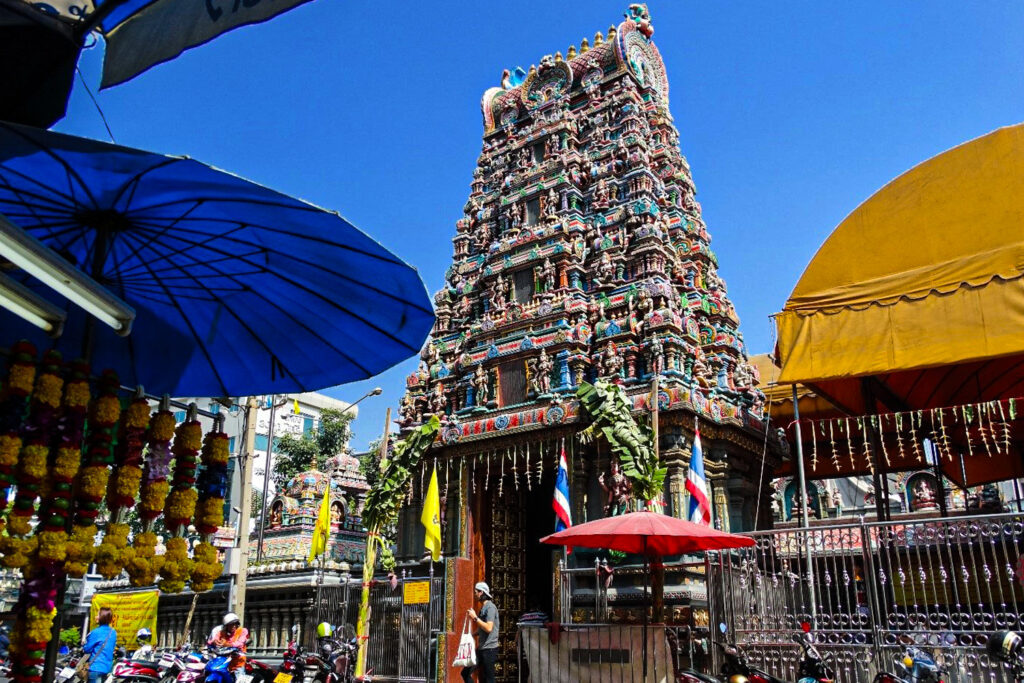
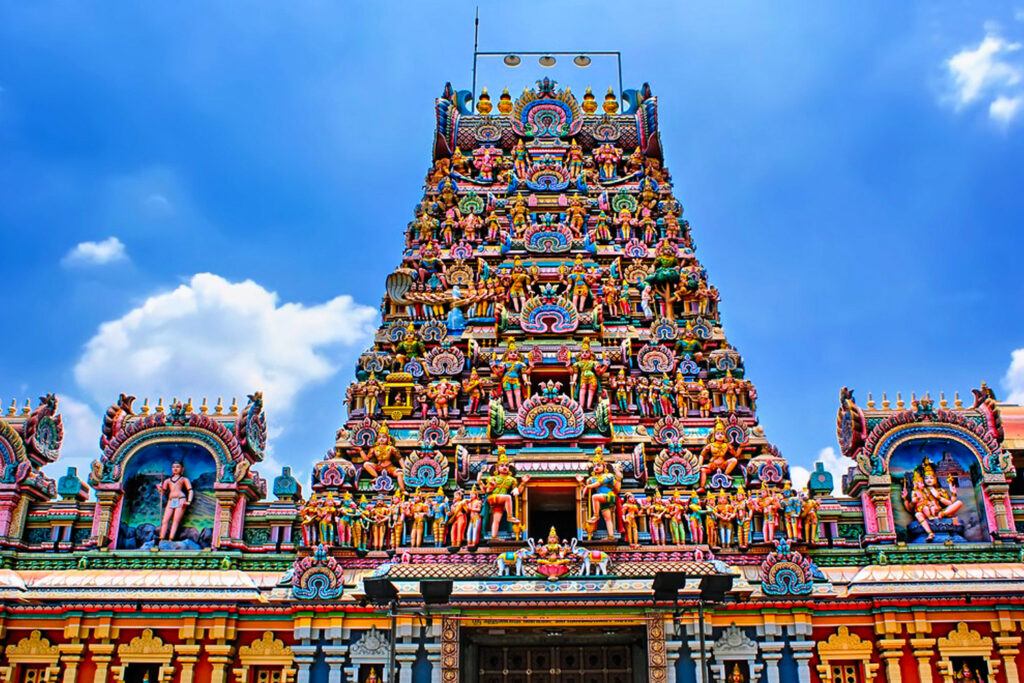
When the temple was first established, it was only a small shrine called Sri Mariamman Shrine. Later, the main sanctuary was built, and the idol of Sri Maha Uma Devi was brought from India and enshrined there. The temple features South Indian architecture, influenced by the Chola and Pallava architectural styles, which are commonly found in Hindu temples throughout Tamil Nadu. One of the temple’s most distinctive architectural features is its gopuram (ornamental entrance tower), decorated with colorful stucco sculptures of Hindu deities. Statues of important Hindu gods are placed on the entrance tower and its upper tiers, creating the temple’s striking appearance. Inside the main sanctuary are three principal deities, all brought from India: Sri Maha Uma Devi, Lord Murugan (Skanda), and Lord Ganesha.
Komkrit Uitekkeng, Assistant Professor in the Faculty of Arts at Silpakorn University, has noted that the temple’s Tamil name, “Tiru Mariamman Kovil,” means “The Temple of Goddess Sri Mari.” In Tamil, the word “Mari” means “rain.” Goddess Mari is revered as the Goddess of Rain and has long been worshipped in the agricultural communities of ancient Tamil society. At the same time, local legends also describe her as the Goddess of Smallpox. Therefore, in its original context, Goddess Mari was the indigenous mother goddess of the Tamil people and one of the earliest local deities worshipped in southern India, long before Hinduism spread into the region and later incorporated her into the Hindu pantheon. The reason the temple is known in Thailand as Sri Maha Uma Devi Temple is to make it easier for Thai people to understand. This follows the belief that all goddesses are manifestations of the Great Goddess, such as Durga, Uma, or Parvati. Among these names, Uma Devi is the one most commonly recognized in Thailand.
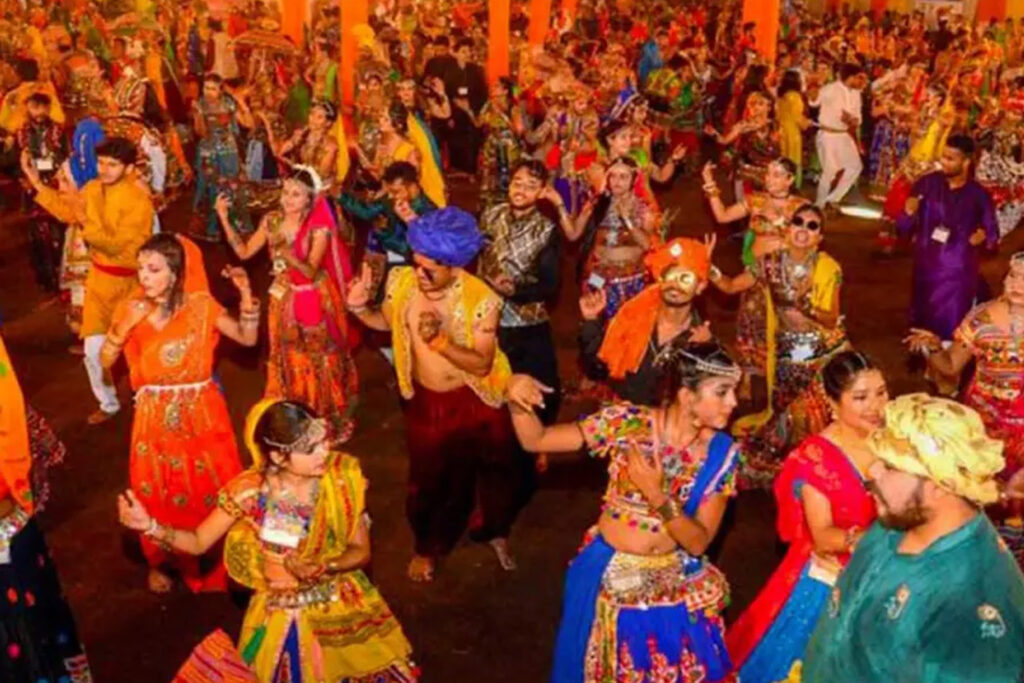
Originally, Sri Maha Uma Devi Temple was a place of worship exclusively for Hindus. Today, however, the temple welcomes visitors of all faiths. Nevertheless, certain rules based on Hindu religious traditions must be observed. For example, visitors are not allowed to bring any kind of meat into the temple, and women who are menstruating are not permitted to enter the main sanctuary. The temple continues to conduct religious ceremonies led by Brahmin priests who are well versed in the Vedas. Every afternoon, the main sanctuary is closed while hymns in praise of the deities are recited. In addition, Hindu religious ceremonies are held throughout the year. The temple’s largest annual celebration is the Dussehra, also known as Navaratri Festival, which attracts large numbers of both Indian and Thai devotees. The festival is held every year between September and October in honor of Sri Maha Uma Devi. It is believed that during this period, Goddess Uma and the procession of deities descend to the human world to bestow blessings upon all people. Throughout the festival, both Indian and Thai devotees gather at the temple to pray, observe religious practices, and follow a vegetarian diet.
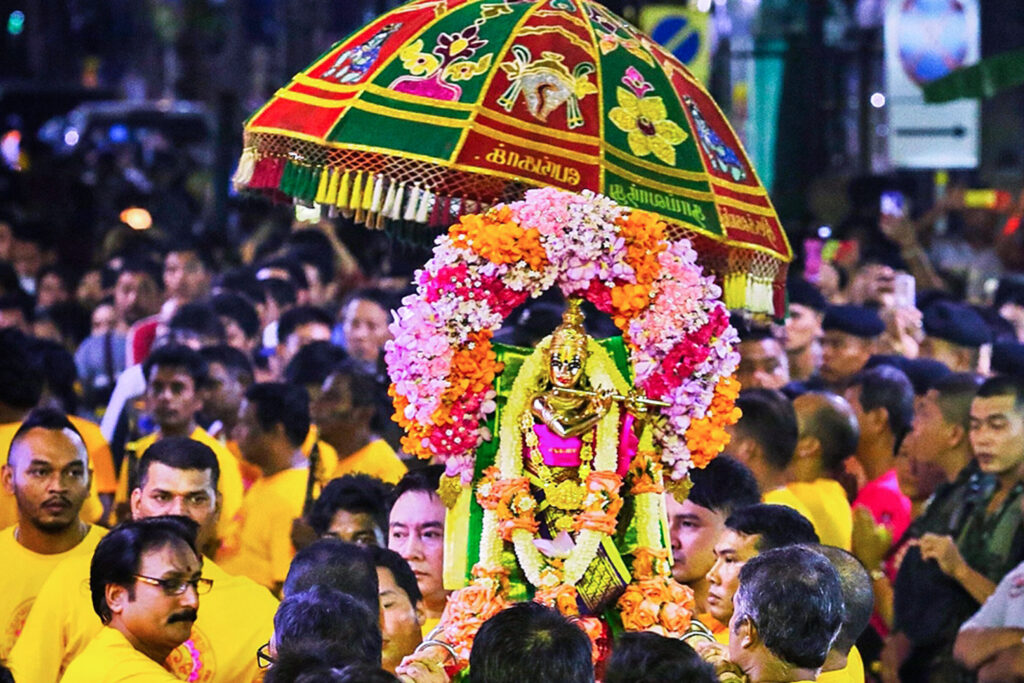
On the evening of the tenth day, also known as Vijayadashami, Silom Road, Naradhiwas Rajanagarindra Road, Sathon Road, and Surasak Road are closed to make way for the grand procession of sacred chariots carrying Hindu deities, allowing devotees to pay their respects and receive blessings. Leading the procession is a Brahmin believed to be possessed by Goddess Uma, carrying a Kalasha filled with sand, water, coins, and ritual offerings. The procession is followed by spirit mediums of Goddess Kali and Lord Murugan. Along both sides of the streets, large numbers of devotees set up offering tables to welcome the Goddess. Typical offerings include coconuts, milk, Namwa bananas, marigold flowers, and incense. Some devotees also prepare other fruits and traditional sweets. On the following morning, the statue of the Goddess, together with the ritual items used during the ceremony, is immersed in water. In the past, this ritual took place in Silom Canal, but today it is performed in the Chao Phraya River.

Today, Sri Maha Uma Devi Temple, also known as Wat Khaek, is one of the most popular sacred places in Thailand for people seeking blessings. Many visitors come to pray for success in their careers, authority, good health, and other aspects of life. The temple is also well known as a place to pray for love and children. Since Goddess Uma is the consort of Lord Shiva and is regarded as a symbol of faithful and enduring love, many devotees believe that praying to her will bring their wishes to fulfillment. In addition, the temple enshrines nine Hindu deities for worship: Lord Ganesha, Lord Shiva, Lord Krishna, Lord Vishnu, Goddess Lakshmi, Lord Murugan, Goddess Mariamman, Goddess Kali, and Goddess Saraswati. If you enjoy our articles, you can read more on the ARM’S ARMOR website. You can also follow the ARM’S ARMOR Facebook page so you never miss our latest content. If you enjoy our work, please like and share our page to support us.