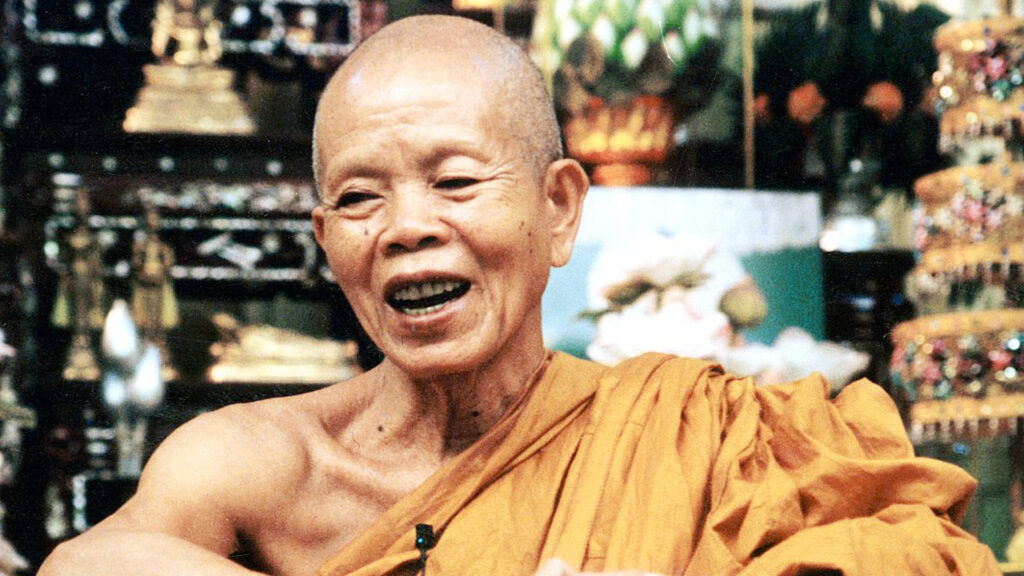
Luang Por Khun Parissuddho, originally named Koon, was born on 4 October 1923 in Ban Rai Village, Kut Phiman Subdistrict, Dan Khun Thot District, Nakhon Ratchasima. He was the son of Mr. Boon and Mrs. Thongkhao Chatphonkrang. He had two biological sisters, Khamman and Thonglo. As his parents earned their living by farming, his childhood was marked by hardship due to the family’s poverty. When he was 11 years old, his mother passed away. His father then entrusted him to Wat Ban Rai as a temple student to receive his education. There, he was taught by Phra Ajahn Li Arakkhayo, Phra Ajahn Chueam Wiracho, and Phra Ajahn Chhaya Kittipanyo.
When Luang Phor Koon was 16 years old, he left Wat Ban Rai and went to live with his uncle. He worked diligently with his two uncles, helping them farm from early morning until late at night. Whenever he became exhausted, he would lie down and rest. Seeing how hard he worked, his uncles told him that if he could no longer endure such a life, he should become a monk. Luang Phor Koon then said, “If I ever have the opportunity to be ordained, I promise that I will never disrobe. I will remain a monk for the rest of my life.”
After living with his uncle for about two years, as he entered adulthood, he became interested in becoming a Mor Phleng Korat (traditional Korat folk singer). He invited a relative of about the same age to walk for more than five days to Non Sung District to become a disciple of Kru Son, a highly respected folk music teacher at that time. Seeing his determination, Kru Son accepted him as a student. In return for receiving lessons in Korat folk singing, Luang Phor Koon helped work on the farm.
After completing his training as a Mor Phleng Korat (traditional Korat folk singer), Luang Phor Koon lived with his uncle by marriage for two years. He then moved to live with his uncle until he turned 21, when he was ordained.When Luang Phor Koon was ordained this time, he felt that he wanted to enter the monkhood to repay the kindness of his parents. He was ordained on 2 May 1944 at the Phatthasima (ordination hall) of Wat Thanon Hak Yai, Kut Phiman Subdistrict, Dan Khun Thot District, with Phra Khru Wicharayatikit, the former abbot of Wat Thanon Hak Noi, serving as his preceptor. Luang Phor Koon originally intended to remain in the monkhood for three Buddhist Lent periods. After being ordained, he looked back on the hardships of his childhood, the remoteness of the area, and the difficulties faced by the local people. He thought about how he could help them. He believed that if he left the monkhood, he would not be able to help anyone, not even himself. But if he remained in the monkhood, he could still use his knowledge to help others. After realizing this, Luang Phor Koon made up his mind to remain in the monkhood and devote his life to serving Buddhism.บวชรับใช้พุทธศาสนาตลอดชีวิต
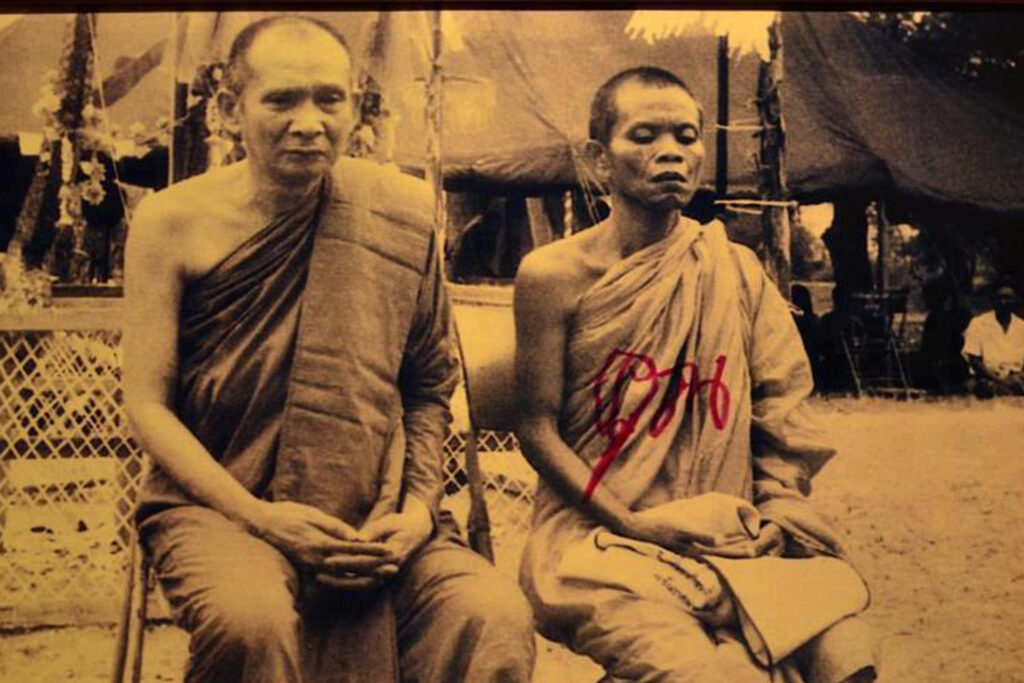
After completing his training as a Mor Phleng Korat (traditional Korat folk singer), Luang Phor Koon lived with his uncle by marriage for two years. He then moved to live with his uncle until he turned 21, when he was ordained.When Luang Phor Koon was ordained this time, he felt that he wanted to enter the monkhood to repay the kindness of his parents. He was ordained on 2 May 1944 at the Phatthasima (ordination hall) of Wat Thanon Hak Yai, Kut Phiman Subdistrict, Dan Khun Thot District, with Phra Khru Wicharayatikit, the former abbot of Wat Thanon Hak Noi, serving as his preceptor. Luang Phor Koon originally intended to remain in the monkhood for three Buddhist Lent periods. After being ordained, he looked back on the hardships of his childhood, the remoteness of the area, and the difficulties faced by the local people. He thought about how he could help them. He believed that if he left the monkhood, he would not be able to help anyone, not even himself. But if he remained in the monkhood, he could still use his knowledge to help others. After realizing this, Luang Phor Koon made up his mind to remain in the monkhood and devote his life to serving Buddhism.
Luang Phor Koon often went on Thudong with Luang Phor Khong Phutthasaro, traveling to different places. During these journeys, Luang Phor Khong taught him Buddhist incantations, traditional sacred practices, and meditation practice. The Buddhist incantations he taught included Takrut insertion, Metta Mahaniyom, and Khong Kraphan Chatri. At that time, Luang Phor Khong was a well-known revered monk, especially for Takrut insertion. He passed all of his knowledge of Buddhist incantations on to Luang Phor Koon. Although monks of the forest meditation tradition were generally not interested in supernatural powers because they believed such powers were not something to become attached to and should be avoided, Luang Phor Khong explained that if a practice did not go against the principles of Buddhism or the Buddhist scriptures, and if it could help others overcome the effects of their karma and benefit the public, it could be practiced. Luang Phor Koon continued his Thudong journey through Laos and Cambodia for more than three years before returning to Wat Ban Rai. When his disciples learned that he had returned, they invited him to take the leading role in restoring the temple, as it had become badly deteriorated after many years. After that, Luang Phor Koon gathered people with faith to help develop Wat Ban Rai, build a new sermon hall, and build schools in remote areas. He collected donations from his disciples and from people who had faith in Buddhism.
Throughout his life, Luang Phor Koon made many contributions to people in Northeastern Thailand. As a result, he gained a great number of disciples and followers from all over the country. On 16 May 2015, Luang Phor Koon Parisuttho passed away at the age of 92, after 70 years in the monkhood. In his will, he donated his body to the Faculty of Medicine, Khon Kaen University for medical education and research.